
Can Soft Washing Remove Lichen From Your Roof?
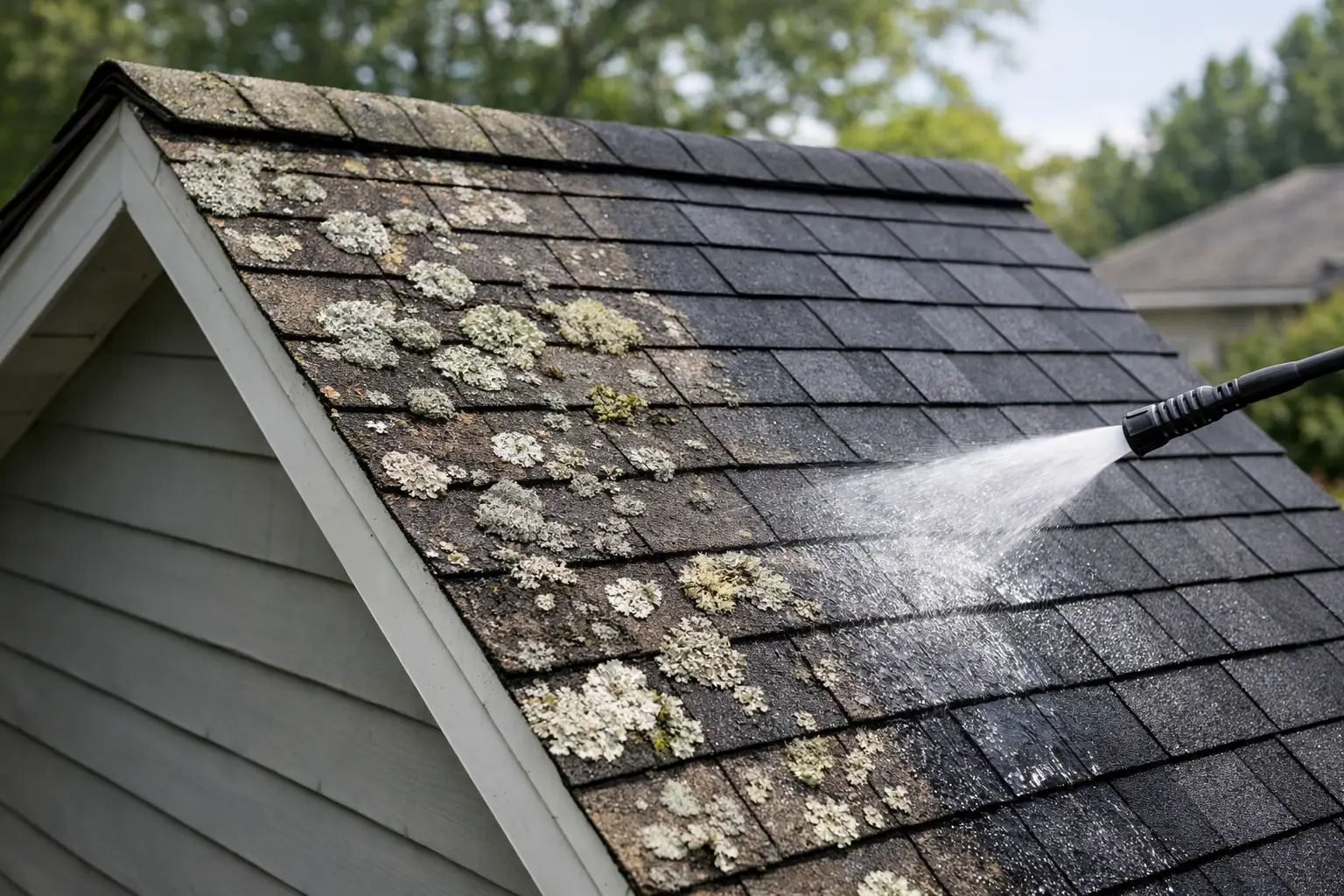
A pale green, gray, or crusty patch on a roof is easy to dismiss as harmless staining. But lichen is a living growth that anchors itself to a surface, holds moisture, and can become harder to remove the longer it stays. So, can soft washing remove lichen? In many cases, yes – when the process uses the right cleaning solution, proper dwell time, and a surface-safe application method.
For homeowners in Asheville and throughout Western North Carolina, this matters because damp weather, tree cover, pollen, and seasonal humidity create ideal conditions for organic growth. The goal is not simply to make a roof or exterior surface look cleaner for a few weeks. It is to treat the growth at its source without blasting away granules, finish, paint, or wood fibers.
Can Soft Washing Remove Lichen Without Damage?
Soft washing can remove and kill lichen on many exterior surfaces, including asphalt shingle roofs, vinyl siding, painted trim, brick, concrete, decks, and fences. Unlike traditional high-pressure washing, soft washing relies on a carefully mixed cleaning solution delivered at low pressure. The solution does the cleaning work, rather than a forceful stream of water.
That distinction is especially important on roofs. High pressure can dislodge asphalt granules, lift shingle edges, drive water under roofing materials, and shorten the life of an already expensive system. Lichen is stubborn, but more pressure is not the answer. A trained soft-wash technician applies a solution that breaks down and treats organic growth, then rinses or allows weathering to finish the process when appropriate for the surface.
There is one realistic expectation to set: thick, established lichen may not disappear the second the crew leaves. The living organism can be treated and neutralized during service, while its tightly attached remnants gradually release over the following weeks as rain and normal weather exposure do their work. Trying to scrape every last piece away immediately can cause more harm than good, particularly on shingles.
Why Lichen Needs More Than a Quick Rinse
Lichen is not the same as loose dirt, pollen, or ordinary mud. It is a durable partnership between fungi and algae or cyanobacteria. That biology allows it to grip surfaces and survive in locations where moisture and filtered sunlight are common.
On a roof, lichen often appears alongside black algae streaks or moss. While black streaks can be largely cosmetic at first, lichen and moss deserve closer attention. Their root-like structures can cling to shingle surfaces, and their presence can keep areas damp longer after rain. On wood, they can contribute to a weathered, neglected appearance and may make the surface more difficult to maintain. On concrete and pavers, they can create slippery areas, particularly on shaded walkways and patios.
A garden hose will rarely solve the problem. It may knock off a little loose material, but it does not reliably kill the growth responsible for the stain. Pressure washing can make the surface look better quickly, yet it may damage the material beneath or leave living growth behind in small crevices. Soft washing is designed to address both the visible issue and the organic source.
How Professional Soft Washing Treats Lichen
A professional lichen treatment begins with identifying the surface and the type of buildup present. A roof with mature lichen needs a different approach than a vinyl-sided home with a few small spots near the gutter line. The age and condition of the material, nearby landscaping, drainage patterns, and access all affect the cleaning plan.
The cleaning team first protects surrounding plants and property. This includes wetting vegetation before treatment, controlling runoff, and rinsing planted areas throughout the process. The cleaning solution is then applied at low pressure, allowing it time to work on lichen, algae, mildew, and other organic contaminants. Depending on the surface and severity of growth, the technician may perform a controlled rinse, a follow-up application, or leave treated lichen to release naturally.
This process is not a one-size-fits-all spray-and-go service. The wrong concentration can be ineffective, while an overly aggressive approach can create unnecessary risk for plants and sensitive materials. Professional training, proper equipment, and careful application are what make soft washing a safe alternative to high-pressure cleaning for delicate exterior surfaces.
What to Expect After a Lichen Treatment
Fresh results vary based on how thick the lichen is and where it is attached. Algae staining and mildew often respond quickly, making siding, trim, and concrete look noticeably brighter the same day. Lichen can take longer, especially on shaded roof sections where it has been growing for years.
After treatment, lichen may change color before it loosens. It can appear lighter, duller, or pale as the growth is neutralized. This is usually a sign that the treatment is working, not that it has failed. Rainfall and regular weathering help remove the dead material over time without the need for scraping or damaging pressure.
Homeowners should avoid climbing onto the roof to brush or pick at treated patches. Roof work carries obvious safety risks, and physical removal can strip shingle granules or break brittle materials. If a follow-up is needed, the cleaning professional can assess whether more treatment is appropriate.
When Soft Washing May Not Be the Whole Answer
Soft washing is highly effective for organic growth, but it cannot repair damage that has already occurred. If lichen has grown over deteriorated shingles, cracked tiles, rotted wood, failed flashing, or loose mortar, cleaning will improve the appearance but will not restore the material itself. Those conditions may require a roofer, contractor, or masonry professional.
It also helps to distinguish lichen from other stubborn stains. Rust, irrigation stains, paint overspray, efflorescence, and oil require different products and techniques. A qualified exterior cleaning contractor should inspect the surface instead of assuming every stain is biological growth.
For commercial properties, the same principle applies. A soft-wash treatment can restore a cleaner, more welcoming appearance to building exteriors, sidewalks, retaining walls, and entry areas, but property managers should also address drainage, leaking gutters, overgrown landscaping, and shaded moisture traps that encourage repeat growth.
Keeping Lichen From Coming Back So Quickly
No exterior cleaning method can change Western North Carolina’s humid climate. However, a few maintenance habits can reduce the conditions lichen prefers. Keep gutters flowing so water does not spill onto siding or pool near walkways. Trim back branches that heavily shade the roof and trap moisture. Remove leaf debris from roof valleys, decks, and patios, and watch for recurring growth near sprinklers or slow-draining areas.
Regular professional cleaning is often easier and more affordable than waiting for years of buildup to take hold. A maintenance schedule can be tailored to a property’s exposure, tree coverage, and surface materials. Homes surrounded by mature trees may need more frequent attention than open, sunny properties.
WNC Wash Pro’s uses surface-safe soft washing to help homeowners and property managers remove organic buildup without taking unnecessary risks with their roofs, siding, wood, or hardscapes. When lichen starts showing up, treating it early gives you the best chance to protect both curb appeal and the surfaces that protect your property.
If you are seeing crusty growth on shingles, green patches on siding, or slick buildup on a patio, do not assume pressure is the cure. A careful evaluation and the right soft-wash treatment can make cleaning your castle far less stressful – and help keep a small exterior issue from becoming a larger maintenance concern.