
Does Soft Washing Damage Roofs? The Safe Answer
A black streak running down an Asheville roof is rarely just a cosmetic problem. In Western North Carolina’s damp, tree-covered neighborhoods, algae, moss, lichen, pollen, and organic debris can hold moisture against roofing materials and make a home look neglected long before the roof is actually old. So, does soft washing damage roofs? When it is performed correctly by trained professionals using the proper solution, pressure, and rinsing process, soft washing is designed to clean roofs safely – not damage them.
The concern is understandable. A roof is one of the most expensive parts of a home, and homeowners have heard plenty of warnings about pressure washing shingles. Those warnings are valid. High-pressure cleaning can cause real damage. Soft washing is different because it relies on a carefully applied cleaning solution to treat organic growth rather than blasting the roof surface with force.
Does Soft Washing Damage Roofs When Done Properly?
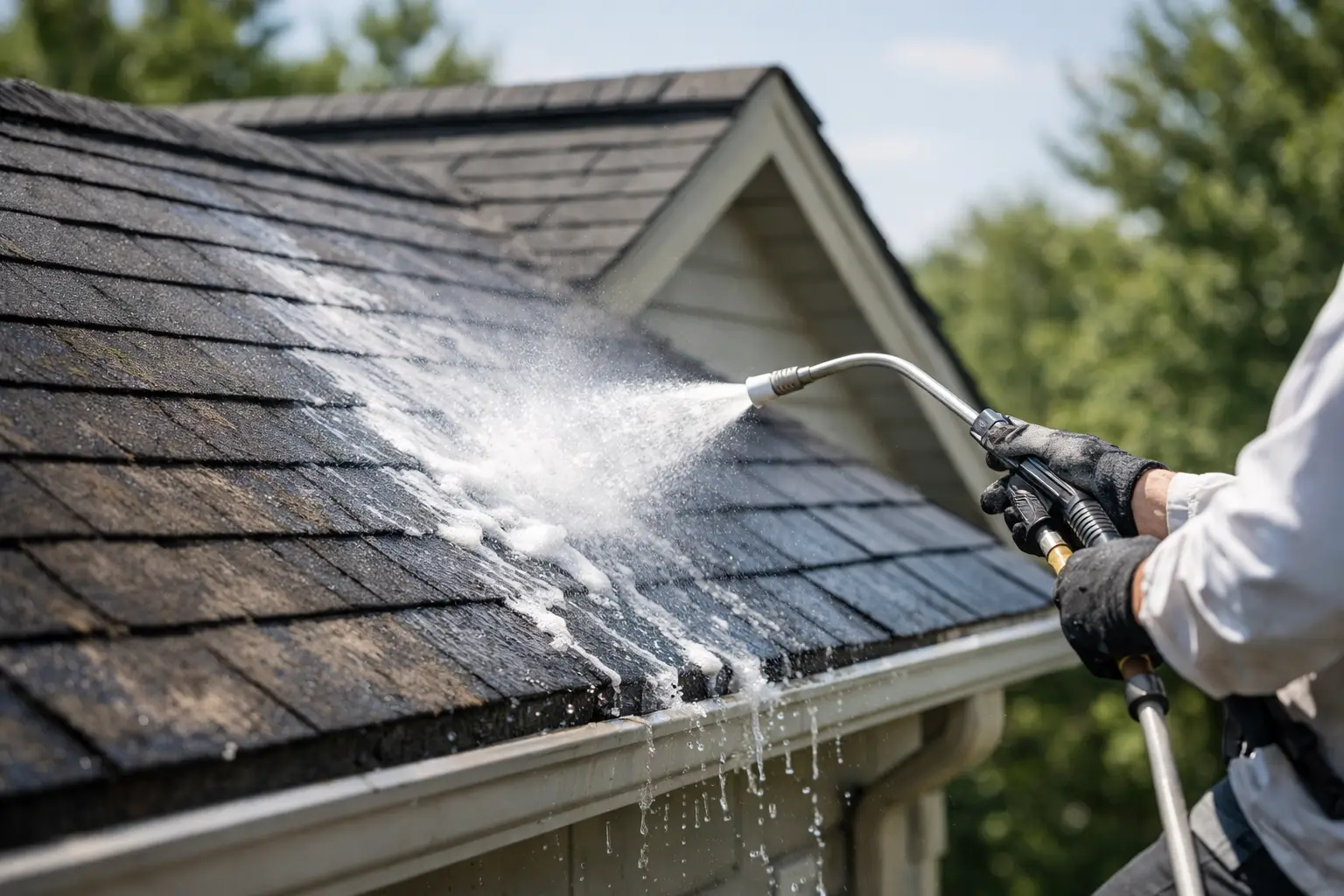
A proper roof soft wash uses very low pressure, typically no more force than a garden hose, along with a solution formulated to break down algae, mildew, moss, and lichen. The cleaning agents do the work. The water is simply the delivery method and, when appropriate, the rinse.
This approach protects the granules on asphalt shingles, which are essential to the roof’s ability to resist sunlight and weather. It also avoids forcing water beneath shingles, lifting edges, or damaging the delicate surfaces of tile, metal, and many other roofing materials.
For homeowners in Asheville, Hendersonville, Biltmore Forest, and surrounding mountain communities, that distinction matters. Shade, humidity, rain, and falling leaves create ideal conditions for roof staining and biological growth. Leaving that growth in place is not always the safer choice. A carefully cleaned roof can improve curb appeal and help reduce the moisture-trapping buildup that contributes to premature wear.
What Actually Damages a Roof During Cleaning?
The phrase “roof washing” can mean very different things depending on who is doing the work. Damage usually comes from the wrong method, poor preparation, or an untrained operator – not from professional soft washing itself.
High pressure can strip or loosen shingles
Pressure washing is excellent for many hard surfaces, including concrete and some driveways. It is not the right approach for asphalt shingles. Concentrated pressure can remove protective granules, scar the shingle surface, loosen tabs, and drive water where it does not belong. Once those granules are gone, they cannot be put back.
Walking carelessly on the roof creates risk
Even a clean roof can be damaged by unnecessary foot traffic. Steep slopes, hot shingles, brittle older materials, and fragile tile all require care. A professional crew should use safe access practices and avoid walking on the roof whenever the job can be completed from ladders, lifts, or the ground.
Incorrect chemical use can harm surrounding areas
Roof-cleaning solutions must be mixed, applied, and controlled correctly. Too little solution may leave the roof streaky and untreated. Too much, or careless overspray, can affect landscaping, painted surfaces, gutters, and exterior fixtures.
A responsible soft wash process includes pre-wetting nearby plants, managing runoff, controlling application, and rinsing vegetation thoroughly throughout the job. The goal is visible roof results without putting your landscaping or property at risk.
Ignoring roof condition can turn cleaning into a problem
Soft washing will not repair missing shingles, failing flashing, cracked tiles, active leaks, or a roof that is already at the end of its useful life. A trained cleaner should recognize obvious concerns and avoid treating a roof in a way that could worsen an existing issue. In some cases, a roofing contractor should inspect the roof before cleaning begins.
Why Algae and Moss Should Not Be Ignored
Those dark roof streaks are often caused by algae, especially Gloeocapsa magma. It thrives in humid climates and feeds on limestone filler found in many asphalt shingles. While algae may begin as a visual issue, heavy growth can retain moisture and create conditions that are harder on the roof over time.
Moss and lichen deserve even more attention. Moss can grow beneath shingle edges and hold water against the roof. Lichen attaches firmly to the surface and may remain visible for a period after treatment as it releases naturally. Trying to scrape either one away aggressively can do more harm than good.
Soft washing treats this growth at the source. Instead of grinding, scraping, or pressure blasting the roof, the solution kills the organic material so it can break down and wash away gradually. That is why a professional roof cleaning may continue to look better in the days and weeks following service.
Not Every Roof Needs the Same Cleaning Plan
The safest method depends on the roof material, age, pitch, condition, and type of staining. Asphalt shingles are common throughout Western North Carolina and generally respond well to a low-pressure soft wash when they are in sound condition. Metal roofs often need a different solution strength and careful attention around coatings, seams, and fasteners. Tile, slate, cedar, and specialty roofing materials require an even more tailored approach.
This is also why a one-price, one-method roof cleaning offer should make a property owner pause. A ranch home with light algae staining does not need the same treatment as a steep, heavily shaded home with moss buildup, gutters full of debris, and delicate landscaping below.
Before scheduling roof cleaning, look for signs that the roof may need repair first. Missing or curled shingles, exposed nail heads, cracked flashing, soft spots, active leaks, and large accumulations of loose granules are all reasons to have a roofer assess the situation. Cleaning a structurally unsound roof is not a substitute for repair.
How Professional Soft Washing Protects Your Property
A quality roof cleaning job begins before any solution touches the shingles. The crew evaluates access, roof material, visible roof condition, nearby plants, drainage paths, and sensitive exterior areas. They choose an appropriate mix, use low-pressure application equipment, and keep landscaping wet and protected during the process.
The work should also be paced carefully. Roof cleaning is not a race to soak every surface as quickly as possible. Controlled application helps the cleaning solution treat stains effectively while limiting unnecessary runoff. If portions of the roof require additional treatment, those areas should receive attention without overapplying product across the entire roof.
At WNC Wash Pro’s, the focus is on surface-safe exterior cleaning that takes the hassle out of caring for your castle. Professional soft washing is a safe alternative to high-pressure roof cleaning because it targets the algae, mildew, and organic buildup without using damaging force against the roofing material.
Can You Soft Wash a Roof Yourself?
Homeowners can buy roof-cleaning products, but a do-it-yourself roof wash carries more risk than many people expect. The primary concern is not only the cleaning solution. It is working safely on a slippery, angled surface while managing hoses, runoff, plants, gutters, and product concentration.
Mixing errors can produce disappointing results or harm surrounding vegetation. Overspray can affect siding, windows, painted trim, and outdoor furnishings. A person who steps onto a mossy or damp roof also faces a serious fall hazard. For many property owners, professional service is the more practical choice because it avoids both the safety risk and the guesswork.
If you are considering cleaning a roof yourself, do not use a pressure washer on shingles. Do not scrape moss aggressively. Avoid combining chemicals, and never apply a product without following its label instructions. When the roof is steep, heavily stained, older, or difficult to access, calling a trained exterior cleaning professional is the safer path.
How Often Should a Roof Be Soft Washed?
There is no fixed schedule that fits every home. A sunny roof with little tree coverage may stay clean for years. A shaded roof beneath oaks, pines, or hardwoods may develop visible algae much sooner. Homes near dense vegetation, in damp valleys, or with north-facing roof sections often need more frequent attention.
Most homeowners should inspect their roof at least once a year and pay attention to dark streaking, green growth, moss, debris buildup, and clogged gutters. Addressing organic growth early is usually easier than waiting until it has spread across the roof. Regular gutter cleaning also helps keep water moving away from the roofline and reduces the debris that holds moisture in place.
A clean roof should never come at the expense of a healthy one. Ask how the roof will be accessed, what pressure will be used, how plants will be protected, and whether the company has experience with your specific roofing material. The right soft wash service leaves you with a cleaner roof, stronger curb appeal, and the confidence that your home was treated with care.