
Soft Washing vs Pressure Washing: Which Is Safer?
That black streaking on a roof, green film on siding, or slippery growth on a shaded walkway is more than a curb-appeal problem in Western North Carolina. Our humid summers, tree cover, and seasonal pollen give algae, mildew, and organic buildup plenty of opportunity to settle in. When comparing soft washing vs pressure washing, the right choice comes down to two things: what needs to be removed and what surface needs protection.
Both methods have a place in professional exterior cleaning. The mistake is treating them as interchangeable. High pressure can deliver an impressive result on durable concrete, while the same force can scar wood, force water behind siding, or shorten the life of roofing materials. A trained crew chooses the cleaning process around the property, not the other way around.
What Is the Difference Between Soft Washing and Pressure Washing?
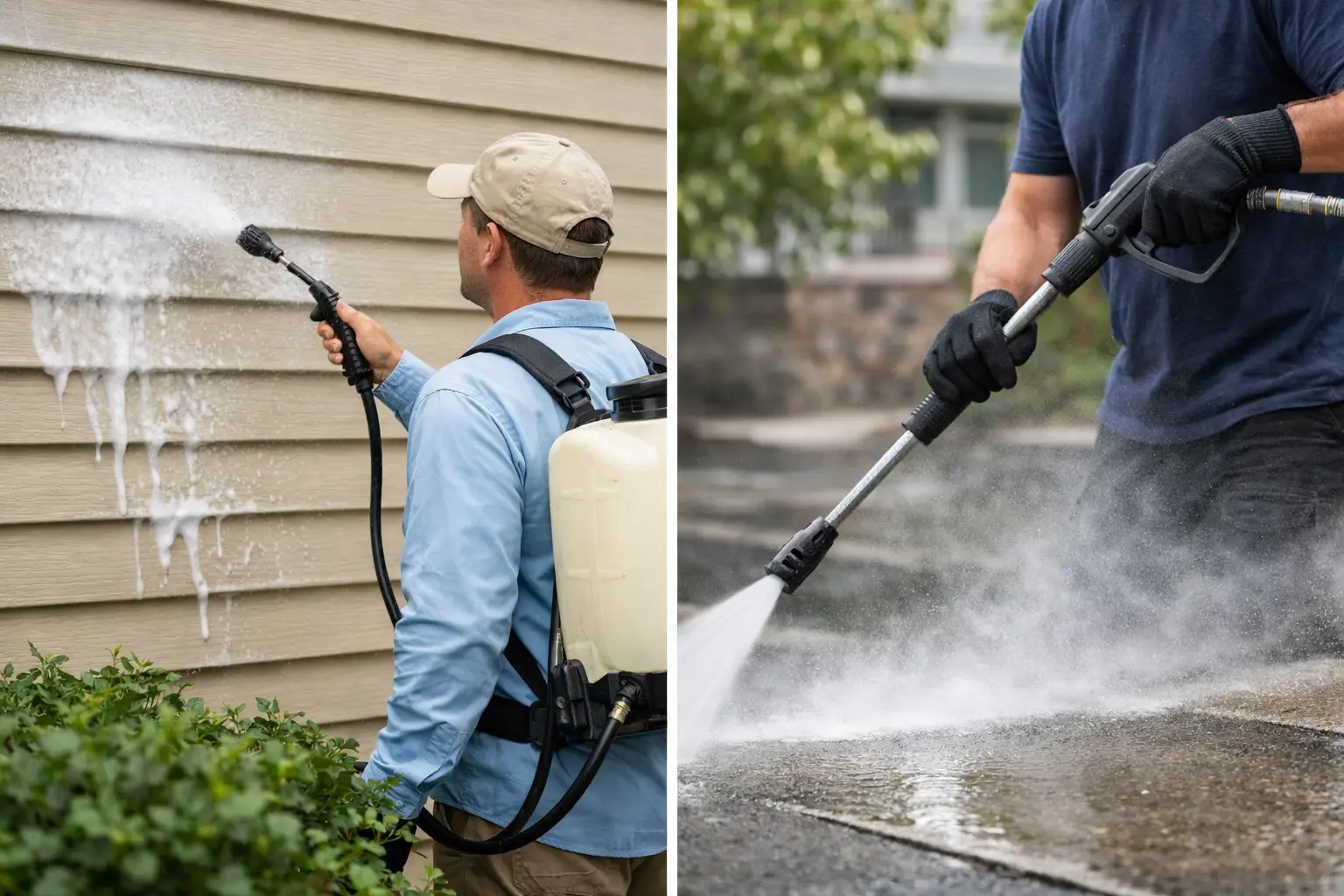
Pressure washing uses a high-pressure stream of water to lift away embedded dirt, mud, surface stains, loose paint, and heavy buildup. Depending on the equipment and setting, that stream can be powerful enough to clean concrete, brick, and other hard materials quickly.
Soft washing relies on low water pressure and a professional cleaning solution formulated for exterior organic growth. The solution does the real work, breaking down algae, mold, mildew, lichen, pollen, and grime at their source. The surface is then gently rinsed clean.
Think of pressure as mechanical force and soft washing as targeted treatment. One is not automatically better than the other. A driveway with tire marks and packed-in grime usually needs pressure. A vinyl-sided home with mildew needs a surface-safe cleaning solution and a low-pressure rinse.
Why pressure alone can leave organic growth behind
A powerful rinse can remove the visible layer of green or black growth, but it may not fully treat what is rooted in the surface. That is why algae can return quickly after a pressure-only cleaning, particularly on north-facing walls, shaded decks, and roofs beneath mature trees.
Soft washing treats the organisms causing the discoloration rather than simply blasting away the evidence. When it is properly applied, the result is a more thorough clean with less risk to delicate materials.
When Soft Washing Is the Safer Choice
Soft washing is the preferred method for many of the exterior surfaces homeowners worry about most. These materials often look durable from the ground, but they can be damaged by excessive pressure or poor technique.
House siding and painted exteriors
Vinyl, painted wood, Hardie board, stucco, and many other siding materials can collect pollen, mildew, spider webs, and road dust. High pressure can leave marks, strip paint, crack brittle siding, or drive water behind exterior cladding. Water where it does not belong can create a much larger repair concern later.
A soft wash removes the grime while keeping water pressure low. It is especially useful for whole-house washing because it can reach uneven surfaces, trim, soffits, and areas around windows without treating every section like a concrete slab.
Asphalt shingle roofs
Black roof streaks are commonly caused by algae, while moss and lichen can hold moisture against roofing materials. It is tempting to rent a pressure washer and attack the problem, but high pressure can dislodge protective granules, damage shingles, and create unnecessary leaks.
Roof soft washing is the safe alternative for asphalt shingles. A trained professional applies the appropriate treatment at low pressure, allowing it to break down organic growth without aggressively scrubbing or blasting the roof. Some heavier moss or lichen may release gradually after treatment, which is normal and far safer than forcing it off.
Decks, fences, and outdoor wood
Wood can be surprisingly easy to damage. Too much pressure raises the grain, creates splintering, leaves wand marks, and strips away stain unevenly. Soft washing is often the best starting point for wood that is affected by mildew, algae, or pollen.
There are exceptions. A weathered deck may need carefully controlled pressure after cleaning to remove stubborn grime and prepare it for staining. The key is control: proper cleaning solutions, correct nozzle selection, safe distance, and pressure suited to the wood’s condition.
When Pressure Washing Makes Sense
Pressure washing earns its place on surfaces built to handle it. It is highly effective where dirt and staining are embedded in hard, non-delicate materials.
Driveways, sidewalks, and patios
Concrete holds onto tire marks, tracked-in soil, leaf tannins, algae, and years of everyday use. A professional pressure washing service can restore a cleaner, brighter appearance to driveways, walkways, pool decks, and patios. For large flat areas, specialized surface-cleaning equipment helps produce consistent results without the streaky appearance that can come from using a wand alone.
In Asheville and surrounding mountain communities, shaded concrete deserves special attention. Algae can make walkways slick, especially after rain. Cleaning it is about helping guests and family move more safely around the property, not just making the surface look better.
Brick, stone, and select commercial surfaces
Many brick and stone areas can be pressure washed effectively, but the word “many” matters. Older mortar, soft stone, damaged brick, and historic materials may need a gentler approach. The same caution applies to commercial storefronts, loading areas, dumpster pads, and building exteriors. The material, staining, and condition should be evaluated before equipment is turned on.
For commercial properties, the best cleaning plan may combine methods. A building facade may require soft washing, while sidewalks and concrete entryways benefit from controlled pressure washing. This approach protects the property while keeping it welcoming for customers, tenants, and employees.
Soft Washing vs Pressure Washing: A Surface-by-Surface View
If the surface is roofing, siding, painted trim, delicate wood, screened enclosures, or exterior areas with organic growth, soft washing is usually the safer choice. If it is sound concrete, a durable paver area, or another hard surface with embedded dirt, pressure washing may be the right solution.
Still, surface type is only part of the decision. Condition matters just as much. A newer concrete driveway can handle a different process than aging concrete with cracks and crumbling edges. A composite deck may tolerate a cleaning method that would be wrong for old cedar. A professional inspection identifies those differences before cleaning begins.
The contaminant matters, too. Mildew and algae respond well to soft-wash treatment. Rust stains, graffiti, oil spots, and mineral deposits often require specialized products and techniques. More pressure is not a universal answer, and it can make certain stains worse or damage the material around them.
What Can Go Wrong With the Wrong Method?
The biggest risk of do-it-yourself exterior cleaning is assuming the machine setting tells the whole story. Damage often comes from a combination of excessive pressure, standing too close, using the wrong nozzle, or applying the wrong cleaner.
On a house, that can mean stripped paint, oxidized vinyl markings, damaged window seals, and water intrusion. On a roof, it can mean loosened shingles and lost granules. On wood, it can mean gouges that remain visible even after the deck dries. On concrete, overly aggressive cleaning can expose aggregate or create uneven stripes.
Plants also need protection. Professional soft washing includes careful preparation, controlled application, and thorough rinsing to protect landscaping and surrounding surfaces. This is one reason exterior cleaning is not simply a matter of renting equipment for an afternoon. The visible result matters, but so does what remains protected when the work is done.
How Often Should You Schedule Exterior Cleaning?
There is no fixed schedule that fits every property. Homes under heavy tree cover or near wooded areas may need house washing more often than open, sunny properties. Roofs with recurring shade and moisture deserve routine observation. Driveways and walkways may need attention when algae begins to create slick spots or when staining starts to detract from the property.
For many homes, annual house washing is a practical maintenance rhythm. Concrete, decks, fences, and roofs should be assessed based on buildup, exposure, and material condition. Regular cleaning is generally easier on surfaces than waiting until growth is thick, staining is deep, or a small maintenance issue becomes a major visual problem.
A quality exterior cleaning company should explain why it recommends a particular method, not just quote a service. At WNC Wash Pro’s, trained local crews assess the surface, identify the buildup, and use the safest effective process to clean your castle. That means pressure where pressure belongs and soft washing where protection matters most.
Your home or commercial property does not need the strongest cleaning method. It needs the right one. When algae, mildew, pollen, or staining starts to take over, a professional evaluation can take the hassle out of choosing and help keep every exterior surface looking cared for.