
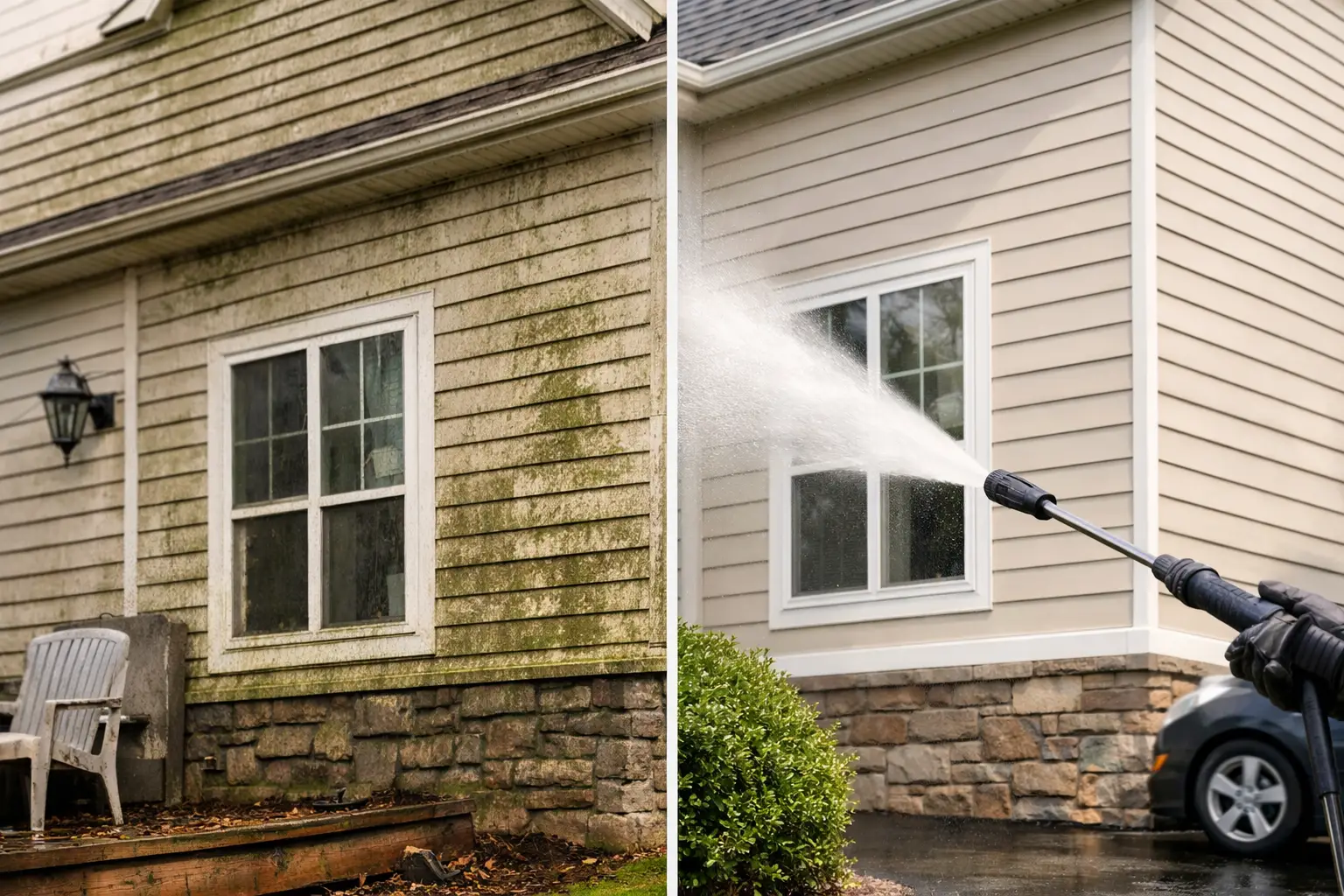
8 Signs Your Exterior Needs Washing Soon
A green film on the siding may look like a cosmetic issue at first. In Asheville and across Western North Carolina, it is often a sign that moisture and organic growth have settled into the surface. Knowing the signs your exterior needs washing helps you address buildup before it affects curb appeal, creates slippery walkways, or shortens the life of materials you paid good money to install.
Mountain weather gives mold, mildew, algae, pollen, and grime plenty of opportunities to collect. Shaded sides of a home, damp decks, tree-covered roofs, and north-facing driveways are especially likely to show it first. Professional exterior cleaning is not about making a property look freshly painted for a weekend. Done with the right method, it is practical maintenance for your home or commercial property.
Signs Your Exterior Needs Washing
1. Green, black, or gray growth is showing up on siding
Green patches on vinyl, Hardie board, painted wood, brick, or stucco are commonly algae. Darker spotting may be mildew, mold, or a mix of organic growth and airborne dirt. This buildup tends to spread gradually, especially on shaded walls where morning dew and rainwater take longer to dry.
A garden hose rarely solves the problem because it may rinse away loose dirt without treating what is holding to the surface. Scrubbing aggressively can also leave marks or damage paint. A surface-safe soft wash uses the proper cleaning solution and low-pressure application to remove the growth without blasting the siding.
2. Your roof has dark streaks or visible moss
Dark roof streaks are one of the most common calls for exterior cleaning in humid areas. They are often caused by algae that feeds on the limestone filler found in many asphalt shingles. Moss may also develop where branches create constant shade and hold moisture near the roofline.
Roof stains can make an otherwise well-kept home look older than it is. More importantly, moss can retain moisture and lift shingle edges over time. Roof cleaning should never mean high-pressure washing. Shingles, flashing, and granules need a gentle, manufacturer-conscious soft-washing approach that treats the organic growth rather than forcing water underneath roofing materials.
3. Your driveway, steps, or patio feel slick when wet
Concrete is durable, but it is not immune to buildup. Algae, mildew, leaf tannins, oil residue, and red clay can settle into its pores. When the surface becomes dark, greenish, or slippery after rain, cleaning becomes a safety concern as well as an appearance issue.
Pay close attention to front steps, pool decks, walkways, and the shaded side of a driveway. Those areas get regular foot traffic, and a slick surface can catch family members, guests, tenants, or customers off guard. Professional concrete cleaning can lift stubborn organic staining and restore a cleaner, more secure walking surface.
4. Pollen and dirt return even after you rinse them away
Spring pollen is a fact of life in Western North Carolina. A yellow layer on outdoor furniture or the hood of a car is easy to spot, but pollen also sticks to siding, soffits, gutters, windows, and porch ceilings. When it combines with humidity, dust, and mildew spores, it creates a dull film that simple rinsing may not remove evenly.
If your home looks dingy shortly after a hose-down, the surface likely needs more than water. Soft washing breaks down the film and organic contaminants so they can be rinsed away safely. This is particularly useful for homes with textured siding, trim detail, or hard-to-reach second-story areas.
5. Gutters are streaked, overflowing, or growing plants
Black lines running down the front of gutters are often called tiger stripes. They form when electrostatic bonding holds grime, oxidation, and runoff residue to the gutter face. While those streaks are mostly an appearance problem, overflowing gutters are a bigger warning sign.
Leaves, twigs, roof grit, and seed pods can block water flow. That water may spill near the foundation, soak fascia boards, stain siding, or wash mulch out of beds. If small plants are growing from the gutter channel, cleaning is overdue. Gutter maintenance is most effective when the channels are cleared and the exterior is cleaned to remove the visible staining.
6. Your deck or fence looks dark, faded, or blotchy
Wood is especially vulnerable to repeated moisture exposure. A deck may develop dark mildew spots, green algae along railings, or a gray weathered appearance that hides the wood’s natural color. Fences can show the same problems on shaded panels and near the ground.
The trade-off here is simple: too little cleaning leaves damaging buildup in place, while too much pressure can fur the wood, carve lines into boards, and strip stain unevenly. The right process depends on the condition of the wood, its age, and whether it is painted, stained, sealed, or unfinished. A trained crew can determine whether a gentle wash alone is appropriate or whether the surface needs preparation before sealing or staining.
7. Brick, stone, or stucco has uneven staining
Masonry surfaces can hide dirt for a while, but moisture reveals the problem. You may see dark areas below downspouts, green growth on retaining walls, white mineral deposits, or rust-colored stains near metal fixtures. Stucco may collect grime in its texture and look shadowed even when the color itself has not changed.
Not every stain should be handled the same way. Rust removal, efflorescence, organic growth, and irrigation stains require different treatments. High pressure can damage mortar joints, scar softer stone, and drive water into cracks. Identifying the stain before cleaning protects the material and delivers a more even result.
8. Your business exterior no longer feels welcoming
For a storefront, office building, rental property, or community facility, exterior cleanliness speaks before anyone walks through the door. Dirty sidewalks, stained entryways, gum spots, graffiti, mildew on awnings, and grimy building walls can make customers question how a property is managed.
Commercial washing schedules depend on foot traffic, nearby trees, parking conditions, and the type of business. A restaurant entrance or medical office may need more frequent attention than a low-traffic warehouse. Regular service is often less disruptive and more cost-effective than waiting until buildup becomes obvious to every visitor.
When to Schedule Exterior Cleaning
Most homes benefit from a professional house wash about once a year, though a heavily shaded property or home surrounded by trees may need service more often. Roof cleaning is typically needed less frequently, but it should be scheduled when streaks, moss, or lichen become visible rather than ignored for years. Driveways, patios, decks, fences, and gutters each have their own schedule based on use, drainage, and exposure.
You do not need to wait for every surface to look dirty. Walk around the property after rain, look closely at shaded areas, and check the roofline from a safe position on the ground. Notice whether exterior surfaces feel slick, appear patchy, or make the home look neglected despite routine upkeep. Those early observations can prevent a larger cleaning job later.
Choose Cleaning Methods That Protect the Surface
Pressure washing has a place on durable surfaces such as properly prepared concrete. It is not the answer for every exterior material. Siding, roofs, painted trim, delicate wood, and many masonry surfaces often need soft washing or another low-pressure technique designed around the material and the type of staining.
WNC Wash Pro’s uses trained, surface-safe cleaning methods to remove mildew, algae, pollen, and dirt without unnecessary risk to your property. A professional assessment also helps identify issues cleaning cannot fix, such as damaged shingles, failing caulk, loose gutters, or drainage problems that should be addressed separately.
A clean exterior makes it easier to enjoy your home, welcome guests, and protect the investment behind the front door. If buildup is starting to show, taking care of it now is usually the simplest way to keep small exterior problems from becoming bigger ones.