
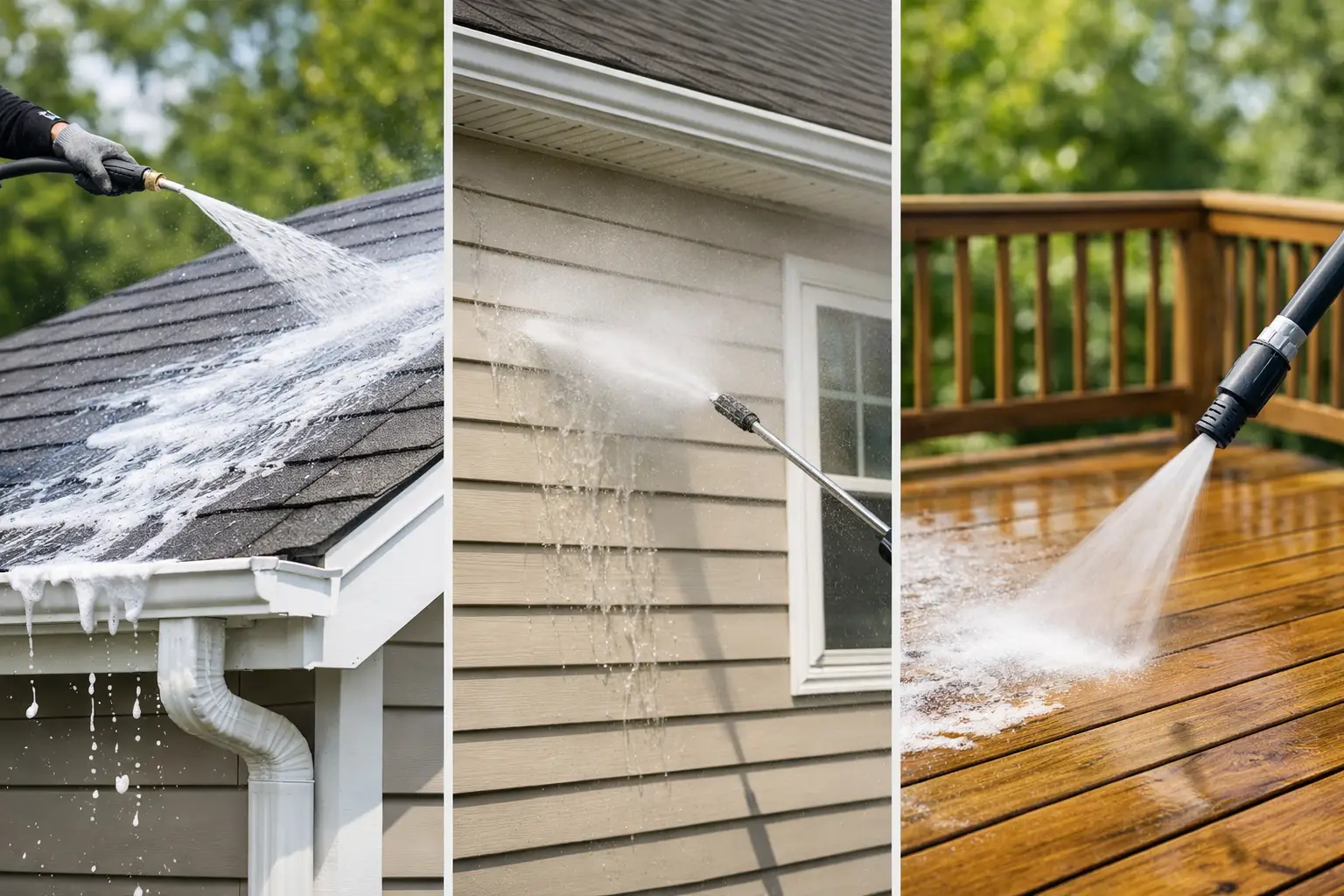
Is Softwash Safe for Your Roof, Siding, and Deck?
A black-streaked roof, green siding, or slippery patio can make a well-kept property look neglected fast. So, is softwash safe for the surfaces that protect your home? When it is matched to the material, mixed correctly, and applied by trained professionals, soft washing is one of the safest and most effective ways to remove organic growth without the destructive force of high-pressure cleaning.
For homeowners across Asheville, Hendersonville, Buncombe County, and Western North Carolina, that distinction matters. Our humid mountain climate gives algae, mildew, mold, pollen, and moisture plenty of opportunity to settle onto roofs, siding, decks, fences, and concrete. The goal is not simply to make those surfaces look better for a few days. It is to clean the source of the staining while protecting your investment.
What Makes Soft Washing Different?
Soft washing uses low-pressure water combined with purpose-made cleaning solutions to break down and remove organic buildup. Rather than relying on force to blast stains away, the cleaning solution does the heavy lifting. After appropriate dwell time, the surface is rinsed at a pressure designed for that material.
Pressure washing and soft washing are both useful exterior-cleaning methods, but they are not interchangeable. A concrete driveway may benefit from higher pressure when used properly. Vinyl siding, painted trim, asphalt shingles, cedar fencing, and many delicate exterior finishes generally require a gentler approach.
The word “soft” does not mean careless or weak. It means controlled. A professional soft-wash process considers the surface, the staining, the age and condition of the material, nearby landscaping, and where rinse water will go before cleaning begins.
Is Softwash Safe for Roofs?
For most asphalt shingle roofs, soft washing is the preferred cleaning approach because it removes the algae responsible for dark streaks without aggressive pressure. Those black marks are often Gloeocapsa magma, a type of algae that thrives in warm, humid conditions. Moss and lichen can also take hold where shade and moisture linger.
High-pressure washing can dislodge granules from asphalt shingles, disturb shingle edges, force water where it does not belong, and shorten the roof’s service life. Soft washing avoids that force. The cleaning solution is applied at low pressure, allowed to treat the growth, and managed carefully to avoid unnecessary wear.
A roof still needs a professional assessment before any cleaning begins. Old or damaged shingles, loose flashing, active leaks, fragile slate, and certain specialty roofing materials may call for a modified method or a different maintenance plan. Safe cleaning is never a one-size-fits-all promise.
Homeowners should also understand that not every roof stain disappears at the same speed. Algae often clears quickly after treatment, while heavier lichen may release gradually over time. Trying to scrape or pressure-rinse stubborn growth off a roof for instant results can create more damage than the stain ever did.
Why Soft Washing Is Safer for Siding and Painted Surfaces
Siding is built to shed weather, not withstand a concentrated high-pressure stream at close range. Too much pressure can crack vinyl, dent aluminum, strip paint, drive water behind siding, or damage caulked joints around windows and doors. The risk increases when a homeowner uses rental equipment without knowing the right nozzle, distance, or pressure setting.
Soft washing allows a trained crew to treat mildew, algae, pollen, cobwebs, and general grime without turning a house wash into a repair project. It is especially useful for vinyl siding, Hardie-style fiber cement, painted wood, trim, soffits, gutters, and exterior accents.
The cleaning process also reaches the places where surface-level rinsing falls short. Mildew often settles into seams, textured siding, shaded corners, and under eaves. Removing the organic growth instead of merely knocking off the visible layer helps the clean appearance last longer.
That said, soft washing is not permission to ignore pre-existing issues. Peeling paint, rotted wood, failed caulk, damaged screens, and open gaps should be identified beforehand. A reputable contractor adjusts the process around vulnerable areas and communicates what they find rather than washing over a problem.
The Safety Question Includes Plants, Pets, and People
Homeowners are right to ask what a cleaning solution means for landscaping and outdoor living spaces. A safe soft-wash job is not just about protecting the siding or roof. It also includes protecting the property around it.
Professional crews prepare the work area by identifying plants, covering or moving sensitive items when appropriate, and thoroughly pre-wetting landscaping. Plants are rinsed throughout the process and again after cleaning. Proper dilution, controlled application, runoff awareness, and final rinsing all reduce unnecessary exposure.
Pets and family members should stay clear of the active work area until the crew confirms it is safe to return. This is a simple precaution, much like staying away from a freshly treated pool or a freshly painted surface. Outdoor furniture, grills, toys, and other belongings should be moved or protected before work starts.
The biggest safety difference is training. Cleaning solutions can be highly effective, but they need to be handled by people who understand dilution ratios, surface compatibility, plant protection, dwell time, and rinse procedures. More product is not better. More pressure is not better, either. The right process is what produces clean, damage-free results.
Which Surfaces Are Good Candidates for Soft Washing?
Soft washing works especially well on surfaces where biological growth is the primary problem. That includes roofs, vinyl siding, painted exterior surfaces, gutters, soffits, fascia, fences, composite decking, screened enclosures, and many types of masonry.
It can also be part of a broader exterior maintenance plan. A property may need soft washing for the home’s siding and roof, while its driveway, retaining walls, or heavily soiled concrete need a separate pressure-washing approach. A capable exterior cleaning contractor chooses the method by surface, not by convenience.
Wood decks deserve particular care. Some deck materials can be soft washed safely, but the solution strength, rinse process, and condition of the wood matter. Weathered boards, loose stain, splintering, or deteriorated areas may require a lower-impact treatment and honest expectations about what cleaning can restore. Cleaning removes buildup. It cannot reverse deep decay or replace failed finishes.
When Soft Washing May Not Be the Right Answer
Soft washing is highly versatile, but it is not the answer to every exterior problem. Oil-soaked concrete, rust stains, graffiti, mineral deposits, embedded tire marks, and old paint may require specialty products or a different cleaning method. The same is true for certain natural stone surfaces, which can be sensitive to the wrong chemistry.
A trustworthy estimate should account for these differences. If a stain will not respond fully to soft washing alone, you should know before the work starts. Clear recommendations are better than a broad promise that every stain will disappear.
It also depends on what caused the discoloration. Green algae and mildew respond differently than oxidation on vinyl siding, which can look like chalky or uneven fading. Oxidation is a material condition, not ordinary dirt, and aggressive cleaning may make it more noticeable. Proper identification protects both the surface and the homeowner’s expectations.
How to Choose a Safe Soft-Washing Company
The safest cleaning method can still be performed poorly, so choosing the right provider matters. Look for a contractor that asks questions about your surfaces, explains the planned method, and is willing to address roof condition, landscaping, pets, and drainage before starting.
You should also expect clear communication about what is included, how the crew will protect surrounding areas, and what results are realistic. A company focused only on the lowest price may skip the preparation that makes soft washing safe. At WNC Wash Pro’s, trained local crews use surface-safe methods designed to restore curb appeal without putting your roof, siding, or landscaping at unnecessary risk.
Ask whether the company is insured, how it handles delicate areas, and what happens if you are not satisfied. A strong satisfaction guarantee is more than a marketing line. It shows that the contractor stands behind the care taken on your property.
A Cleaner Property Should Not Come With Damage
Soft washing is safe when it is done with the right chemistry, low-pressure application, careful preparation, and respect for the specific materials on your property. It can remove the organic buildup that makes a home look weathered while helping avoid the cracking, stripping, and water intrusion associated with improper high-pressure washing.
If your roof streaks, green siding, or mildew-covered deck are starting to take over the view, do not assume more pressure is the answer. A professional evaluation can identify the cause, choose the safest method, and help you enjoy a cleaner castle without the hassle or the guesswork.