
Rust Stain Removal From Concrete That Works Safely
A clean driveway can still look neglected when one orange-brown stain sits beneath a planter, grill, metal chair, or parked vehicle. Rust stain removal from concrete is not the same as ordinary pressure washing. The stain is a chemical reaction within the porous surface, so treating it correctly matters just as much as making it disappear.
In Asheville, Hendersonville, and throughout Western North Carolina, frequent rain, humidity, leaf debris, and outdoor metal furniture give rust plenty of opportunities to show up. The good news is that many stains can be removed safely. The catch is that the wrong product, tool, or pressure setting can leave a lighter spot, etched concrete, damaged landscaping, or a stain that returns because its source was never addressed.
Why Rust Stains Hold Onto Concrete
Concrete may look solid, but it has tiny pores that absorb moisture and minerals. When iron in a metal object, fertilizer, well water, or battery fluid is exposed to water and oxygen, it oxidizes. That oxidation creates the familiar orange, red, or dark brown discoloration.
A fresh surface stain is usually easier to treat than a stain that has been through several seasons of rain and sun. Rust can settle below the surface, particularly on older, unsealed concrete. This is why rinsing, scrubbing with soap, or increasing pressure often produces disappointing results. Those methods may remove dirt around the stain while leaving the rust behind.
The source also affects the right solution. A small round mark below a patio chair calls for a different approach than widespread orange streaking caused by irrigation water with high iron content. If the source remains in place, even a successful cleaning may only be temporary.
Start With the Surface and the Source
Before choosing a cleaner, identify what caused the discoloration and what type of concrete you have. Standard broom-finished driveways and sidewalks are generally more forgiving than decorative, stamped, polished, stained, or recently sealed concrete. New concrete deserves special care because harsh treatment can interfere with curing or create uneven color.
Look for the obvious cause first. A rusting grill leg, metal planter, lawn equipment, rebar exposure, leaking vehicle part, or sprinkler overspray should be repaired, moved, or isolated before cleaning begins. Otherwise, the same stain can reappear after the next storm.
It is also worth confirming that the stain is actually rust. Organic leaf stains can be brown, and tire marks can appear reddish in certain light. Rust usually has a distinct orange-to-brown tone and may follow water flow from a metal source. A trained exterior cleaning professional can help distinguish between rust, fertilizer staining, mineral deposits, and other concrete discoloration before applying treatment.
Safe Rust Stain Removal From Concrete
For a small, isolated stain on plain, unsealed concrete, start with the least aggressive method that has a realistic chance of working. Clear loose debris, pre-wet nearby grass and plants, and test any cleaning product in an inconspicuous location. Concrete color, age, finish, and prior sealers can all change the result.
A cleaner formulated specifically for rust on masonry or concrete is usually the best starting point. These products often use acids or reducing agents that react with iron deposits. Follow the label precisely, including dilution, dwell time, protective equipment, and rinsing instructions. More product or more time is not automatically better. Letting an acidic cleaner dry on concrete can cause discoloration or surface etching.
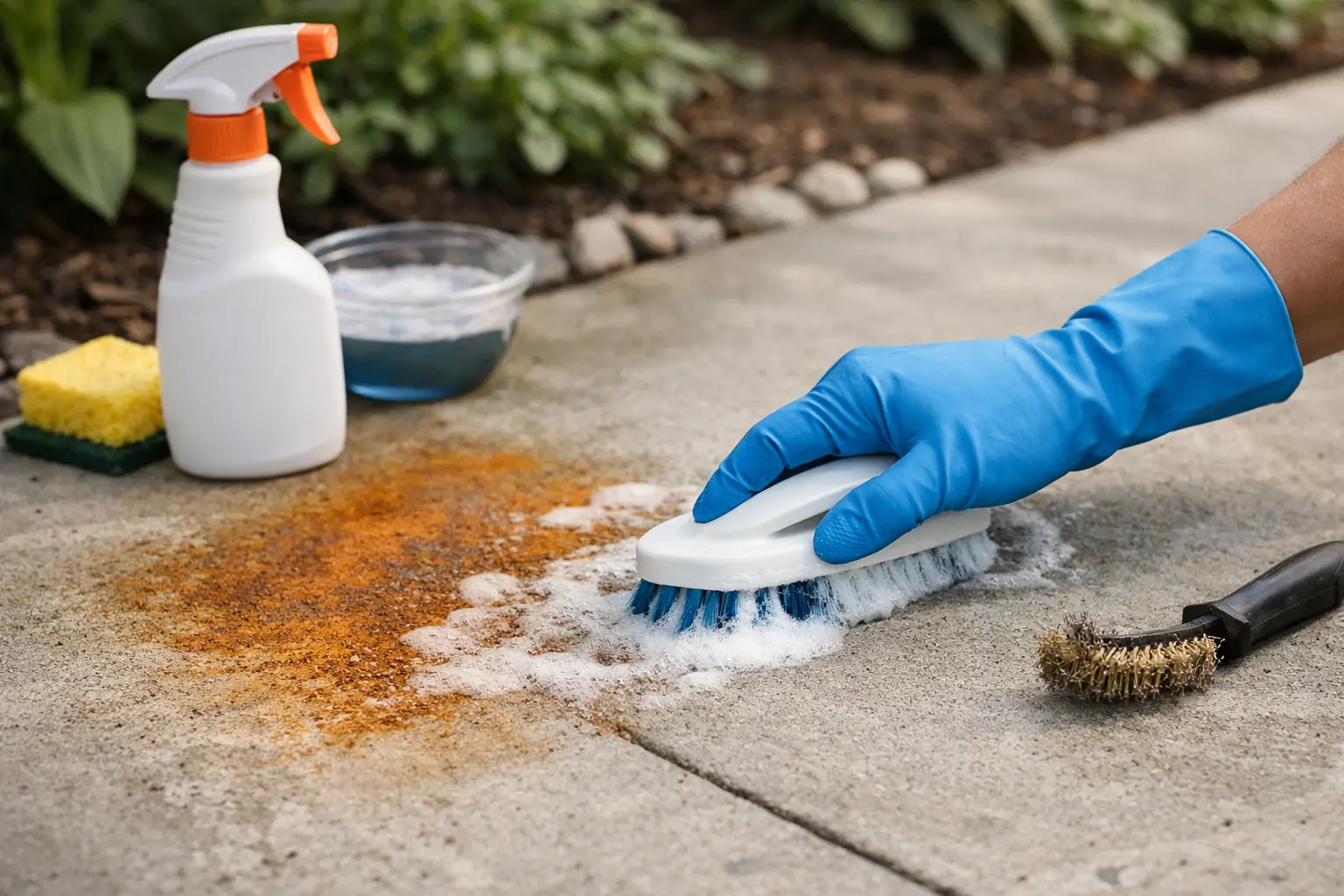
Apply the product only where needed, keep it off painted surfaces and metal fixtures, and rinse thoroughly after the recommended dwell time. Light agitation with a nonmetallic brush may help loosen stubborn staining. Do not use a wire brush. It can scratch the surface and leave behind tiny metal fragments that later rust.
Pressure washing can be useful after the treatment has done its work, but it is not the treatment itself. Excessive pressure can scar concrete, especially at close range or along edges, expansion joints, and already worn areas. On decorative concrete, a professional may use a lower-pressure rinse and a carefully selected restoration product rather than aggressive washing.
Cleaning Methods That Can Cause Bigger Problems
Home remedies are tempting because rust stains are frustrating. Some may produce a visible change, but they are not always safe or reliable for a driveway, patio, or commercial walkway.
Household vinegar is mildly acidic and can sometimes fade very light rust, but it may not reach embedded staining. Repeated applications can also affect concrete appearance, particularly if the area is not rinsed well. Lemon juice has similar limitations and is impractical for anything beyond a tiny spot.
Avoid using straight muriatic acid as a quick fix. It can react aggressively with concrete, creating a rough or bleached patch that stands out more than the original rust stain. It can also produce harmful fumes and damage nearby surfaces, plants, and drainage areas when used improperly. Bleach is not a rust remover, either. It may brighten organic staining but does little for iron oxidation.
Do not combine cleaners. Mixing acids, bleach, degreasers, or unknown products can create dangerous fumes or unpredictable reactions. If you are unsure what was previously applied to the area, rinse it thoroughly and allow it to dry before considering another product.
When Professional Treatment Is the Better Choice
Professional rust removal makes sense when staining covers a large area, has been present for years, affects decorative concrete, or is close to landscaping, siding, garage doors, pools, or drainage drains. It is also the safer option for commercial properties where appearance, pedestrian safety, and minimal disruption matter.
A qualified crew evaluates the concrete first, then chooses the proper chemistry, application method, dwell time, and rinse process. That surface-specific approach helps remove the stain while reducing the risk of damage. It also prevents the common mistake of blasting the spot with high pressure until the concrete texture changes.
For properties in the mountain climate, professional cleaning can be especially helpful when rust is mixed with black mildew, green algae, pollen, soil, or leaf staining. Each contaminant responds differently. A one-product approach may not deliver an even result across the entire surface.
WNC Wash Pro’s uses trained, surface-conscious cleaning methods to restore exterior concrete without treating every problem like a high-pressure job. For homeowners and property managers, that means less hassle, a clearer plan for protecting the surrounding property, and service backed by a 100% satisfaction guarantee.
Preventing Rust From Returning
Once the concrete is clean, prevention is often simple. Replace badly corroded furniture feet, use protective pads beneath metal planters and grills, and avoid setting wet metal tools directly on the driveway or patio. If a sprinkler system is responsible, adjust the spray pattern so iron-rich water does not repeatedly hit the same concrete area.
Concrete sealing can also help, provided the surface is fully clean and dry and the sealer is appropriate for that finish. A quality sealer reduces absorption, making future staining easier to remove. It is not a force field against rust, however. Standing water, deteriorating metal, and constant irrigation can still create discoloration over time.
For commercial entrances, sidewalks, dumpster areas, and loading zones, routine exterior maintenance is often more cost-effective than waiting for stains to become deeply embedded. Regular cleaning catches small problems before they become a larger curb-appeal issue for tenants, customers, or prospective buyers.
A Better Result Than a Brighter Spot
The goal is not merely to make rust less noticeable. It is to restore a consistent concrete appearance without leaving a harshly etched circle or an obvious lighter patch around the treated area. That takes the right chemistry, controlled application, and patience.
If the stain is small and the concrete is plain, a concrete-safe rust remover and careful testing may be enough. If it is widespread, stubborn, or near surfaces you cannot afford to damage, choosing trained local help is the safer route. Your driveway, patio, or storefront should look cared for, not like it lost a fight with a bottle of acid.