
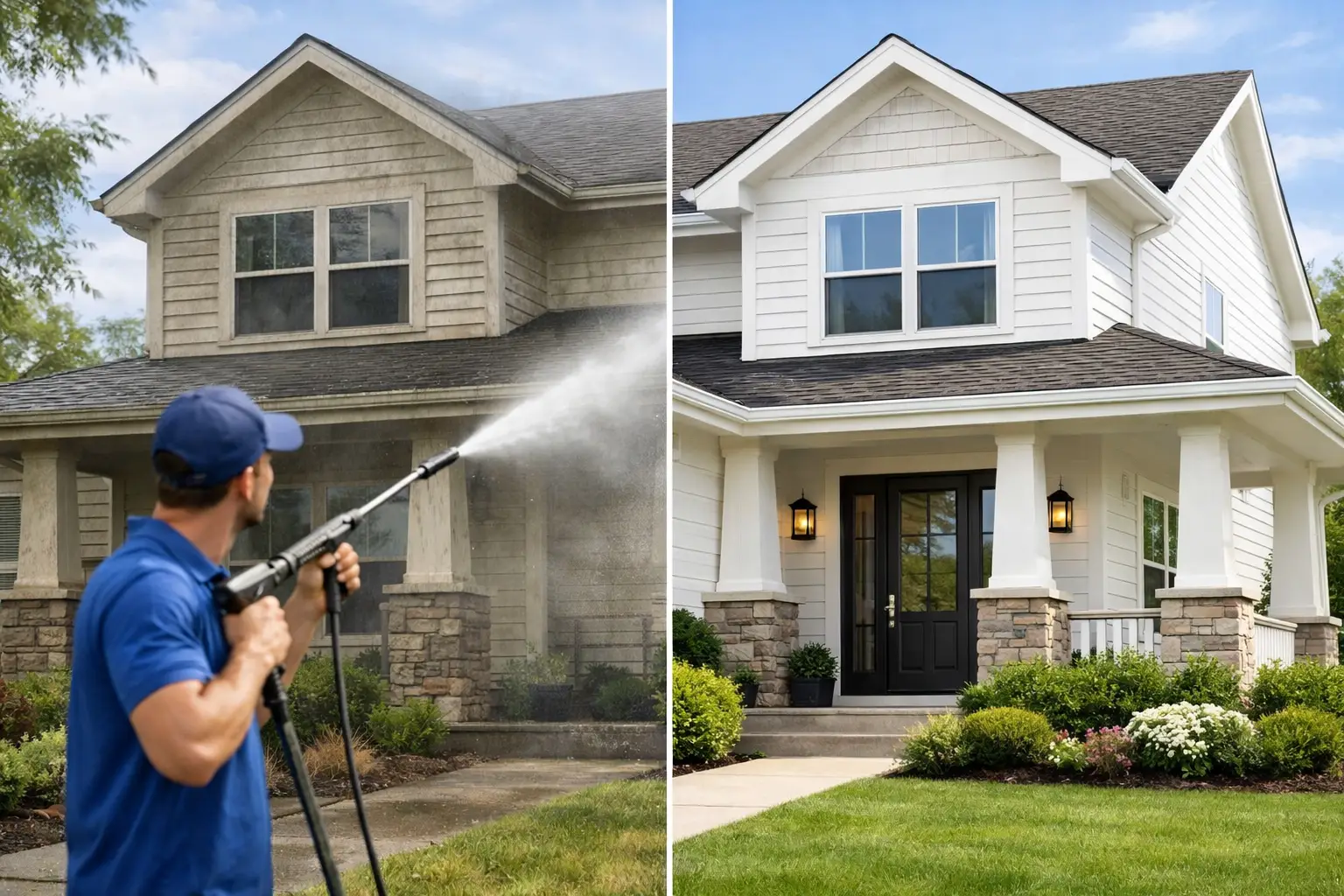
Curb Appeal Transformation Starts With a Clean Exterior
A driveway can look permanently gray until the first pass of professional cleaning reveals the original concrete underneath. That kind of visible change is why a curb appeal transformation often starts before paint, landscaping, or expensive renovations. In Asheville, Hendersonville, and throughout Western North Carolina, damp weather, shade, pollen, and seasonal debris give algae, mildew, and grime plenty of opportunities to settle onto the surfaces that frame your home.
Cleaning those surfaces does more than make a property look cared for. It helps homeowners protect siding, roofing, wood, and concrete from the buildup that can shorten their useful life or make minor maintenance problems harder to spot. For homeowners preparing to sell, welcoming guests, or simply cleaning their castle after another wet season, the right exterior cleaning plan can produce a dramatic improvement without a major construction project.
Why Exterior Buildup Changes the Way a Property Looks
Curb appeal is built from the details people notice in the first few seconds: the condition of the roofline, the brightness of the siding, the path to the front door, and whether the driveway appears maintained. Organic growth can quietly undermine every one of those details.
Green algae on vinyl siding makes a home appear neglected, even when the siding itself is in good condition. Black roof streaks can make a newer roof look older than it is. Mildew on a deck, fence, or retaining wall dulls the color of the material and may create slick areas underfoot. A concrete driveway can collect tire marks, rust stains, leaf tannins, and dark biological growth that make the entire front of a property feel less inviting.
In our mountain climate, these issues are rarely just a matter of dust. Humidity and shaded areas support recurring mold, mildew, algae, and lichen growth. Pollen then adds a yellow-green film across painted surfaces, gutters, porches, and outdoor furniture. Waiting until the buildup is heavy can mean a more difficult job and a less consistent appearance from one area of the property to the next.
A Curb Appeal Transformation Is About the Right Order
Many property owners begin with the most obvious project, such as replacing mulch or painting the front door. Those improvements can help, but they will not have their full impact when the roof is streaked, the siding is dingy, and the walkway is dark with mildew.
A smarter approach is to clean the largest exterior surfaces first, then refresh the smaller visual details. Start at the top of the property with the roofline, gutters, and siding. Move outward to decks, fences, porches, and patios. Finish with concrete surfaces, including driveways, sidewalks, entry steps, and pool areas. Once the background is clean, landscaping and decorative upgrades look more intentional rather than trying to compete with visible grime.
This order also makes practical sense. House washing can leave residue or debris on nearby concrete, and gutter cleaning may release material onto lower surfaces. Cleaning from top to bottom helps avoid repeating work and gives the exterior a more even finished appearance.
Roof Cleaning Can Reset the Entire Exterior
Dark roof streaks are commonly caused by algae, not a roof that needs immediate replacement. The wrong cleaning method, however, can create expensive damage. High pressure is not appropriate for many roofing materials because it can disturb shingles, remove protective granules, or force water where it does not belong.
Professional roof cleaning typically relies on a surface-safe soft washing approach. The cleaning solution is applied carefully to treat the organic growth, then the weather completes much of the rinsing process. Results may continue to improve after the service as treated algae releases from the roof. This is one of the clearest examples of why cleaning power should match the surface rather than using the highest pressure available.
House Washing Brings Color Back Into View
Homeowners are often surprised by how much their siding color has been muted by pollen, mildew, spider webs, and airborne dirt. Soft washing is designed for delicate exterior surfaces such as vinyl, painted siding, stucco, and trim. Instead of blasting contamination away with excessive pressure, it treats and removes the organic growth that causes discoloration.
A careful house wash can brighten trim, clean soffits, refresh shutters, and reduce the dirty streaking that collects below windows and gutters. It can also help reveal areas that actually need repair, such as failing caulk, damaged trim, or peeling paint. Cleaning does not replace maintenance, but it makes maintenance decisions clearer.
Concrete Cleaning Creates a Stronger First Impression
Driveways and walkways cover a large visual area, so their condition has an outsized effect on curb appeal. A clean concrete path naturally directs attention toward the entrance. A stained or algae-covered path can make a home look less maintained before a visitor reaches the front door.
Concrete usually benefits from professional pressure washing equipment and techniques that clean evenly without leaving the striping or wand marks common with do-it-yourself work. The exact method depends on the condition of the concrete and the stain involved. Oil, rust, fertilizer stains, tire marks, and organic growth do not all respond to the same treatment.
For concrete that has been cleaned and restored, sealing may be worth considering. A quality sealer can help reduce future staining and make routine upkeep easier. It is not necessary for every driveway, and older or damaged concrete may need repairs first, but it can be a practical next step for high-traffic areas.
Surface Safety Matters More Than Maximum Pressure
Pressure washing is a useful tool, but it is not a one-method service. Wood, roofing, painted surfaces, masonry, and concrete each have different limits. A powerful stream that works well on a durable concrete driveway may scar a wood deck, damage siding, or strip paint from trim.
That is why trained exterior cleaning professionals choose between soft washing, controlled pressure washing, specialized stain treatment, and hand-detailing based on the material and contamination. The goal is not simply to make a surface look clean for a few days. It is to remove the cause of the staining while protecting the property.
Plants and surrounding outdoor areas also deserve attention. Proper preparation, controlled application, rinsing, and cleanup help safeguard landscaping while the exterior is cleaned. If a contractor cannot explain how they will handle your roof, siding, wood, concrete, and nearby plants differently, it is reasonable to ask more questions before scheduling service.
Small Details That Make Clean Surfaces Stand Out
Once the main cleaning is done, a few focused improvements can complete the effect without adding unnecessary cost. These are most effective after washing because the home is no longer competing with layers of grime.
- Clear leaves and debris from gutters, roof valleys, porch corners, and landscape beds.
- Trim shrubs that block windows, crowd walkways, or keep exterior surfaces damp.
- Replace burned-out entry lights and clean glass fixtures.
- Refresh faded house numbers, mailbox hardware, and the front-door area.
- Add fresh mulch only after nearby sidewalks, curbs, and driveways have been cleaned.
It depends on the property, of course. A wooded home with a long driveway may see the biggest visual improvement from roof, siding, and concrete cleaning. A townhome or commercial storefront may benefit most from bright sidewalks, clean entry glass, and a mildew-free building exterior. The common thread is making the property look actively cared for from the street to the front door.
When to Plan Exterior Cleaning in Western North Carolina
Spring is a popular time for house washing because it removes winter grime and heavy pollen before outdoor gatherings begin. Fall is another smart window, especially after leaves have dropped and before colder weather arrives. Still, curb appeal maintenance should be based on the condition of the property rather than a calendar alone.
Homes surrounded by trees, properties with deep shade, and north-facing walls often need more frequent service. Roofs and siding may show algae sooner in these areas. Driveways near irrigation, wooded lots, or damp slopes can also develop slick growth more quickly. A recurring maintenance plan can keep buildup from reaching the point where it becomes highly visible or difficult to remove.
For a home going on the market, exterior cleaning should happen early enough to support listing photos, showings, and open houses. Real estate buyers notice visible maintenance signals. A clean roofline, fresh-looking siding, and bright concrete do not guarantee a sale, but they help the property present as cared for before anyone steps inside.
Get the Results Without the Weekend Hassle
Renting equipment and spending a weekend cleaning can be tempting, especially for a small patio or short walkway. The trade-off is time, uneven results, and the risk of using the wrong pressure or cleaning solution on a costly surface. Roofs, upper-level siding, stained concrete, and larger properties are usually better handled by a trained crew with the right equipment and surface-specific methods.
WNC Wash Pro’s provides professional soft washing and exterior cleaning for homeowners and commercial properties that need visible results without unnecessary risk to siding, roofing, wood, or concrete. A clear quote and a 100% satisfaction guarantee make it easier to plan the work around your property’s actual needs.
Your front exterior does not need a full renovation to look like a property you are proud to come home to. Start with the surfaces that have been hiding under algae, pollen, mildew, and grime, then let the clean foundation make every other improvement count.