
How to Clean Wood Deck Safely and Thoroughly
A wood deck can go from a favorite gathering place to a slippery, gray-green eyesore in one wet season. In Asheville and across Western North Carolina, shade, humidity, pollen, and regular rainfall create ideal conditions for mildew and algae. Knowing how to clean wood deck surfaces correctly helps restore their appearance while protecting the boards, fasteners, and finish underneath.
The goal is not to blast away every stain with maximum pressure. Wood is softer than concrete, and an aggressive cleaning approach can leave permanent wand marks, raised grain, splintering, or stripped stain. A careful wash removes organic buildup and surface grime without creating a more expensive repair project.
Start by Identifying What Is on the Deck
Not every dark mark on a deck needs the same treatment. Green or black film is often algae, mildew, or mold-related organic growth. Yellow dust may be pollen. Gray, weathered boards may simply have oxidized from sun and moisture exposure. Rust stains around furniture or fasteners, grease near a grill, and tannin marks from wet leaves each call for a more targeted approach.
Check the deck while it is dry and look closely at high-traffic areas, shaded corners, steps, railings, and the spaces around planters. If boards feel soft, spongy, deeply cracked, or loose underfoot, cleaning should wait until needed repairs are made. Washing cannot correct wood rot, and forcing water into damaged boards can make the problem worse.
Also consider the deck’s finish. Bare wood, a clear sealer, semi-transparent stain, and solid-color deck stain all respond differently to cleaners. If you are unsure what was previously applied, test your cleaning solution on a small, inconspicuous section first.
What You Need to Clean a Wood Deck
Most routine deck cleaning does not require complicated equipment. You will need a broom or blower for debris, a garden hose with an adjustable spray nozzle, a deck-safe cleaner, a stiff synthetic-bristle brush, and protective gloves and eyewear. Use a plastic or synthetic brush rather than a wire brush, which can scar the wood and leave metal fragments behind.
For widespread mildew and algae, choose a cleaner labeled for exterior wood and follow its dilution instructions exactly. Oxygen-based cleaners are often a good option for routine organic staining because they are effective without being as harsh as chlorine bleach. Some heavily stained surfaces need a professional-grade treatment, but stronger chemistry must be selected and applied with care.
Bleach is not automatically the answer. It can lighten or discolor wood, harm nearby plants, corrode metal hardware, and weaken some finishes when used incorrectly. It may also remove the visible growth without fully addressing the conditions that allowed it to return. The right cleaner depends on the wood species, existing stain, level of growth, and nearby landscaping.
How to Clean Wood Deck Boards Without Damage
Begin on a dry day with mild temperatures. Avoid cleaning in direct, intense sun if possible, since cleaner can dry before it has time to work. Move furniture, grills, rugs, planters, and decorations off the deck. Sweep away leaves, pine needles, loose dirt, and debris trapped between boards. This small step makes the actual cleaning more even and keeps organic material from holding moisture against the wood.
Before applying cleaner, protect nearby plants by gently rinsing them with water. Cover delicate landscaping only if necessary, and do not leave coverings in place long enough to trap heat. Close nearby windows and doors, and keep pets and children off the work area until the deck is rinsed and dry.
Wet the deck lightly with a garden hose. The boards should be damp, not flooded. Apply the deck cleaner in manageable sections, working from one end toward an exit point so you are not stepping across treated areas. Give the solution the dwell time listed on its label. That waiting period is where much of the cleaning happens.
Do not let the cleaner dry on the wood. Agitate stubborn spots with a stiff synthetic brush, following the direction of the grain. Focus on slick areas, stair treads, railings, and locations beneath planters or furniture where moisture stays trapped. A steady scrub is safer and usually more effective than trying to compensate with excessive water pressure.
Rinse thoroughly from the highest point down, pushing debris and cleaner away from the home. Continue rinsing until the runoff is clear and there is no slippery residue underfoot. Incomplete rinsing can leave streaks, interfere with future staining, and leave cleaner in contact with plants or hardware.
Should You Pressure Wash a Wood Deck?
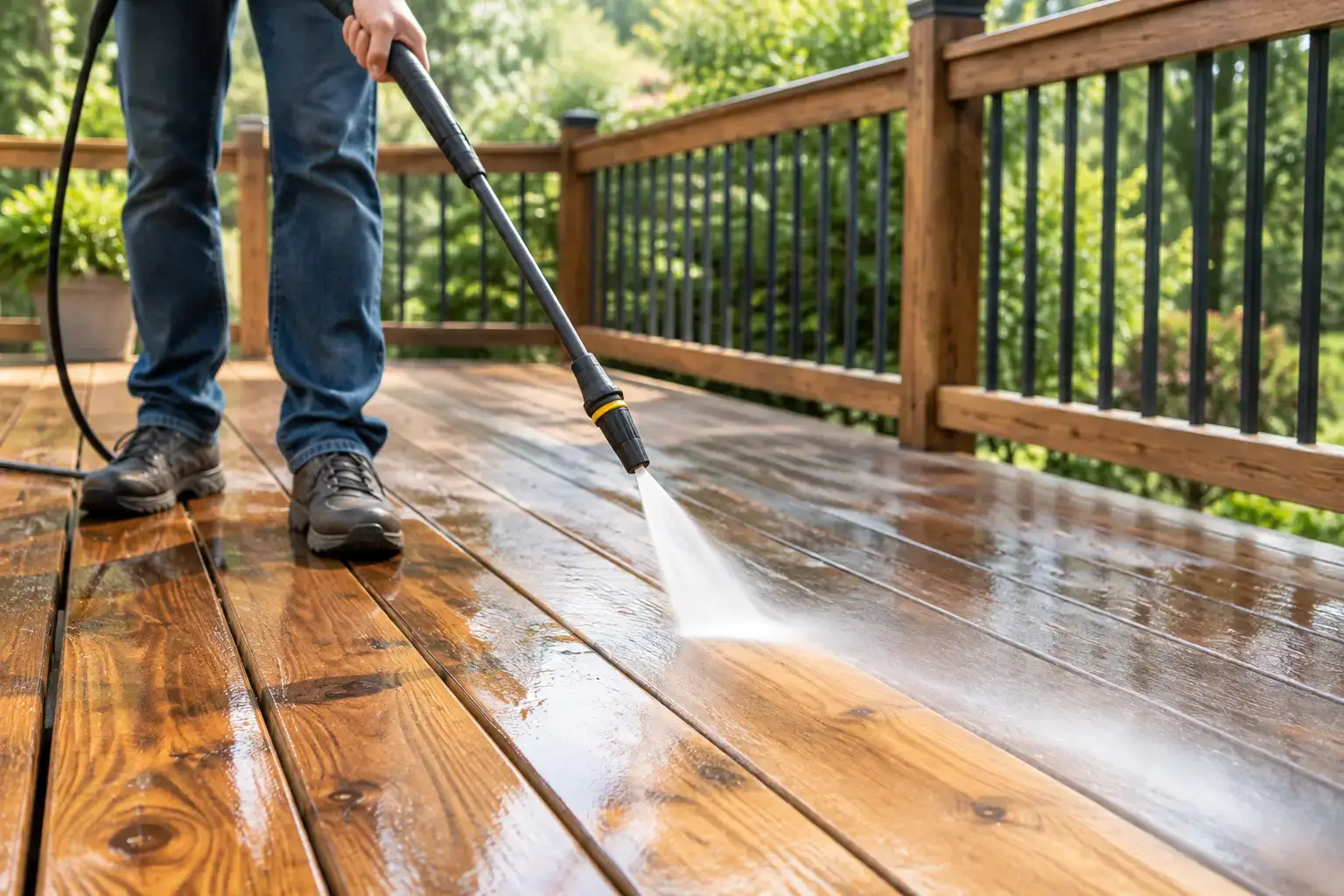
A pressure washer can be useful on some wood decks, but it is not a one-setting solution. Used at the wrong pressure, held too close, or aimed into board edges, it can carve the surface and create fuzzy wood fibers that need sanding before sealing. Soft woods such as pine and cedar are especially easy to damage.
If you use a pressure washer, use a wide fan tip, keep the nozzle moving, and maintain a consistent distance from the boards. Start with the lowest effective pressure and test an inconspicuous location. Never use a pinpoint tip, and do not concentrate the spray in one spot to chase a stain.
For many decks, low-pressure rinsing after a proper cleaner has had time to work is the safer choice. Professional soft washing uses controlled water pressure and surface-appropriate solutions to remove organic buildup without treating the wood like a driveway. That distinction matters when your deck has expensive stain, aging boards, detailed railings, or landscaping close by.
Let the Deck Dry Before Sealing or Staining
Cleaning is only one part of protecting the wood. Once the deck is clean, let it dry fully before applying a water repellent, sealer, or stain. Drying time varies with temperature, humidity, shade, and the thickness of the boards. In the damp mountain climate, give the surface more time than you think it needs, especially after a deep wash.
A simple water test can help determine whether a previously sealed deck needs maintenance. Sprinkle a few drops of water onto a dry board. If the water beads up, the existing protection may still be doing its job. If it quickly soaks into the wood and darkens the surface, it may be time to apply a compatible sealer or stain after cleaning and drying.
Do not seal over active mildew, trapped moisture, or peeling finish. That only locks in the problem and can lead to uneven color or early failure. If old stain is peeling across large areas, stripping, sanding, or refinishing may be necessary before applying a new coating.
When It Is Time to Call a Professional
A deck cleaning project is a good DIY job when buildup is light, boards are in sound condition, and you know the previous finish. It is worth bringing in trained help when the deck is heavily coated in algae, has stubborn black staining, sits near delicate landscaping, includes multiple levels, or has an older finish that you do not want to ruin.
Professional cleaning is also a smart choice before listing a home, hosting an event, or preparing a deck for staining. WNC Wash Pro’s uses surface-safe cleaning methods designed to remove mildew, algae, pollen, and grime while helping protect the wood beneath. The right approach can make a weathered deck look cared for again without the risk of harsh pressure or trial-and-error chemicals.
A clean deck is easier to enjoy, safer when wet, and more prepared for the next round of mountain weather. Keep leaves and furniture from trapping moisture, rinse pollen away as it builds up, and address green growth before it gets slick. Small maintenance habits can help your deck stay ready for cookouts, quiet mornings, and everything in between.