
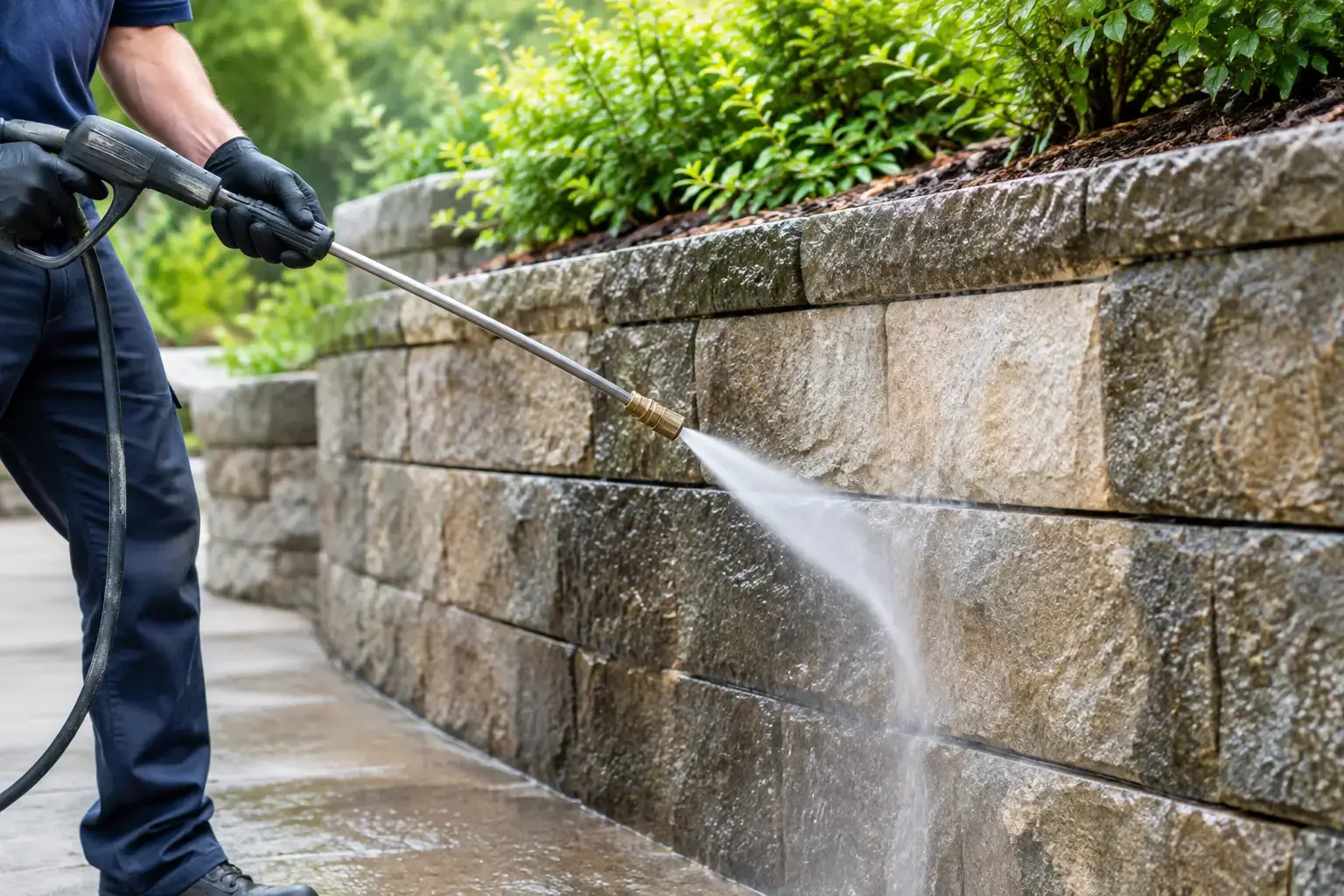
Retaining Wall Cleaning Without Surface Damage
A retaining wall can make a steep Western North Carolina yard feel finished, usable, and well cared for. But after a wet season, retaining wall cleaning often becomes necessary when green algae, black mildew, orange rust stains, and soil streaks begin covering the stone or block. What starts as a cosmetic issue can also hold moisture against the surface, hide drainage concerns, and make a walkway or patio area feel neglected.
The right cleaning method depends on what the wall is made of, what is growing on it, and how sound the structure is. A trained exterior cleaning team can restore the wall’s appearance without blasting away mortar, damaging soft stone, or forcing water where it does not belong.
Why retaining walls get dirty so quickly here
Asheville, Hendersonville, Biltmore Forest, and surrounding mountain communities have the exact conditions organic growth likes: humidity, rainfall, shade, leaf debris, and fluctuating temperatures. A wall beneath trees or along the north side of a property may stay damp for long stretches, giving algae, mildew, moss, and lichen a place to grow.
Retaining walls also collect runoff. Soil, mulch, fertilizer, pollen, and minerals can wash down a slope and settle onto the face of the wall. On concrete block and manufactured stone, this buildup often looks like dull gray or brown staining. Natural stone may develop dark patches in its pores, while walls near irrigation systems can show white mineral deposits or orange discoloration from iron-rich water.
A dirty wall does not automatically mean it is failing. Still, buildup can make it harder to notice loose capstones, cracked mortar, leaning sections, clogged weep holes, or drainage problems behind the wall. Cleaning gives property owners a much clearer view of the surface and helps keep small maintenance needs from going unnoticed.
Retaining wall cleaning is not always pressure washing
Many people see a dirty masonry wall and assume more pressure is the answer. That approach can create expensive problems. High pressure can scar concrete block, etch brick, strip color from some manufactured stone, loosen aging mortar, and dislodge sand or gravel from joints. It can be especially risky on older walls, dry-stacked stone, deteriorating mortar, and walls with visible cracks.
For organic staining, a surface-safe soft washing approach is often the better choice. Soft washing uses low-pressure application and professional cleaning solutions designed to break down algae, mildew, moss, and similar growth at the source. The wall can then be rinsed carefully rather than aggressively blasted.
That does not mean every wall should be soft washed in the same way. Dense poured concrete can usually tolerate more mechanical cleaning than limestone or sandstone. A structurally sound segmental block wall may need a different process than hand-laid fieldstone. The safest plan starts with identifying the material, testing the surface, and adjusting the cleaning method to the condition of the wall.
Common wall materials need different care
Concrete retaining blocks are durable, but their textured faces can trap algae and dirt. Cleaning solutions and controlled rinsing can lift buildup without roughening the finish. Brick walls require extra care around mortar joints, particularly if the wall is older or has areas of deterioration.
Natural stone calls for a gentler touch. Some stone is porous and can absorb cleaning products or retain moisture, while softer varieties can chip or flake under excessive pressure. Manufactured veneer stone may look rugged, but its color coating and mortar joints can be vulnerable to harsh methods.
Timber retaining walls are a separate category. They may have mildew and algae, but they can also have rot, splitting, or insect damage that cleaning will not fix. Wood benefits from low-pressure cleaning and an honest inspection before any work begins.
What a professional cleaning process should address
A good retaining wall cleaning service is about more than making the front face look brighter for a few days. The goal is to remove the buildup responsibly while protecting nearby landscaping, hardscapes, and the wall itself.
Before cleaning, the crew should look for damaged mortar, loose stone, crumbling block, unstable soil, exposed drainage outlets, and areas where water is pooling. Those conditions may not prevent cleaning, but they can change the approach. For example, a wall with open joints should not receive a forceful rinse, and a wall with active drainage problems may need repair before it is cleaned.
Plants along the wall also deserve attention. Professional crews protect landscaping by pre-wetting vegetation, using appropriate solution strength, controlling runoff, and rinsing surrounding areas thoroughly. This matters on terraced yards where cleaning runoff can move downhill toward flower beds, patios, or a neighbor’s property.
At WNC Wash Pro’s, surface-safe cleaning is built around matching the process to the material instead of treating every exterior surface the same. That is especially valuable for retaining walls, where appearance and structural performance are closely connected.
Stains that may need more than a standard wash
Green and black organic growth usually responds well to a professional soft wash. Other stains can be more complicated. Orange staining may be caused by rust, iron-rich irrigation water, metal furniture, or exposed rebar. White chalky residue, called efflorescence, is often a sign that moisture is moving through the masonry and leaving salts behind as it evaporates.
Oil stains near a driveway, tire marks, paint, and graffiti each call for different products and techniques. Trying random household acids, bleach mixtures, or harsh degreasers can discolor stone, damage surrounding plants, or leave permanent blotches. Acid-based products, in particular, should never be an automatic answer for masonry. They can react unpredictably with certain stone, mortar, and concrete finishes.
When a stain keeps returning, cleaning may only be one part of the solution. Repeated efflorescence can point to moisture behind the wall. Constant green algae may indicate overspray from irrigation, heavy shade, or drainage that directs water across the face of the wall. Removing the stain is worthwhile, but correcting the source helps the results last longer.
How often should a retaining wall be cleaned?
Most property owners benefit from having visible buildup addressed every one to three years. Walls in deep shade, near dense landscaping, below rooflines, or beside irrigation zones may need attention more often. A wall in an open, sunny location with good drainage may stay clean longer.
The best time is before growth becomes thick and established. Light algae is easier to treat than a wall covered in moss, and early cleaning reduces the temptation to use damaging pressure later. Spring is a popular time to refresh outdoor spaces after winter moisture and pollen, while fall cleaning can be helpful after leaves and summer humidity have done their work.
Between professional visits, avoid piling mulch or soil against the face of the wall. Keep weep holes and drainage outlets clear, redirect sprinklers that hit the wall every day, and trim back vegetation that prevents airflow. A gentle garden-hose rinse can remove loose dirt, but avoid using a pressure washer unless you understand the wall material and can control the force.
When cleaning should wait
There are times when the wall needs a mason or landscape contractor before it needs a wash. Significant leaning, bulging, widespread mortar loss, loose capstones, deep cracks, soil washing out from behind the wall, or blocked drainage are structural warnings. Cleaning can improve visibility, but it cannot stabilize a failing wall.
It is also wise to postpone cleaning during freezing conditions or when fresh mortar has not fully cured. Water entering tiny cracks can expand when it freezes, and newly repaired joints need time to harden properly. A qualified exterior cleaning professional will be comfortable saying when a wall should be repaired first rather than rushing into a service.
A clean retaining wall makes the entire property feel more intentional, from the driveway and landscaping to the patio below it. More importantly, careful cleaning protects the materials that hold your outdoor spaces in place. If your wall is green, streaked, or stained, choose a process that restores the surface without taking chances on the structure behind it.