
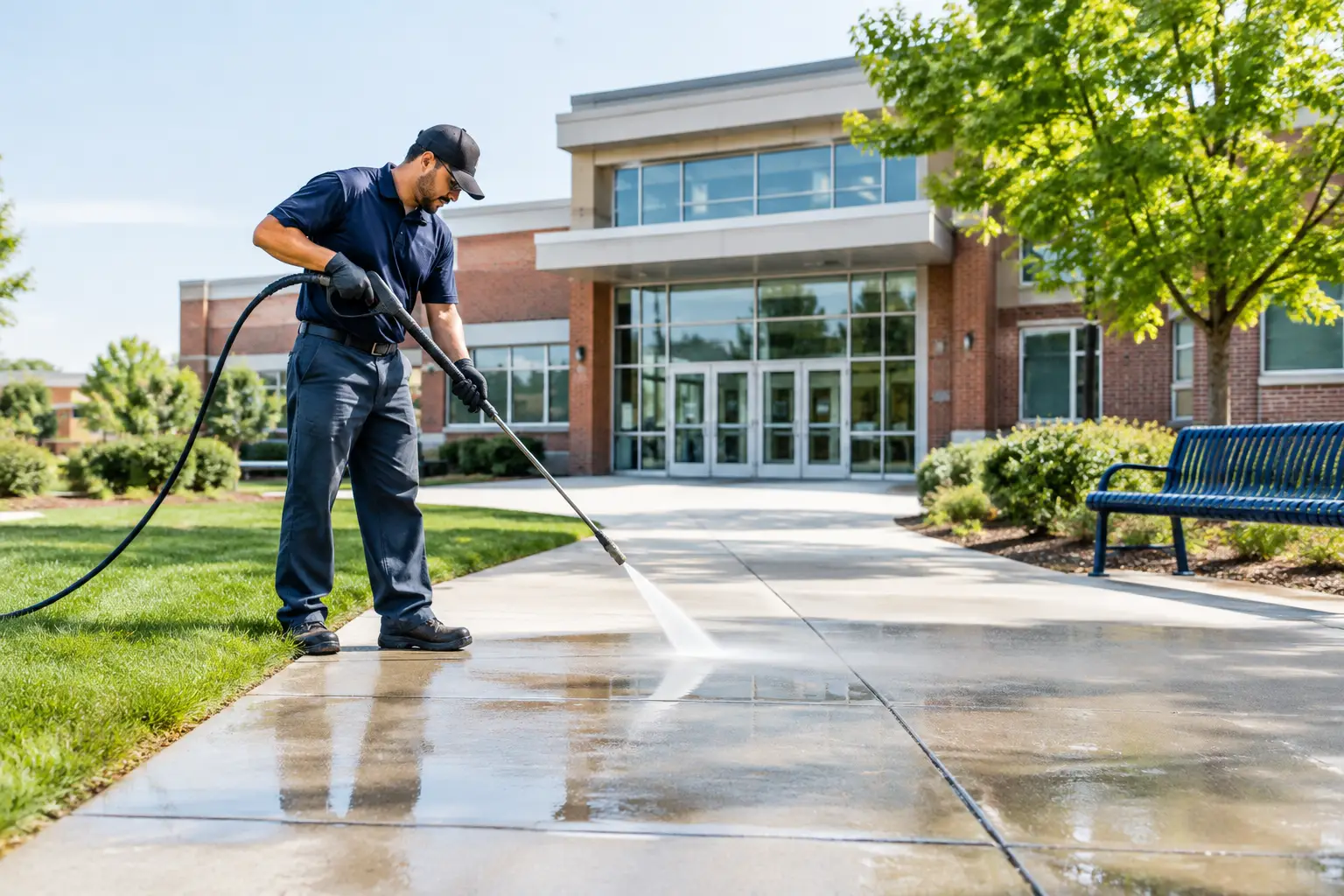
School Walkway Cleaning for Safer Grounds
A clean campus starts before a student, parent, teacher, or visitor reaches the front door. School walkway cleaning removes the dark algae, slick mildew, gum, pollen, leaf tannins, and tracked-in grime that can make sidewalks look neglected and become hazardous after rain. In Western North Carolina, where shade, humidity, and changing seasons keep exterior surfaces damp, this work is part of caring for a safe, welcoming property.
The visible improvement matters, but appearance is only one part of the job. Walkways lead people through busy drop-off areas, athletic facilities, portable classrooms, playgrounds, entrances, and parking lots. When those paths are slippery or heavily stained, they affect daily operations as well as first impressions.
Why School Walkway Cleaning Matters
Concrete is durable, but it is not maintenance-free. Its porous surface holds moisture, organic growth, dirt, and residue from shoes, tires, food, and landscaping. On shaded paths or north-facing entrances, algae and mildew can return quickly. What begins as a green or black film can become noticeably slick when wet.
For a school, church school, daycare, or educational campus, that creates a concern that deserves attention. Students may run between buildings. Families may be carrying bags, pushing strollers, or guiding younger children. Staff members and delivery drivers use the same sidewalks throughout the day. Keeping common walking routes clean helps property managers reduce obvious slip hazards while maintaining an orderly, cared-for environment.
There is also a practical property-protection reason to clean routinely. Organic buildup and embedded grime can leave concrete looking permanently discolored if they are allowed to sit for long periods. Regular professional service helps preserve a more even appearance and can reduce the need for aggressive restoration later.
The Right Method Depends on the Surface and Stain
Not every walkway needs the same cleaning approach. A flat, open concrete sidewalk with tire marks may benefit from professional pressure washing with commercial surface-cleaning equipment. A heavily shaded walkway covered in algae may need a targeted cleaning solution first, followed by a controlled rinse. The goal is not simply to blast the concrete with as much pressure as possible.
Too much pressure, used too closely or inconsistently, can leave wand marks, etch weaker concrete, damage expansion-joint material, or create an uneven finish. It can also push dirty runoff into nearby planting beds, doorways, and drains. Trained exterior cleaning crews adjust the process based on the age and condition of the concrete, the type of buildup, drainage, nearby landscaping, and the activity around the area.
A surface cleaner is often the best tool for large concrete sections because it cleans more evenly than a pressure-washing wand alone. Detail work around corners, curbs, ramps, steps, handrails, and entry thresholds may require a different technique. If algae or mildew is the main issue, a surface-safe treatment can help address the organic growth rather than only removing its top layer.
Common Walkway Problems Around Schools
Campus sidewalks face more than ordinary dust. Gum spots can harden into dark circles that stand out on light concrete. Pollen collects in spring, especially around covered entries and low-traffic corners. Leaves and acorns can stain walkways in the fall, while de-icing products and winter moisture may leave residue near doors and steps.
Food spills, sports drink stains, paint marks, and rust from outdoor furniture or irrigation can also require specialized treatment. Some stains lighten significantly with cleaning but may not disappear completely, particularly if they have penetrated old or worn concrete. A reputable contractor should set clear expectations before work begins instead of promising that every years-old stain will vanish.
Plan Cleaning Around the School Schedule
Timing is one of the most important parts of a successful school walkway cleaning project. The safest, least disruptive schedule is often during school breaks, teacher workdays, weekends, or evening hours after traffic has ended. Larger campuses may be cleaned in phases so entrances and accessible routes remain available.
Before the crew arrives, the facility team should identify priority areas. Main entrances, bus loops, covered walkways, ramps, cafeteria exits, restrooms with exterior access, athletic paths, and high-traffic stair landings usually belong at the top of the list. A walk-through can also reveal drainage problems, cracked sections, loose handrails, or low spots that continue to hold water after cleaning. Those conditions are not solved by washing alone, but spotting them is valuable for maintenance planning.
Communication keeps the work organized. Staff should know which entrances will be temporarily closed and where visitors should walk instead. Parking spaces may need to be cleared, and outdoor furniture, trash receptacles, portable signs, and planters may need to be moved or protected. Professional crews should use visible caution signage and manage hoses carefully to avoid creating new trip hazards while they work.
For campuses with children on site, it is especially wise to allow adequate drying time before the area reopens. Drying time depends on the weather, shade, concrete texture, and the amount of water used. A bright, breezy afternoon is different from a humid morning under a covered breezeway.
What a Professional Cleaning Process Should Include
Quality results begin with inspection, not equipment. A trained contractor looks for organic growth, oil or gum buildup, drainage patterns, fragile concrete edges, nearby windows, electrical fixtures, landscaping, and areas where water could enter the building. That evaluation guides both the cleaning method and the safety plan.
The cleaning itself should be thorough but controlled. Depending on the condition of the walkway, the process may include pretreating algae and stains, using a commercial surface cleaner for broad concrete areas, detail-cleaning edges and steps, and rinsing away residue. Crews should take care around painted curbs, rubberized surfaces, playground equipment, landscaping, and exterior doors.
Runoff management matters, too. Cleaning water can carry dirt, debris, and treatment residue. Responsible contractors plan their work around storm drains and site conditions, rather than allowing dirty water to flow wherever it goes. On a larger campus, this may mean dividing the project into zones and controlling the rinse direction.
After cleaning, a final walk-through is the right time to check for missed spots, remaining gum, stubborn stains, and sections that may need additional attention. WNC Wash Pro’s uses trained methods designed to clean exterior surfaces effectively while treating the property with care, and a 100% satisfaction guarantee gives managers added confidence when planning visible campus maintenance.
How Often Should a Campus Clean Its Walkways?
There is no single schedule that fits every school. A small, sunny campus with limited foot traffic may only need a deep cleaning once a year, plus spot treatment as needed. A larger property with mature trees, shaded buildings, rainy conditions, athletic events, and heavy daily traffic may benefit from cleaning twice a year or more.
In Asheville and surrounding mountain communities, many property managers schedule a spring cleaning to remove winter grime and pollen, then another service in late summer or fall to address algae, leaf staining, and high-traffic buildup. Covered walkways and shaded entrances may need more frequent attention than open sidewalks because they stay damp longer.
The best indicator is the surface itself. If sidewalks look green, black, slippery, or noticeably stained, waiting for a calendar date may not make sense. Addressing the buildup early is usually simpler than allowing it to spread across an entire pathway.
Cleaning Is One Part of Walkway Safety
Professional cleaning can improve traction and appearance, but it does not replace routine inspection or needed repairs. Cracks, uneven slabs, lifted edges, poor drainage, loose railings, and failing caulk around entrances require separate maintenance. A clean walkway makes these issues easier to see, which can help facilities teams prioritize repairs.
Landscaping also plays a role. Overgrown shrubs can keep a sidewalk in constant shade, while clogged gutters or poorly directed downspouts may create damp areas that feed algae growth. In some cases, trimming vegetation, improving drainage, or adjusting irrigation will help keep paths cleaner for longer.
For school leaders and property managers, the goal is straightforward: give every person arriving on campus a clear, clean path to follow. Regular walkway care is a practical way to protect the concrete, support safer movement, and show families that the details of the property are being looked after.