
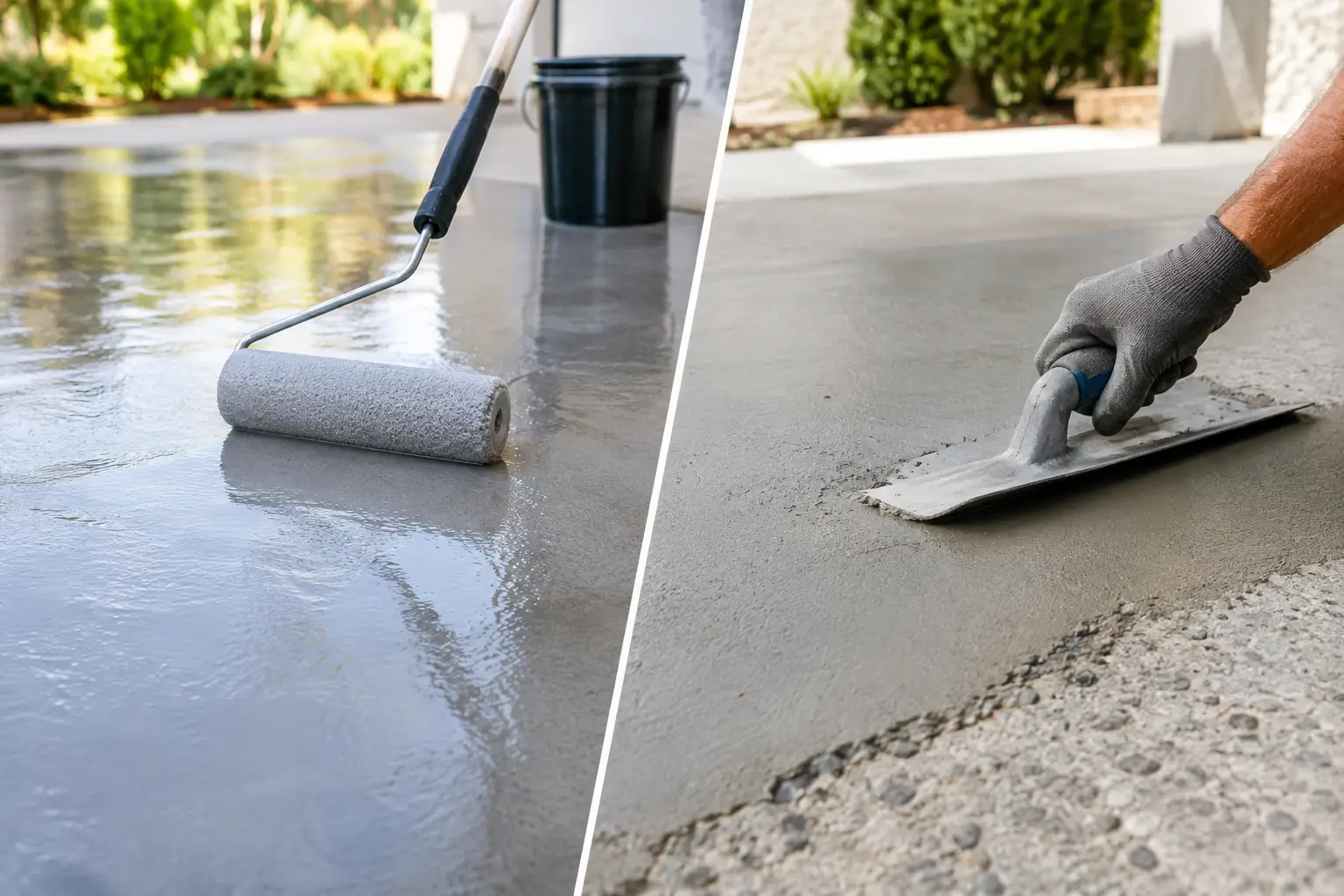
Sealing Versus Resurfacing Concrete: Which Fits?
A driveway can look worn long before it is structurally unsound. Dark mildew, red-clay residue, tire marks, faded color, and a rough surface often make homeowners wonder whether they need a full cosmetic repair. When weighing sealing versus resurfacing concrete, the right choice comes down to what is happening below the surface – not just how the concrete looks from the curb.
For Asheville-area homes and commercial properties, concrete deals with humid summers, frequent rain, leaf tannins, algae growth, and occasional freeze-thaw cycles. A professional cleaning can reveal whether your slab is a good candidate for sealing or whether it needs the more involved repair process of resurfacing.
Sealing Versus Resurfacing Concrete: The Core Difference
Concrete sealing is a protective treatment. After the surface is properly cleaned and allowed to dry, a sealer is applied to help limit water absorption, staining, salt damage, and contamination from oil or organic growth. It is designed to preserve sound concrete and make ongoing maintenance easier.
Concrete resurfacing is a repair and renewal process. A contractor prepares the existing slab, addresses appropriate surface defects, and applies a cement-based overlay or resurfacing material over the top. This creates a new finished layer that can improve the appearance of worn, discolored, pitted, or lightly damaged concrete.
The key distinction is simple: sealing protects the concrete you already have, while resurfacing changes the visible surface. Neither service is automatically better. A sealer cannot hide major spalling, wide cracks, or badly uneven concrete. Resurfacing, on the other hand, is unnecessary when the slab is solid and only needs protection after a thorough cleaning.
When Concrete Sealing Is the Better Choice
Sealing makes sense when the concrete is in generally good condition. The surface may be dull, stained, or exposed to moisture, but it should still be stable, level, and free of significant deterioration.
A driveway, patio, walkway, pool deck, or storefront sidewalk may be a strong sealing candidate if cleaning removes the buildup and reveals only minor cosmetic wear. Small hairline cracks can sometimes be addressed before sealing, depending on their cause and movement. The goal is to prevent a manageable surface from becoming a larger repair project.
In Western North Carolina, moisture is a major reason to consider sealing. Concrete is porous, which means water, dirt, oil, de-icing materials, and organic staining can work their way into the surface. Once moisture enters and temperatures drop, freeze-thaw pressure can contribute to surface damage over time. A quality sealer helps reduce absorption, though it will not make concrete completely waterproof or repair damage that is already present.
Sealing is also a practical choice for property owners who want easier upkeep. A protected surface is generally less likely to hold onto oil spots, leaf stains, mildew, and grime. That does not mean it will never need cleaning, especially in our damp mountain climate. It does mean routine concrete cleaning can be more effective and less of a battle against deeply embedded stains.
What sealing will not fix
A sealer should not be treated as a cover-up product. It will not level settled slabs, bond loose concrete back into place, or disguise widespread flaking. Applying sealer over dirt, mildew, failed coatings, or moisture can leave the surface looking uneven and may reduce performance.
Preparation matters. Concrete should be professionally cleaned to remove algae, mold, mildew, dirt, oil, and other contaminants before a sealer is considered. The surface also needs adequate drying time. Rushing this stage is one of the easiest ways to get disappointing results.
When Resurfacing Is Worth the Investment
Resurfacing is usually the better path when a slab is structurally sound enough to remain in place but its top layer has clearly deteriorated. Think of concrete that has widespread discoloration, shallow pitting, surface scaling, old patch marks, or a consistently rough and tired appearance that cleaning cannot correct.
It can be especially useful for front walks, patios, porches, and driveways where curb appeal matters. If you are preparing a home for sale, a worn concrete entry can make the entire exterior feel neglected. A properly resurfaced surface can create a cleaner, more uniform appearance without the cost and disruption of removing and replacing the entire slab.
Still, resurfacing has limits. The existing concrete must have a stable base. If the slab is heaving, sinking, severely cracked, crumbling, or moving because of drainage problems or soil conditions, an overlay may eventually crack along with the old concrete. In those cases, repair of the underlying issue or replacement may be the more honest recommendation.
Before choosing resurfacing, pay attention to these warning signs:
- Cracks that are wide, deep, spreading, or uneven from one side to the other
- Areas where concrete has settled, lifted, or created a trip hazard
- Extensive spalling that exposes aggregate or leaves weak, loose edges
- Drainage problems that keep water standing on the slab
These conditions do not always rule out resurfacing, but they require a closer evaluation. A new surface layer is only as reliable as the concrete and drainage beneath it.
Cost, Lifespan, and Maintenance Trade-Offs
Sealing generally costs less than resurfacing because it uses less material and involves a simpler process. It is a maintenance investment, not a major visual transformation. Its lifespan depends on the type of sealer, how much traffic the surface receives, weather exposure, preparation quality, and the amount of cleaning or abrasion the area experiences.
Resurfacing costs more because the preparation and materials are more involved. It can dramatically improve the look of a worn surface, but it is not maintenance-free. The new overlay still needs to be kept clean and may benefit from sealing when appropriate. It can also be vulnerable to damage if vehicles, heavy equipment, moisture issues, or ground movement exceed what the surface was designed to handle.
For many homeowners, the best value is not choosing the least expensive option today. It is choosing the option that matches the slab’s actual condition. Sealing healthy concrete early can delay more costly repairs. Resurfacing a cosmetically damaged but stable slab can extend its useful appearance. Trying to seal failing concrete simply because it costs less may mean paying twice.
Start With Cleaning and an Honest Surface Check
Concrete often looks worse than it is. Algae can make a driveway appear permanently dark. Pollen and red-clay soil can dull a patio. Grease, leaf tannins, and mildew can hide the true color and condition of a walkway. A professional concrete cleaning is often the clearest first step because it exposes cracks, pitting, stains, and surface wear that were hidden under buildup.
Cleaning also requires the right method. High pressure used too aggressively can damage weakened concrete, expose aggregate, or worsen existing surface problems. Trained exterior cleaning professionals adjust their approach to the material, contamination, and condition of the area. For organic growth, the goal is not only to blast away the visible layer but to treat and remove the source safely.
After cleaning, inspect the slab in daylight. Look for loose material, recurring stains, pooling water, cracks, and changes in elevation. Consider how the space is used. A lightly traveled decorative patio has different needs than a steep driveway, a busy commercial entry, or a sidewalk exposed to constant foot traffic.
Choosing the Right Next Step for Your Property
Choose sealing when your concrete is clean, sound, and worth protecting. It is an effective way to preserve a driveway, patio, walkway, or commercial concrete area before moisture and staining become deeper problems.
Choose resurfacing when the slab is stable but its finished surface has reached the point where cleaning and sealing will not deliver the appearance you want. Choose repair or replacement when movement, drainage failure, major cracks, or widespread breakdown point to problems beneath the surface.
At WNC Wash Pro’s, the goal is to take the hassle out of caring for your exterior surfaces with a clear recommendation based on what your concrete actually needs. A clean, protected slab does more than improve curb appeal – it gives you a better chance of enjoying your property without letting small surface issues grow into expensive ones.