
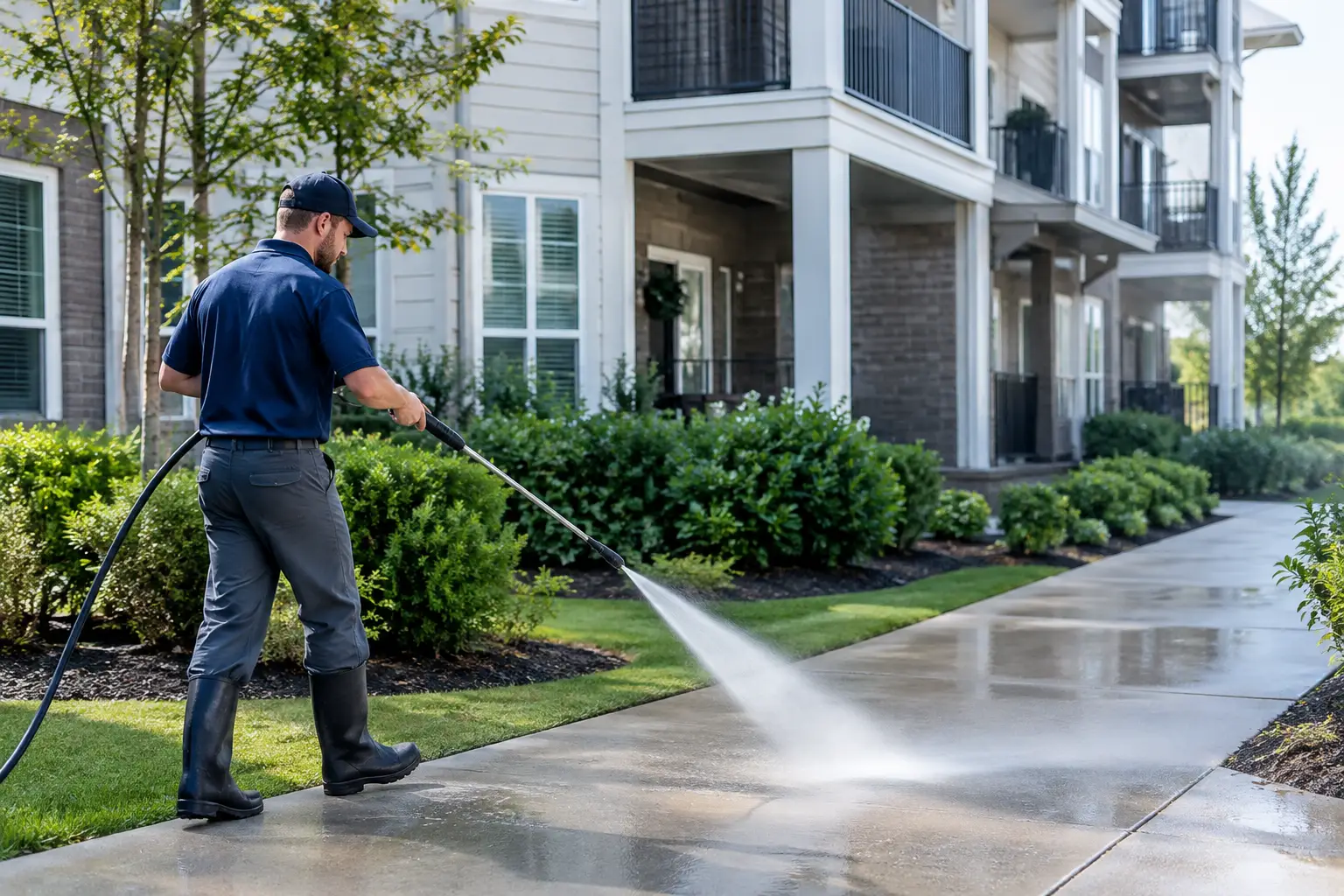
Apartment Complex Pressure Washing Services
A stained breezeway, slippery pool deck, or algae-covered entry can change how residents and prospects see an apartment community before they ever step inside. Apartment complex pressure washing services give property managers a practical way to protect curb appeal, improve common areas, and address the mildew, pollen, dirt, and organic buildup that thrive in Western North Carolina’s humid climate.
For multifamily properties, exterior cleaning is not simply a cosmetic project. It is part of maintaining a welcoming, well-managed community. The right plan considers each surface, resident access, drainage, safety, and the cleaning method needed to get visible results without causing damage.
Why Exterior Cleaning Matters at Apartment Communities
Apartment buildings and shared outdoor spaces take more abuse than a typical single-family home. Residents, guests, delivery drivers, maintenance teams, and vendors use sidewalks, stairs, parking areas, breezeways, dumpsters, and amenities every day. Add shade, moisture, tree debris, and seasonal pollen, and exterior surfaces can become grimy quickly.
Organic growth is especially common around Asheville, Hendersonville, Biltmore Forest, and surrounding mountain communities. Green algae, black mildew, and dark staining can collect on siding, concrete, retaining walls, roofs, fences, and patios. Left alone, that buildup makes a property appear neglected and may create slick walking surfaces in high-traffic areas.
A clean exterior supports leasing efforts, but it also helps a management team stay ahead of bigger maintenance concerns. Regular washing makes it easier to spot damaged caulk, deteriorating paint, drainage issues, loose gutters, or concrete cracks that may otherwise hide beneath dirt and staining.
What Apartment Complex Pressure Washing Services Can Cover
Every community has different needs. A small garden-style property may need building washing and sidewalks cleaned before leasing season, while a larger complex may need a phased maintenance program for multiple buildings, parking lots, pool areas, and shared amenities.
Professional apartment complex pressure washing services can address exterior areas such as:
- Building siding, brick, stucco, stone, and exterior trim
- Breezeways, walkways, stairwells, entry pads, and curbs
- Concrete patios, pool decks, clubhouse areas, and outdoor gathering spaces
- Drive lanes, parking areas, dumpster pads, retaining walls, and loading zones
- Fences, gates, decks, railings, gutters, and common-area structures
Not every surface should be cleaned the same way. Concrete can often handle higher-pressure cleaning when performed correctly, while painted siding, delicate trim, roofs, and many wood surfaces need a lower-pressure soft washing approach. The goal is not to use the most pressure possible. It is to use the safest effective method for the material and the type of buildup present.
Pressure Washing vs. Soft Washing for Multifamily Properties
The terms are often used interchangeably, but the difference matters. Pressure washing relies on water pressure to lift surface dirt and staining. It can be an effective choice for durable concrete, hardscape, and certain heavily soiled surfaces.
Soft washing uses specialized cleaning solutions and low-pressure application to treat organic growth at its source. This method is often the safer alternative for vinyl siding, painted surfaces, roofs, wood, and other materials that can be damaged by aggressive pressure. Rather than blasting algae away, soft washing helps break it down so the surface can be cleaned more thoroughly and with less risk.
For an apartment complex, the best approach is usually a combination. Concrete walkways may need controlled pressure washing to remove embedded grime, while the buildings themselves benefit from soft washing. A trained crew should assess surfaces individually instead of applying one method across the property.
Why Too Much Pressure Creates Problems
Improper pressure washing can force water behind siding, scar wood, chip paint, damage window seals, and etch concrete. Those risks increase when work is handled by an inexperienced operator or when crews use one setting for every material.
There is also a resident-safety concern. Runoff needs to be managed carefully, entryways must remain accessible, and work zones should be clearly marked. Professional planning is just as valuable as the equipment itself when people live on-site during the project.
How to Plan Cleaning Without Disrupting Residents
A well-run exterior cleaning project should feel organized, not disruptive. Property managers should start by identifying the areas with the greatest need: high-visibility entrances, slippery shaded sidewalks, dirty breezeways, pool decks, clubhouse patios, and dumpster pads are often sensible priorities.
Scheduling matters. Cleaning common areas during low-traffic hours can reduce inconvenience, while phased work lets crews move through a larger community without blocking every entrance at once. Residents should receive clear notice about the work schedule, any temporary parking limitations, and areas that need to stay clear while surfaces dry.
Water access, drainage, landscaping, and nearby vehicles also need attention. Landscaping should be protected, windows and doors checked, and outdoor furniture moved or covered as needed. A qualified contractor will discuss these details before work begins rather than improvising on cleaning day.
For properties with several buildings, it may make sense to divide service into sections. This allows the management team to prioritize urgent areas now while establishing a realistic schedule for the remaining buildings. It also makes budgeting more predictable than waiting until every surface looks overdue.
A Maintenance Schedule That Fits the Mountain Climate
There is no single cleaning calendar for every apartment community. The right frequency depends on tree cover, shade, building materials, foot traffic, drainage, landscaping, and how quickly mildew returns. Communities surrounded by mature trees or positioned in damp, shaded areas may need attention more often than open properties with direct sun.
Many property managers find that annual building washing and periodic concrete cleaning keep the property looking cared for. High-use areas such as pool decks, breezeways, entrance walks, and dumpster pads may need more frequent service. Roof cleaning should be evaluated based on visible organic growth and the roof manufacturer’s care guidance, not automatically included with every wash.
A recurring plan can be particularly helpful because it prevents buildup from becoming severe. When algae and grime are treated earlier, cleaning is generally more straightforward, and the property avoids the sudden appearance of a large, expensive catch-up project before inspections, lease-up periods, or community events.
Choosing a Contractor for an Apartment Complex
Multifamily work calls for more than a homeowner-grade pressure washer. Look for a contractor that understands surface-safe cleaning, carries appropriate insurance, uses trained technicians, and can explain how the work will be staged around residents and daily operations.
The estimate should identify the areas being cleaned, the type of service proposed, and any conditions that may affect the final scope. For example, heavy staining, limited water access, unusual building materials, or parking restrictions can change how the project is performed. Clear expectations help avoid surprises for both the property manager and the contractor.
It is also worth asking how the company handles satisfaction concerns. A dependable provider should stand behind the work, communicate promptly, and be willing to return if an agreed-upon area needs attention. WNC Wash Pro’s brings that customer-first approach to exterior cleaning with trained local crews and a 100% satisfaction guarantee.
Clean Common Areas Support Better Property Care
Exterior washing will not replace routine repairs, landscaping, or preventative maintenance. What it does provide is a clear, immediate improvement that residents and visitors notice. Cleaner entries feel more welcoming. Brighter sidewalks and breezeways reinforce that the property is actively cared for. Removing algae from walking surfaces can also help reduce the slick conditions that develop after rain and humidity.
For property managers, the strongest results come from treating pressure washing as planned maintenance rather than a last-minute response to complaints or an upcoming inspection. Start with the surfaces residents use most, choose cleaning methods that protect the material, and build a schedule that matches the property’s environment. A cleaner community is easier to show, easier to maintain, and more enjoyable to come home to.