
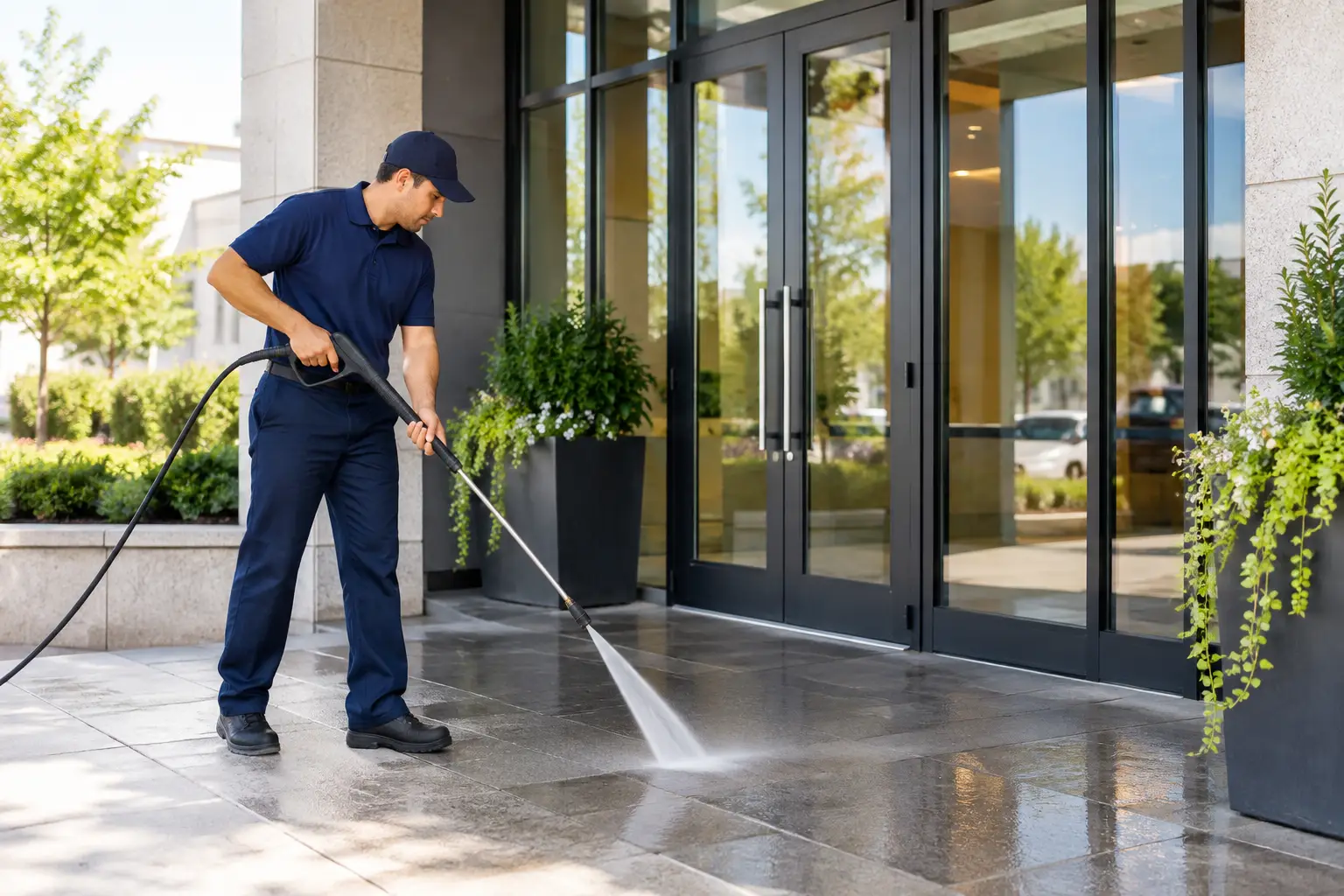
10 Best Building Entrance Cleaning Tips for Curb Appeal
A building entrance tells visitors what to expect before they reach the front door. In Asheville and across Western North Carolina, rain, pollen, red clay, leaf debris, mildew, and foot traffic can make that first impression look neglected fast. The best building entrance cleaning tips focus on more than a quick rinse: they help protect the surfaces people walk on, reduce slippery buildup, and keep your property looking cared for.
For a home, that may mean a cleaner walkway, porch, and front steps. For an office, retail center, apartment community, or rental property, it means a safer and more welcoming path for customers, tenants, and guests. The right approach depends on the material, the stain, and where the water will drain.
Best Building Entrance Cleaning Tips That Work
1. Start at the curb and work toward the door
Walk the full approach before pulling out a hose or cleaner. Look at the curb, parking area, sidewalks, steps, railings, entry pad, door frame, exterior glass, and awning. Dirt often travels from the parking lot to the threshold, so cleaning only the small area in front of the door can leave the entrance looking uneven.
Sweep away loose leaves, mulch, gravel, and trash first. This simple step prevents debris from turning into muddy streaks once water is applied. It also lets you spot problem areas such as rust stains, gum, oil spots, algae, or cracked concrete that need a different treatment.
2. Identify the surface before choosing a cleaning method
Concrete, pavers, brick, natural stone, composite decking, painted wood, vinyl, and coated metal do not respond the same way to pressure or cleaning products. A method that works well on a plain concrete sidewalk may scar soft stone, strip paint, force water behind siding, or damage aging mortar.
Use a gentle cleaning method for delicate surfaces and organic growth around painted trim, wood, and entry features. High pressure has a place for durable concrete when used correctly, but it is not the answer to every dirty surface. When in doubt, test a small, less visible area first. The goal is a clean entrance, not a damaged one.
3. Treat algae and mildew as a cleaning problem, not just a color problem
Dark green, black, or gray staining near a shaded entry is often algae, mildew, or other organic buildup. Simply blasting the visible layer away may improve the appearance for a short time, but it does not always address what is feeding the growth.
Use a surface-appropriate treatment that removes organic contamination, then allow it enough contact time to work before rinsing. In humid mountain conditions, shaded sidewalks, north-facing entries, and areas beneath trees may need more frequent care. This is one reason surface-safe soft washing is often a better choice than relying on pressure alone around entrances, siding, and painted features.
4. Give special attention to steps, ramps, and textured concrete
These are the places where appearance and safety meet. Textured concrete holds dirt in its small grooves, while steps and ramps can become slick when pollen, algae, or wet leaf residue builds up. A clean-looking walkway is helpful, but a properly cleaned walking surface is the real priority.
Work in manageable sections and rinse thoroughly so cleaning solution and loosened dirt do not dry back onto the surface. Avoid making a ramp or stairway overly wet when visitors may be arriving. For a commercial entrance, schedule deeper cleaning during lower-traffic hours and use clear caution signs until the area is dry.
5. Do not overlook mats, grates, and door thresholds
Entrance mats collect what would otherwise end up inside the building. They also trap moisture, sand, pollen, and organic debris, especially after rainy weeks. Lift mats rather than spraying around their edges. Sweep or vacuum them, clean them according to the manufacturer’s instructions, and allow them to dry completely before putting them back.
Check the surface beneath each mat and around drainage grates. A hidden layer of grit can stain concrete and hold moisture against the entrance. Keeping these areas clear also helps water move away from the doorway instead of pooling at the threshold.
6. Handle stains by their cause
Not every stain is dirt. Rust around railings, HVAC equipment, planters, or irrigation overspray requires a rust-specific approach. Oil and grease need a degreaser designed for the surface. Graffiti may call for a targeted removal product and careful rinsing. White mineral deposits can be a sign of moisture moving through masonry, not a stain that should be aggressively pressure washed away.
Using one harsh product on every mark can make the issue worse. Acidic cleaners, for example, can etch concrete or natural stone if misused. If a stain has been there for months or years, professional assessment is often the safer and more cost-effective choice than repeated trial-and-error cleaning.
7. Clean railings, columns, and surrounding walls at the same time
A bright walkway can still look unfinished if the handrails are streaked or the lower walls are covered in splash marks. Wipe or gently wash railings, columns, light fixtures, and the lower portions of exterior walls as part of the same project. These surfaces catch pollen and rain runoff, and they are right at eye level for visitors.
Use a low-pressure rinse around fixtures, electrical outlets, door hardware, and weather stripping. Protect nearby landscaping when applying cleaning solutions, and rinse plants with clean water before and after treatment if needed. Careful preparation keeps a cleaning project from creating an avoidable landscaping problem.
8. Control runoff and protect the landscaping
Water should move away from the building, not toward it. Before cleaning, make sure downspouts, drains, and channels are open. Bagged mulch, loose soil, and fallen leaves can block drainage paths and carry dirty runoff across a freshly cleaned entrance.
Be especially cautious near landscaped beds, ponds, and storm drains. Use only the amount of solution needed, follow product directions, and prevent wash water from carrying debris where it does not belong. For larger commercial properties, runoff planning is part of a professional cleaning process, not an afterthought.
9. Set a realistic maintenance schedule
An entrance does not need a full restoration every month, but it does need regular attention. Weekly sweeping and spot cleaning keep debris from becoming stains. Mats should be cleaned often enough to remain effective, particularly at businesses with steady traffic. A seasonal deep cleaning is a practical starting point for many homes and properties.
It depends on the setting. A shaded mountain cabin, a busy storefront, and an apartment entrance beneath mature trees will usually need more frequent cleaning than a sunny, low-traffic entry. Plan for additional service after pollen season, extended wet weather, leaf drop, or construction activity nearby.
10. Know when trained exterior cleaning is the safer answer
A small front stoop may be manageable with a broom, mild cleaner, and garden hose. Larger entrances, steep steps, stubborn algae, heavy staining, multi-surface areas, and commercial walkways require more care. Incorrect pressure, unsuitable chemicals, and rushed rinsing can leave etching, dead plants, damaged paint, or slippery residue behind.
A trained local crew can match the method to the surface, whether that calls for controlled pressure washing on durable concrete or a soft washing approach for more delicate materials. WNC Wash Pro’s helps property owners take the hassle out of cleaning high-visibility exterior areas while protecting the surfaces that make up the entrance.
Keep the Entry Clean Between Professional Services
The best long-term habit is to stop buildup before it settles in. Keep nearby shrubs trimmed back to improve airflow and reduce damp, shaded conditions. Clear leaves from corners and drains after storms. Address sprinkler overspray, leaking gutters, and dripping planters because constant moisture encourages algae and can leave mineral staining.
For commercial properties, give staff a simple routine: inspect the entry each morning, remove debris, straighten mats, and report spills or slippery patches immediately. For homeowners and landlords, a quick check before guests arrive, a showing is scheduled, or a tenant moves in can make a noticeable difference.
A clean entrance is a practical way to protect curb appeal, reduce avoidable slip concerns, and show visitors that the property is cared for. Start with the surface in front of the door, then keep the whole approach working as one clean, safe welcome.