
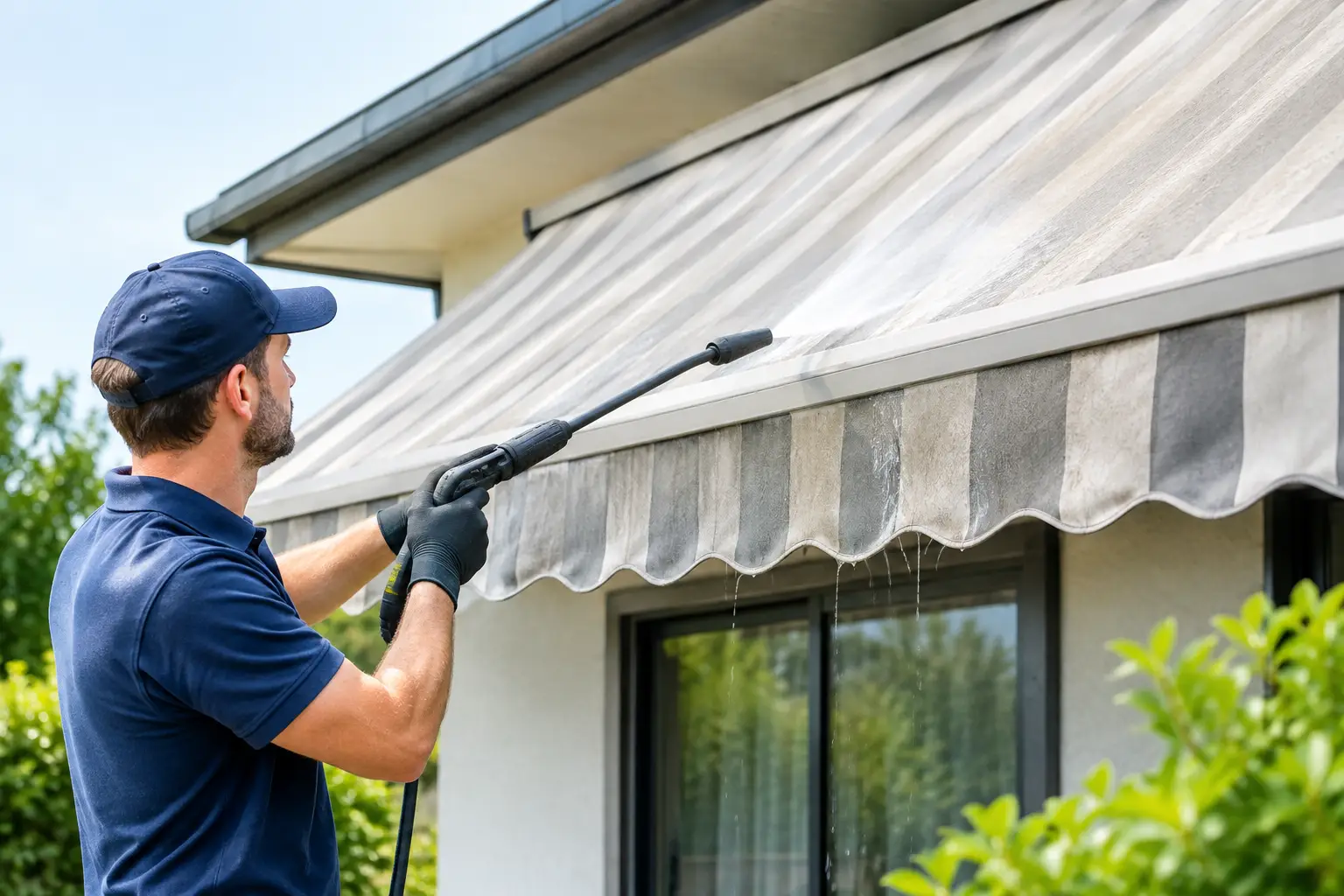
How to Clean Awnings Safely Without Damage
Awnings do more than add shade. They protect entryways, patios, storefronts, and outdoor seating from sun and rain while giving a property a finished look. In Western North Carolina and Greenville, moisture, pollen, mildew, algae, and windblown debris can quickly leave them stained and tired-looking. Knowing how to clean awnings safely helps preserve the material, avoid costly damage, and keep the exterior of your home or business looking cared for.
The key is matching the cleaning method to the awning itself. A fabric awning, a vinyl canopy, and a metal storefront awning may all look dirty for similar reasons, but they should not all be cleaned the same way. High pressure, harsh chemicals, and aggressive scrubbing can create damage that is far more noticeable than the original stain.
Start by Identifying Your Awning Material
Before bringing out a hose or cleaning solution, check the manufacturer tag, installation paperwork, or material specifications. Most residential and commercial awnings fall into three broad categories: fabric, vinyl, or metal.
Fabric awnings are often canvas, acrylic, or polyester blends treated for water resistance and UV protection. They need the gentlest approach because strong chemicals may fade the color, weaken stitching, or strip protective coatings. Vinyl awnings are durable and relatively easy to rinse, but abrasive pads can leave permanent scratches. Aluminum and other metal awnings can tolerate more physical cleaning, although harsh products may dull painted finishes or affect surrounding trim.
If the awning has visible tears, loose seams, rusted hardware, sagging supports, or cracked mounting brackets, address those issues before cleaning. Water and scrubbing can make existing damage worse, especially on older retractable awnings.
How to Clean Awnings Safely: Prepare the Area First
A safe cleaning job begins with a little setup. Move patio furniture, grills, planters, signs, and outdoor cushions away from the work area. Cover nearby sensitive plants if you are using any cleaner beyond mild soap and water. Close windows and doors below the awning, and make sure electrical fixtures, outlets, and outdoor speakers are protected from overspray.
For retractable awnings, extend the fabric fully and lock it in place according to the manufacturer’s instructions. Never clean a partially extended awning that is unstable or sagging. A fixed awning should be checked for secure mounting before you apply water or put pressure on the frame.
Avoid climbing onto an awning or leaning a ladder against its frame. The frame is designed to support the canopy, not a person’s weight. If cleaning requires working at a height that cannot be reached securely from the ground, professional service is the safer call.
Remove Loose Debris Before Wet Cleaning
Dry debris is much easier to remove before it turns into muddy streaks. Use a soft-bristle brush, microfiber duster, or leaf blower on a low setting to clear leaves, cobwebs, pollen, and dirt from the top and underside of the awning.
Brush in the direction of the fabric weave or the length of the panels. This reduces stress on seams and helps prevent snags. For metal awnings, pay special attention to corners, gutters, and the area where the awning meets the wall. Those spots often hold decomposing leaves and moisture, which can contribute to staining, mildew, and corrosion.
Do not use a stiff deck brush, wire brush, or abrasive scouring pad. Even when a stain comes off quickly, those tools can roughen the surface and make it easier for dirt to cling to the awning later.
Use a Gentle Cleaning Solution
For routine cleaning, mild dish soap mixed with cool or lukewarm water is usually enough. Add a small amount of soap to a bucket of water, then apply it with a soft brush or clean sponge. Work in manageable sections so the solution does not dry on the material.
Mildew and algae may need more than soap, particularly in shaded areas around Asheville, Hendersonville, Biltmore Forest, and other humid mountain communities. The safest choice depends on the awning material and its manufacturer guidance. A cleaner that works well on concrete or siding may be too strong for acrylic fabric or colored vinyl.
As a general rule, avoid these products unless the awning manufacturer specifically approves them:
- Bleach or highly concentrated chlorine cleaners
- Strong degreasers or solvent-based products
- Acidic cleaners used for rust or mineral removal
- Abrasive powders and scouring pads
- Undiluted household cleaners with unknown ingredients
A gentle, surface-appropriate cleaning solution is slower than blasting away stains, but it protects the finish, the seams, and the water-resistant treatment that help the awning last.
Test a Small Area and Clean With Light Pressure
Always test the cleaning solution on a small, hidden section first. Let it sit for a few minutes, rinse it away, and check for color change, streaking, tackiness, or fabric weakening. If the material looks unchanged after it dries, continue with the rest of the awning.
Apply the solution from the bottom upward when possible. This helps prevent dirty runoff from creating long streaks down the canopy. Let the cleaner dwell briefly, but do not allow it to dry. Then use a soft brush with light, even strokes. Focus on visible mildew spots, bird droppings, tree sap, and grime around seams without overworking one area.
For stubborn stains, repeat a gentle application rather than scrubbing harder. Multiple light cleanings are safer than one aggressive attempt. Some deeply set stains, especially rust marks, paint transfer, or years of embedded organic growth, may require a trained exterior-cleaning professional to assess the surface and choose the right treatment.
Rinse Thoroughly Without Using Excessive Pressure
A standard garden hose with a gentle spray setting is the best choice for most awnings. Rinse from the top down so loosened dirt and soap flow away naturally. Keep the spray at a comfortable distance and avoid directing water forcefully into seams, mounting points, retractable arms, or the connection between the awning and the building.
Pressure washing is not automatically the right answer. Fabric awnings can tear, stretch, or lose their protective coating under high pressure. Vinyl can be punctured or forced loose from its frame, and water can be driven behind metal awnings and into wall openings. Even on sturdy commercial canopies, cleaning pressure must be adjusted for the surface, condition, and mounting system.
This is where a soft washing approach makes a real difference. Soft washing relies on properly selected cleaning solutions and controlled, low-pressure rinsing to remove organic buildup without treating every surface like a driveway. WNC Wash Pro’s uses surface-safe methods because protecting the material matters just as much as improving its appearance.
Let the Awning Dry Completely
After rinsing, leave retractable awnings fully extended until they are completely dry. Rolling damp fabric into its housing traps moisture and creates an ideal environment for mildew, odor, and staining. On a humid day, drying may take longer than expected, so give the awning plenty of time before retracting it.
Check underneath as well as on top. Water can collect along seams, in folds, and near the frame. If there are areas that stay damp, gently blot them with a clean microfiber towel. Do not use high heat, which can damage some synthetic fabrics or coatings.
Once dry, inspect the awning for remaining stains, loosened stitching, or hardware concerns. Catching these small issues early can prevent a simple maintenance task from becoming a repair or replacement project.
Keep Cleaning on a Practical Schedule
Most awnings benefit from a light rinse and debris removal every few months, especially beneath trees or on shaded sides of a property. A more thorough cleaning once or twice a year is often enough for well-maintained residential awnings. Commercial entrances, restaurant patios, and customer-facing storefronts may need attention more often because they collect more traffic-related dirt, food residue, and visible staining.
It depends on location. An awning under pine trees may collect sap and needles quickly, while one near a damp, shaded roofline may develop mildew faster. Regular maintenance keeps contaminants from becoming embedded and makes every future cleaning easier.
A clean awning makes a front entrance, patio, or storefront feel more welcoming. More importantly, cleaning it with patience and the right method helps protect the shade, comfort, and curb appeal it was installed to provide.