Awning Cleaning Costs and What Affects Them
A streaked storefront awning or mildew-spotted patio canopy can make an otherwise well-kept property look neglected fast. Awning cleaning costs are usually modest compared with replacement, but the right price depends on more than the square footage. Material, staining, height, access, and the cleaning method all affect the estimate.
For property owners across Asheville, Hendersonville, Buncombe County, and nearby Western North Carolina communities, the humid climate adds another layer to the decision. Pollen, algae, mildew, tree debris, and road dust can settle into awning fabric and frames season after season. Professional cleaning restores the appearance of the property while helping prevent organic buildup from becoming harder to remove.
Typical Awning Cleaning Costs
Most residential awning cleaning jobs fall roughly between $100 and $350, depending on the number, size, condition, and accessibility of the awnings. A single small patio awning with light seasonal dirt may be near the lower end. Multiple awnings, a large retractable system, or heavy mildew staining will require more time and careful treatment.
Commercial awning cleaning costs vary more widely. A few entrance awnings at a small office or retail shop may cost a few hundred dollars, while restaurants, shopping centers, medical offices, and multi-tenant properties may need a custom quote. These jobs often involve larger square footage, multiple elevations, detailed lettering or graphics, and scheduling around customers or business hours.
A trustworthy estimate should reflect the actual work rather than a one-size-fits-all price. The lowest quote is not always the best value if it relies on high pressure, skips stain treatment, or does not account for delicate fabric and hardware. Awnings are visible, functional parts of a property, and damage from an aggressive cleaning approach can be expensive.
What Affects Awning Cleaning Costs?
The material is one of the first things a trained exterior cleaning crew should identify. Fabric and canvas awnings need a different approach than vinyl, metal, aluminum, or fixed polycarbonate covers. Many fabric awnings require a controlled soft wash process that breaks down organic growth without blasting the material, weakening seams, or fading the finish.
The amount and type of buildup also matter. Loose pollen and surface dust generally take less time to clean than embedded mildew, algae, bird droppings, grease, rust transfer, or black streaking. Organic growth may need a treatment period before rinsing so the cleaning solution can do its job. Trying to force stains away with excessive pressure can leave fibers damaged or create uneven-looking areas.
Access can change the price just as much as the awning itself. Ground-level patio awnings are typically straightforward. Second-story window awnings, steep terrain, obstructed walkways, landscaped areas, or awnings above busy entrances can require extra setup, safety measures, and more careful rinsing. For commercial properties, crews may need to protect signage, windows, sidewalks, outdoor dining areas, or customer entry points.
Other factors that can shape a quote include:
- The number of individual awnings and their combined size
- Whether the awnings are fixed, retractable, or attached to a larger canopy system
- The need for spot treatment on mildew, algae, grease, or rust stains
- Whether cleaning is bundled with building washing, concrete cleaning, or gutter cleaning
Bundling services can be a practical way to improve the overall value of an exterior maintenance visit. If a building facade, sidewalk, or entrance canopy is already due for cleaning, completing the work at the same time can reduce repeat setup and help the entire property look consistently cared for.
Why Cleaning Method Matters More Than a Cheap Quote
Not every awning should be pressure washed. High pressure may seem like a quick fix, but it can tear fabric, loosen stitching, push water behind building materials, strip protective coatings, or bend lightweight components. This is especially risky on older awnings that already have sun wear or brittle sections.
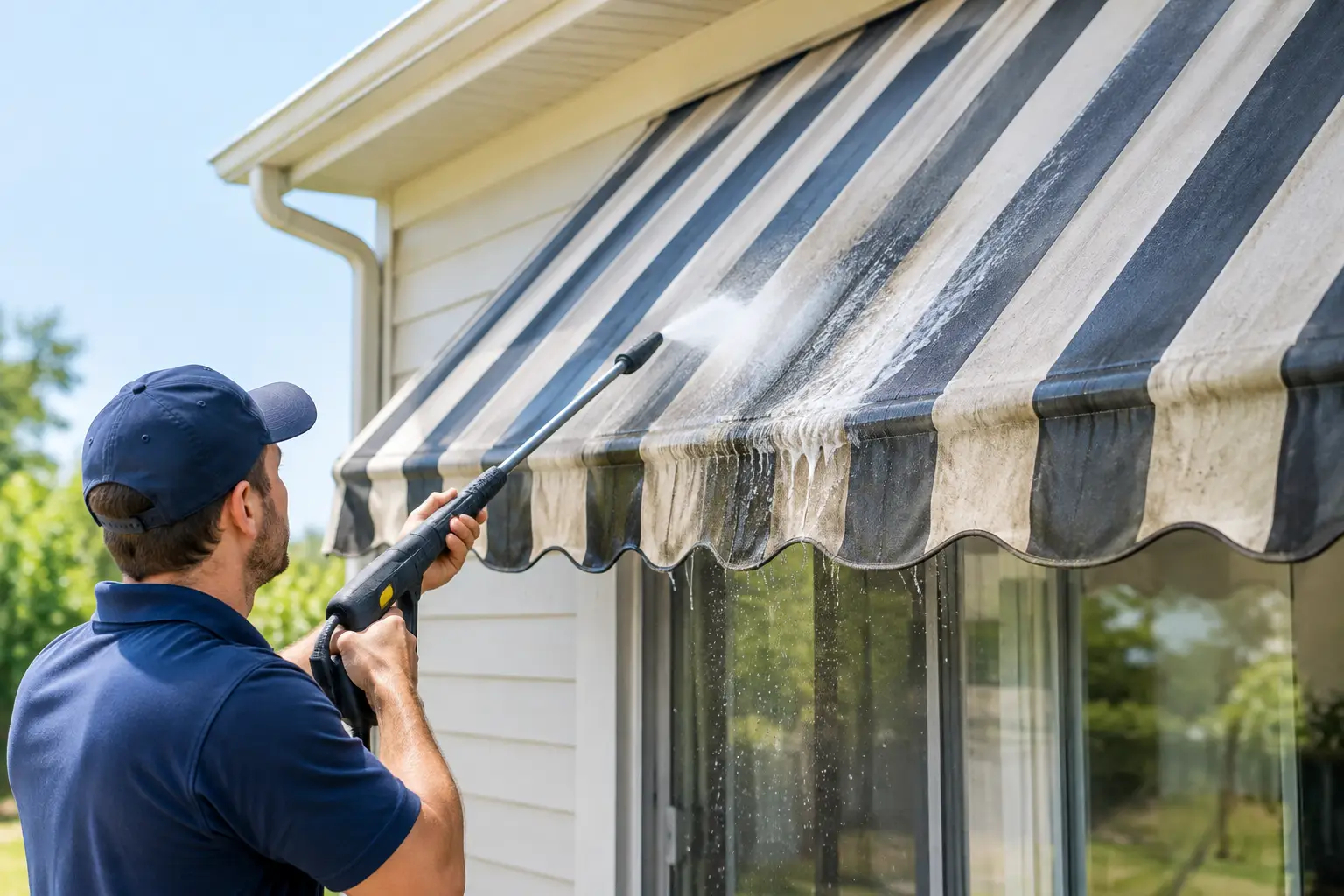
Soft washing is often the safer alternative for fabric and other sensitive surfaces. The process uses appropriate cleaning solutions and low-pressure application to remove mold, mildew, algae, pollen, and dirt at the source. After adequate dwell time, the surface is rinsed carefully. The goal is not simply to make the awning look cleaner for a day or two. It is to remove the growth that causes discoloration and recurring buildup.
That does not mean every job receives the same treatment. Metal awnings, heavily greased restaurant covers, and concrete-adjacent canopies may call for a different combination of solutions, agitation, and rinsing. A professional crew evaluates the surface before cleaning so the method matches the material and condition.
Residential Awnings: When Is Professional Cleaning Worth It?
For homeowners, professional service makes sense when an awning is too high to reach safely, has visible mildew or algae, covers a large deck or patio, or includes retractable components. It is also a good choice when DIY products have failed or when the homeowner is unsure what cleaner is safe for the fabric.
Home cleaning can be reasonable for a small, accessible awning with light dust. A gentle rinse and manufacturer-approved cleaner may handle routine upkeep. The trade-off is that household methods often do not fully address established organic growth, and using the wrong product can bleach color, leave residue, or harm water-resistant treatments.
If the awning is over a stained deck, delicate landscaping, or exterior furniture, professional preparation is particularly valuable. Nearby surfaces should be protected and rinsed as needed throughout the process. This kind of detail is part of what separates a surface-safe cleaning service from a quick spray-and-go job.
Commercial Awnings: Appearance Is Part of the Customer Experience
A commercial awning is often one of the first things a customer sees. When it is covered in green algae, dark streaks, cobwebs, or faded-looking dirt, it can affect the perceived care of the entire business. Clean awnings help entrances look more inviting and support a polished, professional exterior.
Property managers also need predictable service. Recurring maintenance can prevent the buildup from reaching the point where cleaning becomes more labor-intensive. For restaurants, retail locations, office buildings, apartment communities, and medical facilities, scheduled exterior cleaning can be planned around operations instead of becoming an urgent appearance issue.
The right interval depends on shade, tree cover, exposure to traffic, and the surrounding environment. In the Asheville area, many properties benefit from an annual cleaning, while heavily shaded or high-traffic locations may need attention more often. A professional can recommend a maintenance schedule based on what is actually growing or collecting on the surface.
How to Compare Awning Cleaning Estimates
When reviewing estimates, ask what surfaces are included, how staining will be treated, and whether the cleaning approach is appropriate for your awning material. It is also wise to confirm whether the quote includes protection for nearby windows, siding, plants, furniture, and walkways.
Look for a company that is willing to inspect the awning rather than guessing from a generic price chart. Clear communication matters when a job includes delicate fabric, hard-to-reach areas, or visible branding. A detailed estimate helps you understand what you are paying for and reduces surprises on service day.
WNC Wash Pro’s uses trained, professional cleaning methods designed to remove organic buildup without damaging the surfaces that protect and improve your property. With a 100% satisfaction guarantee, the focus stays where it should be: safe cleaning, visible results, and an awning that looks ready to welcome people again.
A clean awning does more than brighten an entrance. It helps your home or business look cared for before anyone steps through the door, and a tailored estimate is the simplest way to get the right level of service without paying for work you do not need.