
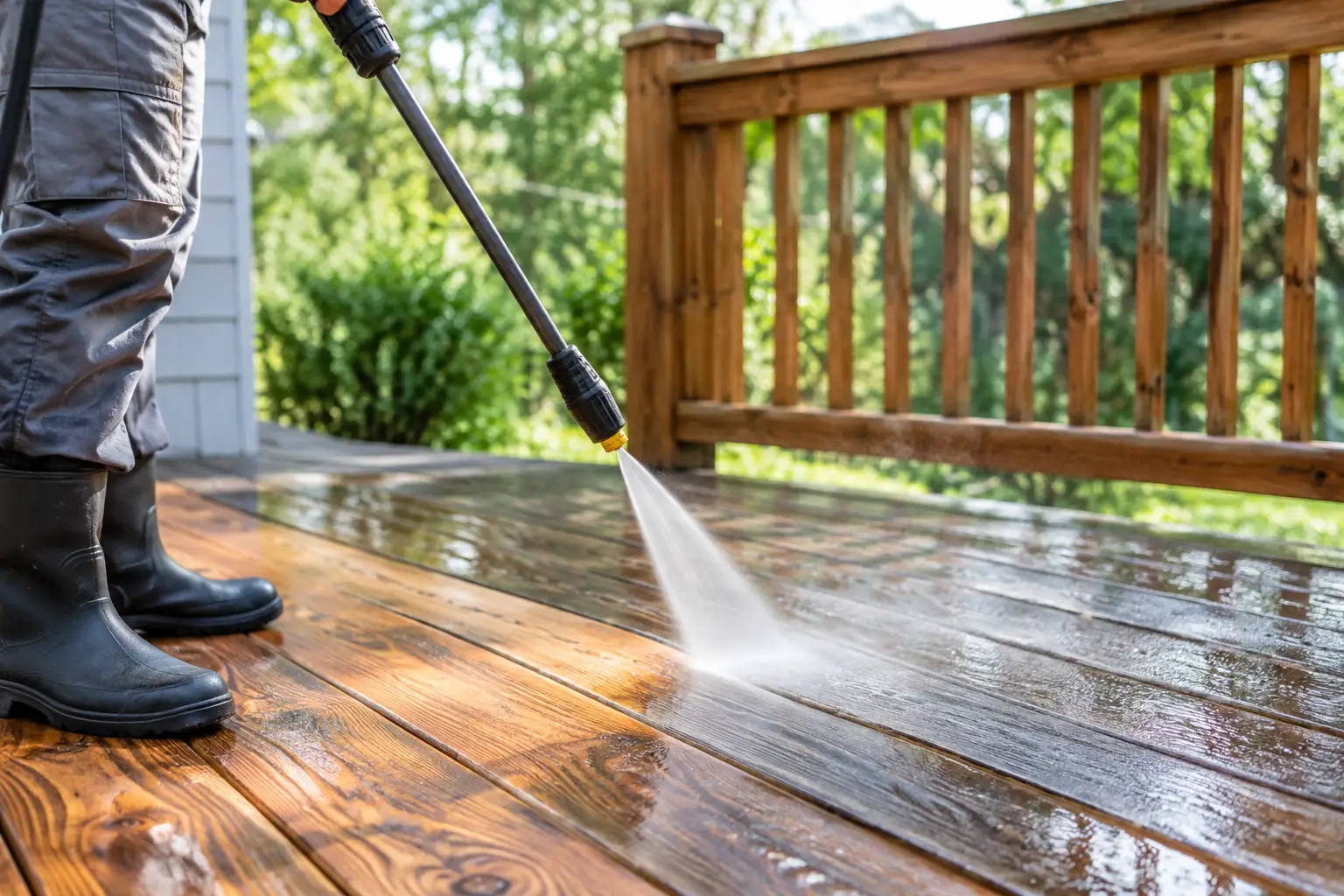
Will Pressure Washing Damage Wood? The Safe Answer
A wood deck can look gray, slick, and overdue for cleaning after a humid Western North Carolina summer. That does not mean it needs the strongest setting on a pressure washer. Will pressure washing damage wood? It can – and the damage can happen much faster than most homeowners expect. High pressure may strip protective stain, raise the wood grain, leave visible lines, or gouge soft boards in seconds.
Wood can be cleaned beautifully without being blasted. The key is matching the cleaning method, pressure, detergent, and rinse technique to the wood’s age, condition, and finish. For many decks, fences, railings, and other exterior wood surfaces, a low-pressure soft washing approach is the safer choice.
How Pressure Washing Can Damage Wood
Pressure washing is not automatically harmful. The problem is that wood is a softer, more porous material than concrete, brick, or many types of siding. A pressure setting that makes quick work of a driveway can scar a deck board or carve into a cedar fence.
When water hits wood with too much force, it can tear apart the surface fibers. This often leaves a fuzzy, rough texture known as raised grain or furring. Once dry, the wood may feel splintery under bare feet and require sanding before it can be stained or sealed properly.
Too much pressure can also leave wand marks. These are the light, uneven streaks that appear when the operator pauses, works too close to the surface, or overlaps passes inconsistently. On older wood, high pressure may widen existing cracks, loosen fasteners, and force water into gaps around boards and trim.
The risk is especially high on softwoods commonly used for decks and fences, including pine, cedar, and redwood. Weathered boards, sun-damaged areas, and places with previous water damage are even more vulnerable.
When Is Pressure Washing Wood Safe?
Wood cleaning can be safe when it is treated as a controlled restoration process, not a high-powered rinse. A trained technician starts by identifying the material, checking for loose boards or failing stain, and determining what is causing the discoloration. Green or black buildup is often algae, mildew, or mold, while a yellow film may be pollen and dark spots can be tannin staining or embedded dirt.
For most wood, low pressure is the rule. The cleaning solution does much of the work by breaking down organic growth and grime. The rinse should remove the residue without cutting into the surface. Distance from the wood, nozzle selection, water flow, and the angle of the spray all matter.
There are situations where carefully controlled pressure is useful. A solid, unfinished deck may need a gentle rinse after a wood-safe cleaner has had time to work. Even then, the goal is not to make the surface look instantly bright by force alone. The goal is to clean it evenly while preserving the fibers that protect the board.
The Age and Condition of the Wood Matter
Newer pressure-treated lumber may tolerate cleaning differently than a 20-year-old cedar deck. Wood that has dried out, cracked, or lost its protective coating needs a lighter touch. Painted surfaces also require caution because aggressive pressure can peel paint away from sound sections, not just the areas that are already failing.
A close inspection is worth the time. If boards feel soft, nails are rising, paint is flaking heavily, or the structure shows rot, cleaning should not be used to hide a repair issue. Replace compromised boards and address drainage or moisture problems first.
Stain and Sealant Change the Approach
A quality stain or sealer protects wood from moisture and UV exposure, but it can be weakened by the wrong cleaning process. Strong pressure may strip a transparent or semi-transparent stain in patches. Harsh chemicals can dull the finish, especially if they are left on too long or are not rinsed correctly.
If a deck is due for refinishing, cleaning may be the first step in the project. In that case, the surface should still be cleaned carefully so it is not damaged before sanding, brightening, or staining begins. If the finish is in good shape, the priority is preserving it while removing algae and dirt.
Why Soft Washing Is Often Better for Wood
Soft washing uses specialized cleaning solutions and low-pressure application to treat organic buildup at its source. Rather than relying on force, it allows the solution to lift algae, mildew, mold, pollen, and grime from the surface. The area is then rinsed with controlled, surface-safe pressure.
This approach matters in Asheville and surrounding mountain communities, where shade, rainfall, tree cover, and summer humidity create ideal conditions for algae and mildew. A deck can become slippery even when it is not visibly filthy, and a fence may develop dark staining along its lower sections where moisture lingers.
Soft washing is not simply spraying cleaner and walking away. The solution must be appropriate for the surface, mixed correctly, applied evenly, allowed the right amount of dwell time, and rinsed thoroughly. Nearby plants, painted trim, metal hardware, and adjacent surfaces also need protection.
At WNC Wash Pro’s, trained exterior-cleaning crews use surface-safe methods designed to remove the buildup that makes wood look tired without treating a deck or fence like concrete. That careful approach helps homeowners protect curb appeal and extend the useful life of expensive outdoor spaces.
Signs Your Wood Surface Needs Professional Cleaning
Wood does not have to look black or green from end to end before it needs attention. Early cleaning is often easier and safer than waiting until organic growth has taken hold. Watch for these common warning signs:
- Green film, black spotting, or slippery areas on deck boards, steps, and handrails
- Gray, dull wood with pollen, leaf stains, or dirt embedded in the grain
- Dark streaks on fence panels, especially along shaded or low-lying areas
- Mildew odors near a porch, deck, or covered outdoor space
- Uneven color caused by tree cover, moisture, or runoff from gutters
These conditions are more than cosmetic. Algae can create a slipping hazard, and trapped moisture can contribute to premature deterioration over time. Regular exterior maintenance helps keep a deck welcoming, safer to use, and ready for the next barbecue, showing, or quiet afternoon outside.
What Homeowners Should Avoid
The biggest mistake is using a pressure washer at maximum power because the surface looks dirty. Avoid turbo nozzles, narrow spray patterns, and close-range spraying on wood. Do not hold the wand still, spray upward beneath siding or deck boards, or use a strong cleaner without knowing whether it is compatible with the existing finish.
Rental machines can be effective tools, but they do not come with an understanding of your wood’s condition or the consequences of a wrong pass. A single gouge may not seem serious while the wood is wet. Once it dries, however, the damage can be obvious and difficult to blend into the surrounding boards.
Bleach-heavy mixtures and DIY cleaners also deserve caution. Some products can harm nearby landscaping, affect metal fixtures, or leave uneven results when used incorrectly. Cleaning chemistry should support the surface, not create another restoration problem.
A Better Maintenance Schedule for Decks and Fences
Most exterior wood benefits from a professional cleaning about once a year, though the right schedule depends on shade, tree cover, moisture, traffic, and how well the surface is sealed. Properties surrounded by mature trees or located in damp, shaded areas may need attention more often.
Between cleanings, sweep away leaves and pine needles, keep planters from trapping moisture against boards, and trim vegetation that prevents airflow. Check gutters and downspouts as well. Overflowing water can create concentrated staining and mildew growth on nearby wood.
After cleaning, allow the wood to dry fully before applying stain or sealer. The drying time varies with weather, wood type, and the condition of the boards. Rushing this stage can trap moisture and reduce how well the finish performs.
A clean deck or fence should look refreshed, not stripped, fuzzy, or uneven. If you are unsure whether your wood can handle pressure, choose the safer path: have the surface evaluated and cleaned with the method it actually needs. Protecting the wood now is far easier than repairing avoidable damage later.