
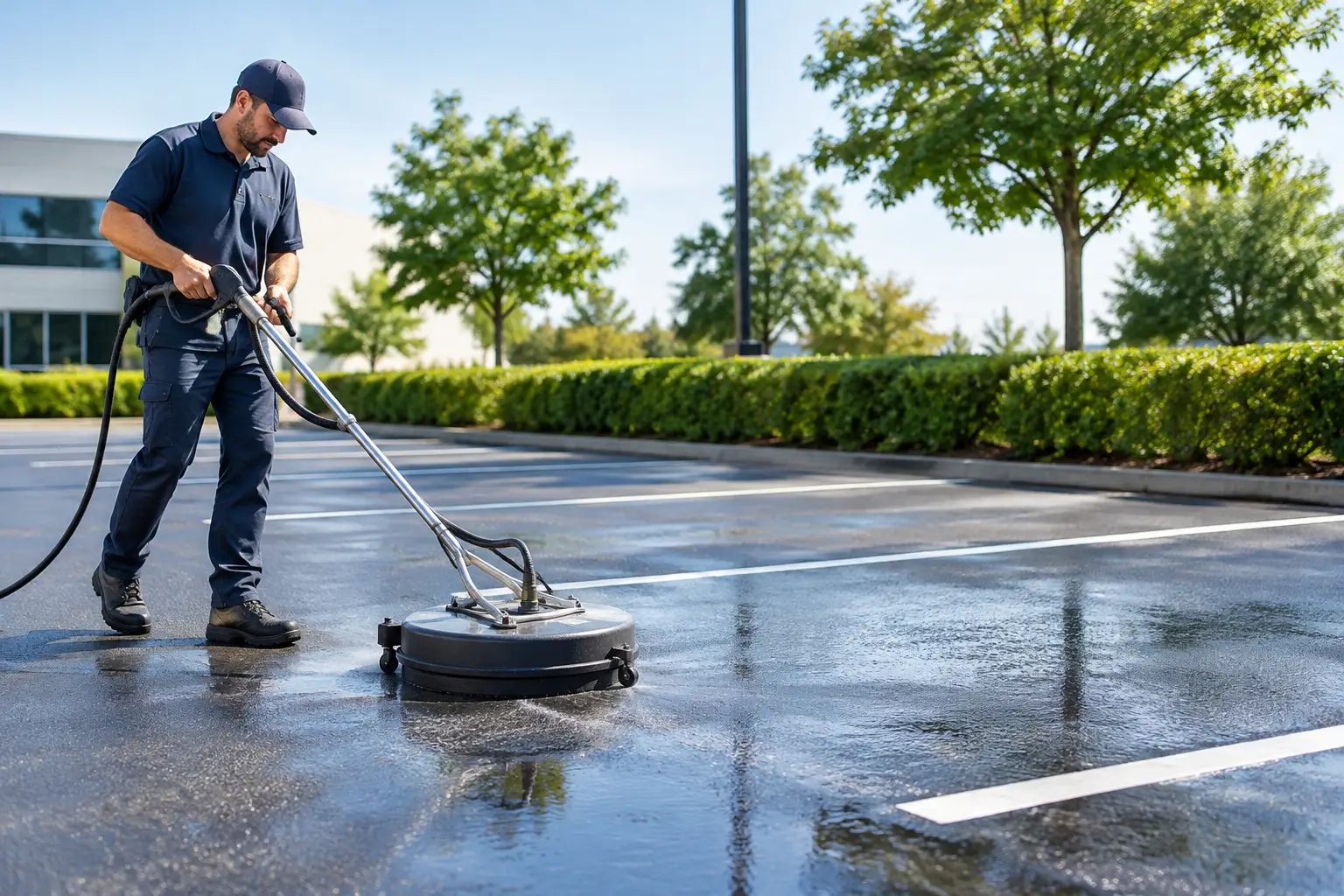
A Guide to Parking Lot Cleaning That Lasts
A dirty parking lot can make an otherwise well-kept property feel neglected before a customer ever reaches the front door. This guide to parking lot cleaning helps property owners and managers plan the right work, protect the pavement, and maintain a safer, more welcoming exterior throughout the year.
For businesses across Asheville, Western North Carolina, and the Greenville area, parking lots collect more than ordinary dirt. Mountain weather, falling leaves, pollen, rain, vehicle leaks, gum, mildew, and winter treatment materials all leave their mark. The right cleaning plan addresses each issue without creating damage, drainage problems, or disruption for tenants and customers.
Why Parking Lot Cleaning Is More Than Curb Appeal
A clean lot sends a clear message: the property is cared for, managed, and ready for visitors. That matters for retail centers, restaurants, medical offices, apartment communities, churches, hotels, and professional buildings. Faded striping, oil spots, trash buildup, and dark organic staining can distract from an otherwise professional property.
Appearance is only part of the value. Leaves, litter, and sediment collect near curbs and storm drains, slowing water flow during heavy rain. Standing water can contribute to slick conditions, algae growth, and premature surface deterioration. Oil and grease create slip risks, especially when rain spreads the contamination across the pavement.
Routine cleaning also makes maintenance easier to manage. When the lot is free of grime, a property manager can spot new cracks, failed sealcoat, loose wheel stops, damaged curbs, and drainage concerns sooner. Cleaning does not replace asphalt repair or sealcoating, but it helps protect the investment and reveals where repair is needed.
Start With a Parking Lot Assessment
Parking lot cleaning works best when it begins with a walk-through instead of a one-size-fits-all service. A small storefront lot with scattered stains needs a different approach than a large medical complex with frequent traffic, loading areas, sidewalks, and multiple storm drains.
Look at the pavement condition first. Fresh asphalt, aging asphalt, concrete entrances, pavers, curbs, parking stops, and painted traffic markings may all need different cleaning methods. High-pressure washing can be highly effective on durable concrete, but excessive pressure or poor technique can disturb weak asphalt, strip failing sealcoat, or damage delicate markings.
Next, identify what is on the surface. Pollen and ordinary dirt are straightforward. Mold, mildew, and algae often need a surface-safe treatment before rinsing. Oil spots may require a degreaser and dwell time. Rust stains, tire marks, paint, gum, and graffiti each call for more specialized products and techniques.
A good assessment should also account for where the water will go. Storm drains, landscaped islands, storefront doors, loading docks, electrical fixtures, and neighboring vehicles all affect the job plan. Professional crews protect nearby surfaces, manage runoff responsibly, and use the method that fits the condition of the property.
The Right Process for Parking Lot Cleaning
The best approach combines detail work with broad surface cleaning. Simply spraying the entire lot may remove loose dirt, but it will not deliver the consistent result most commercial properties need.
Clear Debris Before Washing
Start by removing loose trash, leaves, gravel, branches, and other debris. Sweep curb lines, corners, landscaped edges, and drain areas carefully. This step prevents debris from being pushed into storm drains and lets cleaners focus water and treatment where it will make a visible difference.
It is also the right time to note issues that washing cannot solve, such as potholes, alligator cracking, damaged drains, or broken concrete. Cleaning around a damaged area is often appropriate, but aggressive washing can worsen already failing pavement.
Treat Stains Instead of Overwashing the Surface
Oil, grease, algae, rust, and gum should be treated as individual problems. Degreasers can loosen petroleum-based stains, while organic growth often responds best to a properly applied soft-wash treatment. The goal is to use enough cleaning solution and dwell time to break down the contamination, rather than relying on extreme pressure.
This matters on older asphalt and sealcoated surfaces. More pressure is not always better. A trained technician adjusts water pressure, temperature when appropriate, chemicals, nozzles, and rinsing methods according to the surface. On concrete, hot-water cleaning may be especially useful for stubborn grease near dumpsters, drive-throughs, or loading areas.
Clean the Areas Customers Notice Most
The most visible sections deserve close attention: entrances, sidewalks, curbs, accessible parking areas, cart returns, drive lanes, dumpster pads, and the front row of parking spaces. Concrete sidewalks often hold dark mildew staining and tracked-in grime that can make a clean building look less inviting.
Pay attention to curb edges and landscaped islands as well. These areas trap soil and organic debris, creating a dark outline around the lot. Removing buildup helps sharpen the property’s appearance without requiring a full resurfacing project.
Rinse Carefully and Manage Runoff
Rinsing is not an afterthought. Water carrying detergent, oils, loose sediment, or debris should not be allowed to flow unchecked into storm drains. Requirements vary by location and property type, so the cleaning plan should follow applicable local rules and site conditions.
For heavily soiled commercial areas, runoff management or water recovery may be needed. A professional exterior cleaning contractor can assess this before the work begins. It is far easier to plan for drains and runoff than to address a preventable issue after cleaning is underway.
How Often Should a Parking Lot Be Cleaned?
There is no single schedule that fits every property. A busy restaurant, shopping center, or healthcare facility may benefit from frequent sweeping and periodic professional washing, while a low-traffic office property may only need a detailed cleaning once or twice a year.
In Western North Carolina, seasonal pollen can quickly coat pavement, sidewalks, and entrances in spring. Summer humidity encourages mildew and algae in shaded areas. Fall leaves fill curb lines and drains, while winter weather can leave behind grit, salt residue, and staining. For many properties, a spring cleaning followed by a fall cleaning is a practical baseline.
Higher-traffic or customer-facing properties should schedule service based on what visitors actually see. Dumpster pads may need attention more often than the main lot. A restaurant drive-through can require more frequent degreasing. A property with dense tree cover may need added leaf and drain maintenance after storms.
Protect Pavement, Striping, and Nearby Surfaces
Parking lot cleaning should improve the surface, not shorten its service life. Before work begins, confirm whether the lot has fresh sealcoat, brittle asphalt, loose aggregate, fading paint, or recently applied traffic markings. These conditions affect pressure settings and chemical choices.
Cleaning can brighten faded striping by removing grime around it, but it will not restore worn paint. If striping is already thin or peeling, plan cleaning before restriping so the new markings are applied to a clean, dry surface. The same timing principle applies to sealcoating and crack repair.
Protective practices matter around the edges of the job, too. Windows, doors, landscaping, exterior furniture, signs, and vehicles should be considered before cleaning begins. Surface-safe methods and careful preparation help avoid overspray, chemical residue, and unwanted damage.
When to Call a Professional Parking Lot Cleaner
Basic litter pickup and routine sweeping are manageable in-house for many properties. Professional service becomes especially valuable when oil and grease are widespread, stains have set into porous concrete, organic growth keeps returning, or the property includes drainage-sensitive areas.
It is also worth hiring trained professionals when the lot is large, traffic must remain partially open, or several surfaces need attention in one visit. Coordinating parking lot washing with sidewalk cleaning, building washing, dumpster pad service, graffiti removal, and curb cleaning can reduce disruption and create a more consistent result.
WNC Wash Pro’s uses professional, surface-conscious cleaning methods to help commercial properties look cared for without unnecessary risk to pavement, concrete, landscaping, or nearby building materials. A clear scope of work and a free estimate give property managers a practical place to start.
Keep the Lot Looking Clean Between Services
The simplest maintenance habits make a noticeable difference. Keep curb lines and drain openings clear after storms. Address fresh oil leaks before they spread. Empty overflowing trash receptacles promptly, and inspect shaded walkways for early signs of algae or mildew.
A parking lot does not have to look brand new to make the right impression. It just needs to look cared for, safe, and ready for the people who depend on your property every day.