
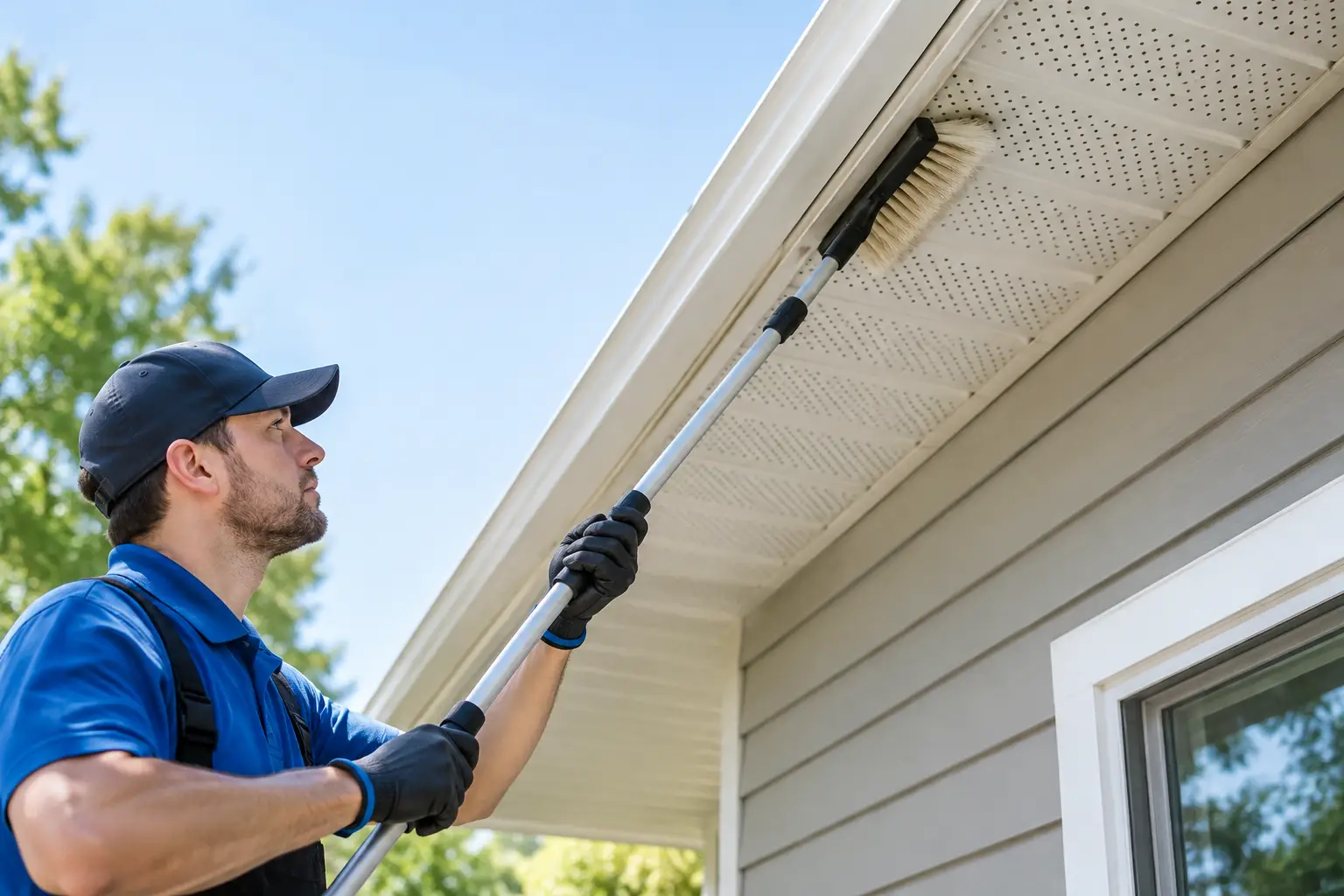
How to Clean Soffits Without Damaging Your Home
Soffits are easy to overlook until the white trim beneath your roofline starts showing black spotting, green mildew, pollen streaks, or cobwebs. Knowing how to clean soffits properly helps restore that finished look around your home without forcing water into attic vents, damaging paint, or leaving behind visible drip marks.
For homeowners across Asheville and Western North Carolina, soffit buildup is a familiar problem. Our humid summers, shaded rooflines, heavy pollen seasons, and frequent rain create ideal conditions for mildew and organic growth. The right approach depends on what your soffits are made of and how much buildup is present, but one rule stays the same: use a gentle cleaning method rather than high pressure.
Why Soffits Get Dirty So Quickly
Soffits sit on the underside of the eaves, where they help ventilate the attic and protect the roof structure. Because they are tucked under the roofline, rain does not rinse them as effectively as siding. At the same time, they collect windblown pollen, dust, spider webs, insect residue, and runoff from gutters.
When gutters overflow, dirty water can streak across fascia boards and onto soffits. Shade makes the situation worse. A north-facing side of the house, a roofline near mature trees, or an area under heavy tree cover may develop mildew much faster than sunny sections.
Dark speckling is often mildew or algae, while a dull yellow or gray film may be pollen and airborne grime. If the staining is concentrated near gutters, look for clogs, loose gutter seams, or overflow issues that should be corrected after cleaning. Otherwise, the same stains may return quickly.
Check the Soffit Material Before You Start
Most homes have vinyl, aluminum, fiber-cement, or painted wood soffits. Vinyl and aluminum are generally durable, but they can still dent, discolor, or allow water behind panels if cleaned too aggressively. Painted wood needs extra care because worn paint, loose caulk, and exposed grain can absorb water.
Look closely at the panels before applying any cleaner. If you see peeling paint, soft wood, loose vent covers, cracked vinyl, or open gaps along the fascia, do not soak the area. Cleaning can reveal maintenance problems, but it should not turn a small repair into water damage inside the eaves.
Also locate exterior light fixtures, security cameras, outlet covers, and open attic vents. These areas need a lighter touch and more controlled rinsing. If you are unsure whether a stain is surface-level grime or a sign of rot, a professional inspection is the safer move.
How to Clean Soffits Safely at Home
Routine soffit cleaning does not require a pressure washer. A garden hose with an adjustable spray nozzle, a soft-bristle brush, a bucket, mild exterior-safe detergent, safety glasses, and a sturdy ladder are usually enough. For a one-story home, an extension pole with a soft brush can reduce ladder time.
Start on a cool, overcast day if possible. Direct sun can dry cleaning solution before it has time to work, leaving streaks or residue. Avoid cleaning during windy conditions, especially when working near windows, vents, and landscaping.
Protect the Area Below
Move outdoor furniture, grills, and décor away from the work area. Cover delicate plants if you are using more than a mild soap solution, then rinse the plants with plain water before and after cleaning. Close windows and doors, and make sure exterior electrical covers are secure.
If the soffits are near a deck or patio, pre-rinse the surface below. This helps prevent cleaner and loosened grime from drying onto wood, composite boards, or concrete.
Rinse Off Loose Dirt and Cobwebs
Use a gentle shower setting on the hose to rinse down loose pollen, webs, and dust. Keep the spray aimed outward and downward whenever possible. Do not spray upward into vented soffit panels or force water into seams where the soffit meets the fascia and siding.
This first rinse gives you a clearer view of the remaining stains. It also prevents dry debris from turning into muddy streaks when you apply cleaner.
Apply a Mild Cleaning Solution
For light grime, mix a mild exterior-safe detergent with water according to the product directions. Apply it with a soft brush, sponge, or low-pressure pump sprayer. Work in manageable sections, especially on a warm day.
Let the solution sit briefly, but do not allow it to dry. Then gently agitate stubborn areas with a soft-bristle brush. A soft touch matters here. Scrubbing hard can scuff vinyl, remove oxidized paint, or leave a noticeably cleaner patch surrounded by duller material.
Never mix cleaning products. In particular, do not combine bleach with ammonia, acids, or any unknown household cleaner. If mildew is widespread or staining remains after gentle washing, it is better to use a professionally applied soft-wash treatment designed for exterior surfaces.
Rinse Thoroughly and Inspect Your Work
Rinse each section with low water pressure, again directing water away from vents and gaps. Start at the top edge and work downward so runoff does not travel over freshly cleaned areas.
After the soffits dry, check for missed streaks around corners, light fixtures, and gutter lines. If a dark mark returns immediately after drying, it may be embedded organic growth rather than surface dirt. Repeated heavy scrubbing is rarely the answer and can do more harm than good.
Why High-Pressure Washing Can Be a Problem
A pressure washer may seem like the fastest way to clean a roofline, but it carries real risks when used on soffits. High pressure can force water into attic ventilation openings, behind siding, and into gaps along the fascia. It can also bend aluminum, crack brittle vinyl, strip paint from wood, and dislodge caulk.
The trade-off is simple: pressure may remove visible dirt quickly, but it can create expensive problems that are not visible until moisture has already reached the wrong place. Soffits are one of the exterior areas where cleaning chemistry, dwell time, and a controlled rinse are usually more effective than brute force.
Professional soft washing uses low pressure to apply an appropriate cleaning solution, allowing it to break down mildew, algae, and organic staining before a careful rinse. This approach is especially useful on two-story homes, steep lots, heavily shaded properties, and rooflines with persistent mildew.
When Soffit Stains Need Professional Attention
A homeowner can often handle a seasonal rinse and light cleaning. However, it makes sense to call a trained exterior cleaning crew when staining covers large areas, the home has multiple stories, or the buildup is close to roofing, gutters, and electrical fixtures.
Professional service is also worthwhile when the soffits are heavily mildewed, oxidized, or stained by gutter overflow. The right crew can clean the soffits as part of a full house wash, treating siding, fascia, gutters, and trim for a more even result. Cleaning only the soffits can make the rest of the exterior look noticeably dull by comparison.
WNC Wash Pro’s uses surface-safe soft washing to remove organic buildup without relying on damaging high pressure around sensitive exterior materials. A professional cleaning can take the hassle out of roofline maintenance while helping your home look cared for from the street all the way up to the eaves.
Keep Soffits Cleaner Between Washes
The best maintenance plan is not necessarily the most frequent one. It depends on shade, nearby trees, gutter condition, and the amount of pollen your property receives. Many homes benefit from a light rinse after pollen season and a more thorough exterior cleaning every year or two. Homes under dense tree cover may need attention sooner.
Keep gutters clear so dirty overflow does not repeatedly stain the trim. Trim back branches that trap moisture against the roofline, and watch for leaking gutters after heavy rain. If you see mildew returning in the same spot, investigate the source rather than simply cleaning it again.
A clean soffit does more than sharpen curb appeal. It gives you a chance to spot loose panels, failing caulk, gutter trouble, and early wood damage before those small details become a bigger repair. A gentle seasonal look upward can be one of the simplest ways to keep your castle looking its best.