
Lichen Removal Methods That Protect Your Home
A pale green, gray, or white patch on a roof, retaining wall, or shaded walkway may look harmless at first. Lichen is persistent, though, and the wrong lichen removal methods can turn a manageable exterior-cleaning problem into damaged shingles, scarred concrete, or splintered wood. In Western North Carolina’s damp, tree-covered settings, choosing the right approach matters as much as removing the growth itself.
Lichen is a living partnership between fungi and algae or cyanobacteria. It grips surfaces more firmly than many homeowners expect, especially after it has been allowed to grow for several seasons. Its root-like structures do not function like plant roots, but they can still hold moisture, trap debris, and attach tightly enough that aggressive scraping causes surface damage.
Why Lichen Needs a Surface-Specific Approach
Lichen favors places that stay damp and receive limited sunlight. North-facing roof slopes, shaded siding, stone paths, decks beneath trees, and concrete near wooded landscaping are common trouble spots. It often appears alongside moss, algae, mildew, leaf debris, and pollen staining, but it does not respond to every cleaning technique in the same way.
The goal is not simply to make the surface look clean for a day. A good treatment removes active growth, limits the moisture and debris that support regrowth, and protects the material underneath. That balance is especially important on asphalt shingles, painted siding, cedar, composite decking, and older concrete.
High-pressure washing can be useful on certain hard surfaces when performed correctly, but it is not a universal answer. Pressure that is too strong can strip shingle granules, force water behind siding, etch concrete, and damage wood fibers. Professional cleaning starts with identifying the surface, the age and condition of the material, and how deeply the lichen has attached.
Lichen Removal Methods for Different Surfaces
Roof lichen removal
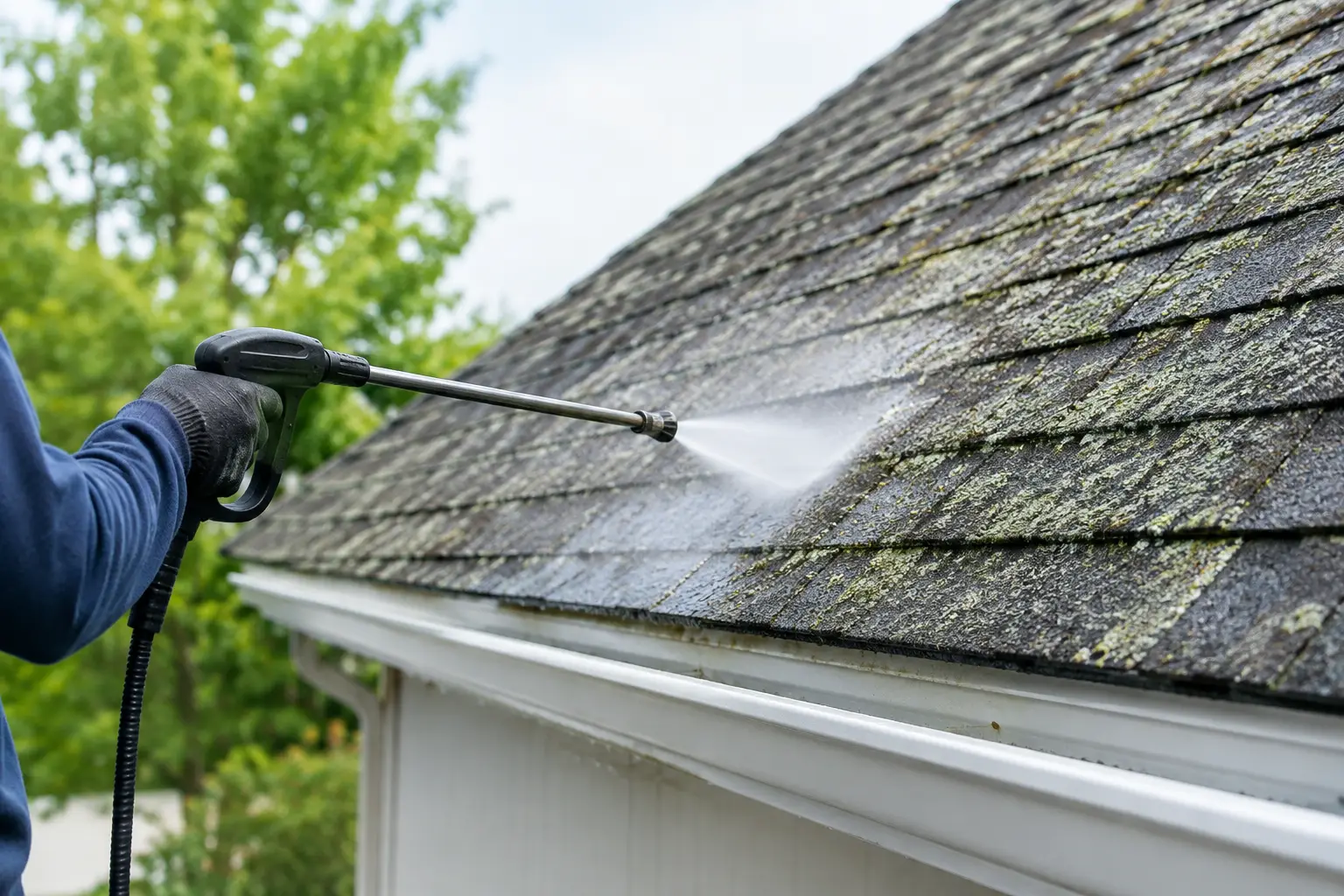
Roof lichen deserves the most caution. Scrubbing, scraping, and pressure washing may loosen visible patches quickly, but those shortcuts can shorten the life of a roof. On asphalt shingles, physical removal can dislodge protective granules. On tile, metal, and specialty roofing, improper pressure or cleaners can create their own problems.
A low-pressure soft washing treatment is generally the surface-safe method for roof lichen. A trained technician applies the appropriate cleaning solution at low pressure so it can break down organic growth without blasting the roofing material. The growth may not always disappear the instant the application is complete. Mature lichen can release gradually as weather exposure rinses away the treated material over time.
That slower visible change can be a sign that the roof is being treated safely rather than aggressively. Forcing every attached patch off in one visit is not worth sacrificing shingle integrity. Homeowners should also have overhanging branches, accumulated leaves, and clogged gutters addressed, because these conditions hold moisture against the roof and create a better environment for future growth.
Siding and exterior walls
Lichen on vinyl, fiber cement, brick, stucco, and painted wood typically forms in damp, shaded areas where landscaping sits close to the house. On siding, the concern is twofold: visible staining and the possibility of moisture being driven behind panels or trim during improper cleaning.
Soft washing is often the preferred choice for exterior walls because it uses specialized cleaning solutions and controlled water pressure. The solution does the cleaning work, rather than relying on force. This approach can remove lichen, algae, mildew, pollen, and grime while protecting paint, caulk lines, windows, landscaping, and siding materials.
Brick and stone need added judgment. While these materials are durable, older mortar, loose joints, and porous surfaces can be vulnerable. A professional should inspect the condition of masonry before selecting a cleaner and rinse method. Harsh acids and untested chemical mixtures are not a safe do-it-yourself experiment around exterior walls.
Concrete, patios, and driveways
Concrete can usually tolerate more cleaning pressure than a roof or siding, but that does not mean maximum pressure is the best answer. Lichen attaches to porous concrete and can leave a shadow or discoloration after the main growth is removed. On older driveways, patios, and sidewalks, excessive pressure can expose aggregate, create uneven-looking stripes, or worsen existing cracks.
The most effective process typically combines a suitable treatment for organic growth with controlled pressure washing. The treatment loosens and kills the lichen, while the rinse removes residue and restores a more even appearance. Heavily shaded walkways may need periodic maintenance, particularly where wet leaves, soil, and nearby plantings keep the concrete damp.
After cleaning, concrete sealing may be worth considering for surfaces that are in good condition. A properly selected sealer can help reduce water absorption and make future buildup easier to manage. It will not eliminate the need for cleaning, but it can support a longer-lasting result.
Decks, fences, and wood surfaces
Wood is less forgiving than concrete. Lichen removal from a deck or fence calls for a gentle method that cleans the growth without raising the grain, gouging boards, or stripping more stain than necessary. A surface-safe cleaner, low-pressure rinse, and careful technique are more effective than trying to carve growth off with a pressure washer.
If a deck has peeling stain, soft boards, visible rot, or loose fasteners, those maintenance issues should be addressed before or alongside cleaning. Cleaning reveals the true condition of the wood, which is useful for planning repairs or refinishing. Once the wood is fully dry, staining or sealing can help limit moisture absorption and improve its resistance to future organic buildup.
What Not to Do When Removing Lichen
Homeowners often make lichen harder to manage by using methods that seem effective in the moment. Avoid these common mistakes:
- Do not pressure wash asphalt shingles or use a pressure setting that can damage delicate exterior materials.
- Do not scrape roof lichen with metal tools, wire brushes, or sharp blades.
- Do not mix household chemicals without knowing whether the combination is safe for people, pets, plants, and the surface being cleaned.
- Do not ignore runoff control when using cleaning products near landscaping, ponds, or storm drains.
- Do not clean from a ladder or roof if the work requires unstable footing or creates a fall risk.
Store-bought products can have a place on small, accessible hard-surface areas when used exactly as directed. They are less practical for large roofs, tall siding, widespread concrete growth, or properties with sensitive landscaping. The cost of a wrong cleaner or damaged surface can quickly outweigh the savings of a DIY attempt.
How to Slow Lichen From Returning
No exterior cleaning method can permanently prevent lichen in a humid mountain climate. Still, a few practical changes can make a noticeable difference. Trim branches that heavily shade roofs and walls, while respecting the health and structure of the tree. Keep gutters clear so water does not back up along roof edges. Rake wet leaves away from decks, walkways, and foundation areas instead of letting them break down in place.
Landscaping also matters. Shrubs planted too close to siding reduce airflow and hold moisture against the home. Creating a little space between plants and exterior walls helps the surface dry more quickly after rain and morning dew. On patios and concrete paths, regular sweeping removes the soil and organic debris that lichen uses as a foothold.
The right maintenance schedule depends on shade, tree cover, roof pitch, drainage, and the material being cleaned. A sunny, open driveway may stay clean for years, while a north-facing roof under mature trees may benefit from more consistent professional care. Looking at the conditions around each surface is more useful than relying on a one-size-fits-all timeline.
When Professional Cleaning Is the Safer Choice
Call a trained exterior-cleaning professional when lichen is widespread, located on a roof, growing on a second-story surface, or attached to aging materials. The same applies when you are unsure whether the staining is lichen, moss, algae, mold, or a combination of contaminants. Each may require a slightly different treatment plan.
WNC Wash Pro’s uses surface-safe soft washing where it is appropriate and controlled pressure washing for durable surfaces that need it. The objective is straightforward: remove the buildup, protect your property, and take the hassle out of keeping your home or business looking cared for.
If lichen is beginning to spread, addressing it before it becomes thick and established gives you more options and helps preserve the surfaces you have invested in. A careful inspection and a clear cleaning plan are a better starting point than a pressure washer set to full power.