
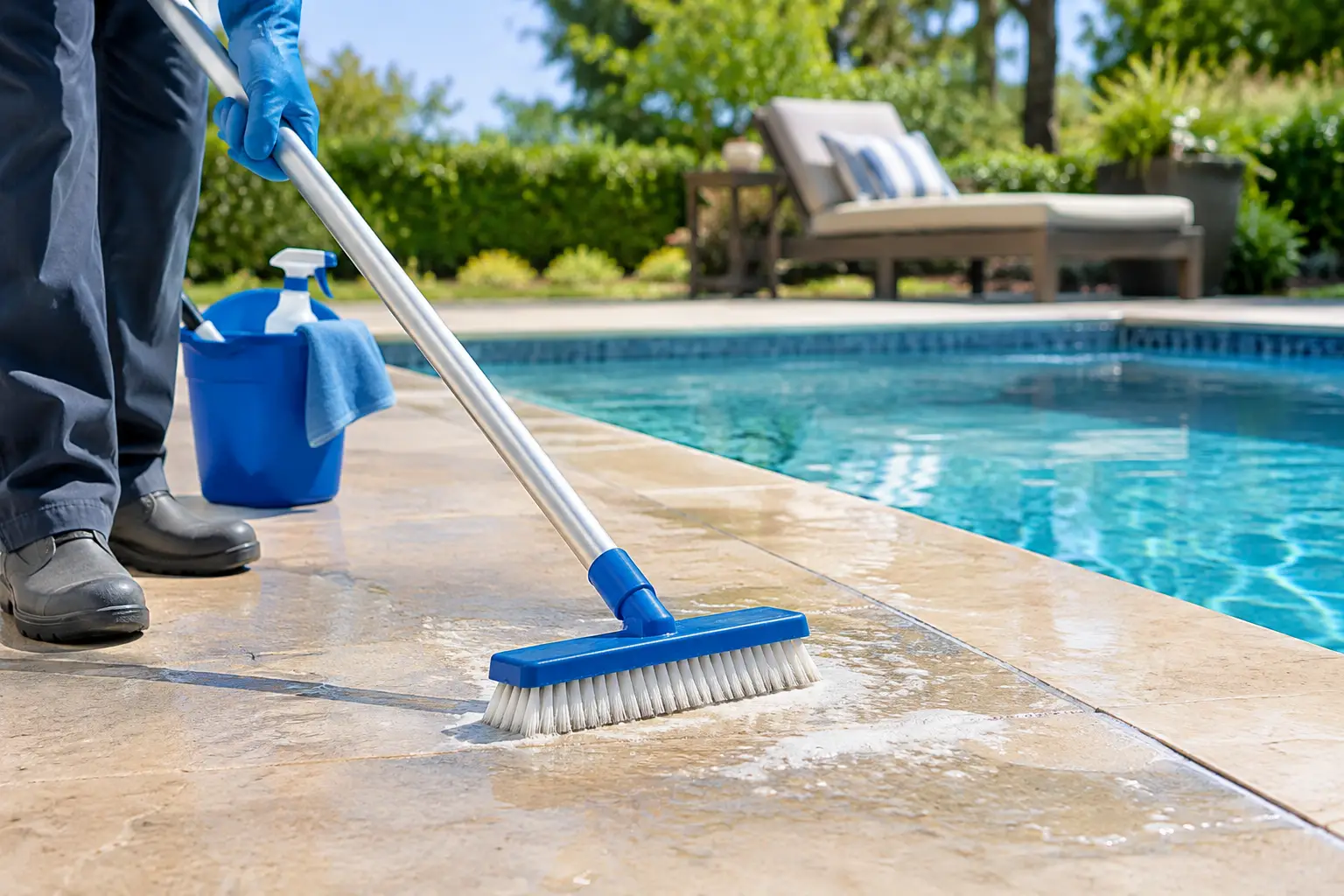
How to Clean Your Pool Deck Safely Without Damage
A slick green film around the pool is more than an eyesore. In Asheville and throughout Western North Carolina, humidity, shade, pollen, and summer storms can turn a clean-looking pool deck into a slippery surface surprisingly fast. Knowing how to clean pool deck safely helps protect bare feet, pool water, nearby landscaping, and the surface itself.
The right approach depends on what the deck is made of and what has built up on it. Concrete, pavers, travertine, stamped concrete, and coated surfaces do not all handle pressure, cleaners, or scrubbing the same way. A careful cleaning plan removes algae and grime without leaving behind etched concrete, loose joint sand, faded color, or chemical runoff in the pool.
Start With Pool Deck Safety, Not Pressure
Before reaching for a pressure washer or deck cleaner, clear the area and consider where the runoff will go. Skimmer baskets, pool drains, landscaping beds, and patio furniture all need attention before cleaning begins. The goal is to control the mess instead of pushing dirt and cleaning solution from one problem area into another.
Move furniture, toys, rugs, planters, and removable accessories away from the work zone. Sweep leaves, sticks, and dry debris first. That simple step keeps organic material from turning into a muddy paste when it gets wet and makes it easier to see stains, algae growth, and damaged areas.
Keep pets and children out of the area until the deck has been thoroughly rinsed and dried. Wet concrete, pavers, and sealed surfaces can be slick even before a cleaner is applied. If someone needs to pass through the area, make sure they wear shoes with good traction.
It also helps to protect the pool itself. Covering the water is not always practical, especially on a large pool, but avoid spraying cleaners toward the waterline. Shut off or cover nearby outdoor electrical equipment as appropriate, and take extra care around landscape lighting, outlets, and pool equipment.
Match the Method to the Deck Material
There is no single setting or chemical that is right for every pool deck. Using too much pressure is one of the fastest ways to create costly damage, particularly on decorative concrete, older pavers, natural stone, and coated finishes.
Concrete and Broom-Finished Decks
Standard concrete can handle more cleaning than many other deck materials, but it is still possible to scar the surface with an overly aggressive pressure washer tip. A concentrated stream may leave visible lines or expose aggregate, creating an uneven appearance that is difficult to correct.
For routine buildup, begin with a low-pressure rinse and a surface-appropriate cleaner. Let the solution work for the recommended dwell time, then rinse evenly. Stubborn algae may require gentle agitation with a stiff, non-metal brush rather than more pressure. This is especially true in shaded corners where moisture lingers.
Pavers and Brick
Paver decks need a lighter touch. High pressure can dislodge joint sand, chip edges, or drive dirt deeper between the pavers. If the deck has polymeric sand, aggressive cleaning can weaken the joints and leave room for weeds or shifting.
Use low pressure and rinse at an angle rather than directing water into the joints. After cleaning, inspect for missing joint sand, loose pavers, and areas where water is pooling. Cleaning reveals maintenance issues, which is a good thing, but those issues should be addressed before they become trip hazards.
Travertine, Natural Stone, and Coated Surfaces
Natural stone and coated decks require the most caution. Acidic products, harsh degreasers, and high pressure can dull, etch, strip, or discolor the finish. A cleaner that works well on concrete may be completely wrong for travertine or a painted pool surround.
Check the manufacturer’s care instructions when they are available, and always test a small inconspicuous area first. A soft wash approach, using the proper diluted cleaning solution and low-pressure application, is often the safer choice for sensitive surfaces and organic staining.
How to Clean Pool Deck Safely Around Pool Water
Pool water changes the cleaning process. Even a small amount of the wrong product can affect water chemistry or create foaming, cloudiness, and irritation for swimmers. Keep cleaners, degreasers, and stain removers away from open water whenever possible.
Choose products formulated for the deck material and follow the label directions exactly. More cleaner is not better. Overapplying a chemical creates extra runoff, increases rinse time, and may harm grass, shrubs, or decorative plants around the pool.
Work in manageable sections so the cleaner does not dry on the surface. On a hot, sunny afternoon, that may mean cleaning a smaller area at a time and pre-wetting nearby landscaping. Rinse plants before and after cleaning to reduce the chance of chemical stress, especially around delicate flowers and newly planted beds.
Never combine cleaning products. Mixing bleach-based products with acids, ammonia, or other household chemicals can create dangerous fumes. If you are unsure what was previously used on the deck, rinse thoroughly and stick with one appropriate product at a time.
If any cleaner reaches the pool, stop work and remove it according to the product directions. Test and rebalance the pool water before anyone swims. When in doubt, a pool professional can help confirm that the water is safe.
Use Pressure Washing Carefully
Pressure washing can be effective for heavily soiled concrete, but it is not automatically the best answer for every pool deck. The wrong pressure, tip, distance, or angle can leave permanent marks that stand out even more than the original dirt.
Start with the lowest effective pressure and keep the wand moving in consistent passes. Hold the nozzle far enough from the surface to avoid cutting into it, then adjust only if needed. Never use a pinpoint tip on a pool deck, and do not aim high-pressure water at coping, expansion joints, cracks, drains, pool lights, or the pool liner.
A professional surface cleaner can produce more even results on suitable concrete than a wand alone. However, it still needs the right pressure and technique. On fragile stone, coated concrete, or older pavers, soft washing and hand agitation may provide a cleaner, safer result than pressure washing.
Watch for Problems Cleaning Will Not Fix
Cleaning removes surface contamination, but it cannot repair failing materials. If algae returns quickly, the issue may be poor drainage, deep shade, a nearby irrigation leak, or a worn sealer that no longer protects the surface.
Look closely after the deck dries. Cracks, loose coping, flaking coatings, hollow-sounding pavers, and areas that stay damp deserve attention. A clean deck makes these concerns easier to spot before a guest catches a toe or water reaches a larger crack.
If the surface has white, powdery residue, known as efflorescence, ordinary washing may not solve it. Rust stains, mineral deposits, paint spills, and embedded oil also need material-specific treatment. Using a random stain remover can make the damage worse, particularly on decorative concrete and natural stone.
When Professional Cleaning Is the Safer Choice
A homeowner can handle light seasonal cleaning, but there are times when trained exterior cleaning is the sensible option. Heavy algae growth, a large deck, delicate stone, recurring mildew, difficult staining, or a surface close to the pool’s edge all raise the stakes.
WNC Wash Pro’s uses surface-safe soft washing methods and professional cleaning equipment to remove organic buildup without treating every deck like plain concrete. That distinction matters when protecting expensive finishes, landscaping, and the spaces where family and guests spend time barefoot.
A professionally cleaned deck should look refreshed, but the bigger benefit is confidence underfoot. Keep leaves and pollen swept away between cleanings, address drainage issues early, and schedule service before algae has a full season to take hold. A clean, dry, well-maintained pool deck gives everyone one less thing to worry about before the first cannonball of the day.