
Best Ways to Clean Pool Decks Without Damage
A pool deck can look fine one week and turn slick, stained, and weathered the next. In Western North Carolina and the Greenville area, humidity, summer storms, pollen, leaf debris, and shade give algae and mildew plenty of opportunities to grow. The best ways to clean pool decks depend on the surface underfoot, but the goal stays the same: remove buildup safely without etching concrete, stripping coatings, washing out paver sand, or sending dirty runoff into the pool.
A cleaner deck does more than improve the view from a lounge chair. It helps reduce slippery areas, protects the finish of the surface, and keeps the pool area looking cared for when friends, family, renters, or potential buyers arrive. The right approach is controlled, surface-specific, and thorough enough to address the organic growth causing the problem.
Start by Identifying Your Pool Deck Surface
“Pool deck” can describe several very different materials. A method that works beautifully on plain concrete can cause damage to decorative coatings or loosen material between pavers. Before selecting a cleaner or bringing out a pressure washer, identify what you are cleaning.
Standard broom-finished concrete is durable, but it can still show wand marks, etching, and uneven color when cleaned with too much pressure. Stamped or stained concrete needs more care because aggressive washing can dull the color or damage a protective sealer. Pavers require attention at the joints, where excessive pressure can displace polymeric sand. Travertine, flagstone, and other natural stone surfaces may react poorly to acidic cleaners and high-pressure washing. Painted, coated, or cool-deck surfaces are often the most sensitive of all.
If you are unsure of the material or whether it has been sealed, test any cleaning product in a small, out-of-the-way location first. This simple step can prevent a large, expensive surprise.
Best Ways to Clean Pool Decks Safely
The safest process begins with dry debris removal, followed by a cleaning solution appropriate for the stain, gentle agitation where needed, and a controlled rinse. Skipping straight to high pressure may make a deck look better quickly, but it does not always remove the source of algae or mildew. It can also leave inconsistent clean lines that stand out in the sun.
Clear debris before applying water
Sweep leaves, mulch, dirt, and loose pollen from the entire deck. Pay close attention to corners, expansion joints, furniture feet, planters, pool equipment pads, and the area along the coping. Organic debris holds moisture against the surface and feeds mildew growth.
Move outdoor furniture when possible rather than cleaning around it. This prevents missed patches and avoids splashing cleaner onto cushions, metal finishes, or nearby landscaping. Cover or pre-wet sensitive plants if a cleaning solution will be used.
Treat algae and mildew at the source
Green, black, or dark gray discoloration is often algae, mildew, or a mix of organic growth and embedded dirt. Water alone may rinse away the surface layer, but the stain can return quickly if the growth is not properly treated.
For many concrete and masonry decks, a professional-grade soft wash treatment is the safer alternative to relying on brute-force pressure. The solution is applied at an appropriate strength, given time to work, then rinsed with care. This approach can break down organic buildup in textured areas where a pressure washer cannot clean evenly.
Chemical selection matters. Harsh acids are not a general-purpose answer for pool decks and can damage certain stone, coatings, metal fixtures, and surrounding landscaping. Household cleaners can also leave residue or create a pool-water concern if used carelessly. Keep cleaners out of the pool, follow product directions precisely, and never mix cleaning products.
Use gentle agitation for stubborn spots
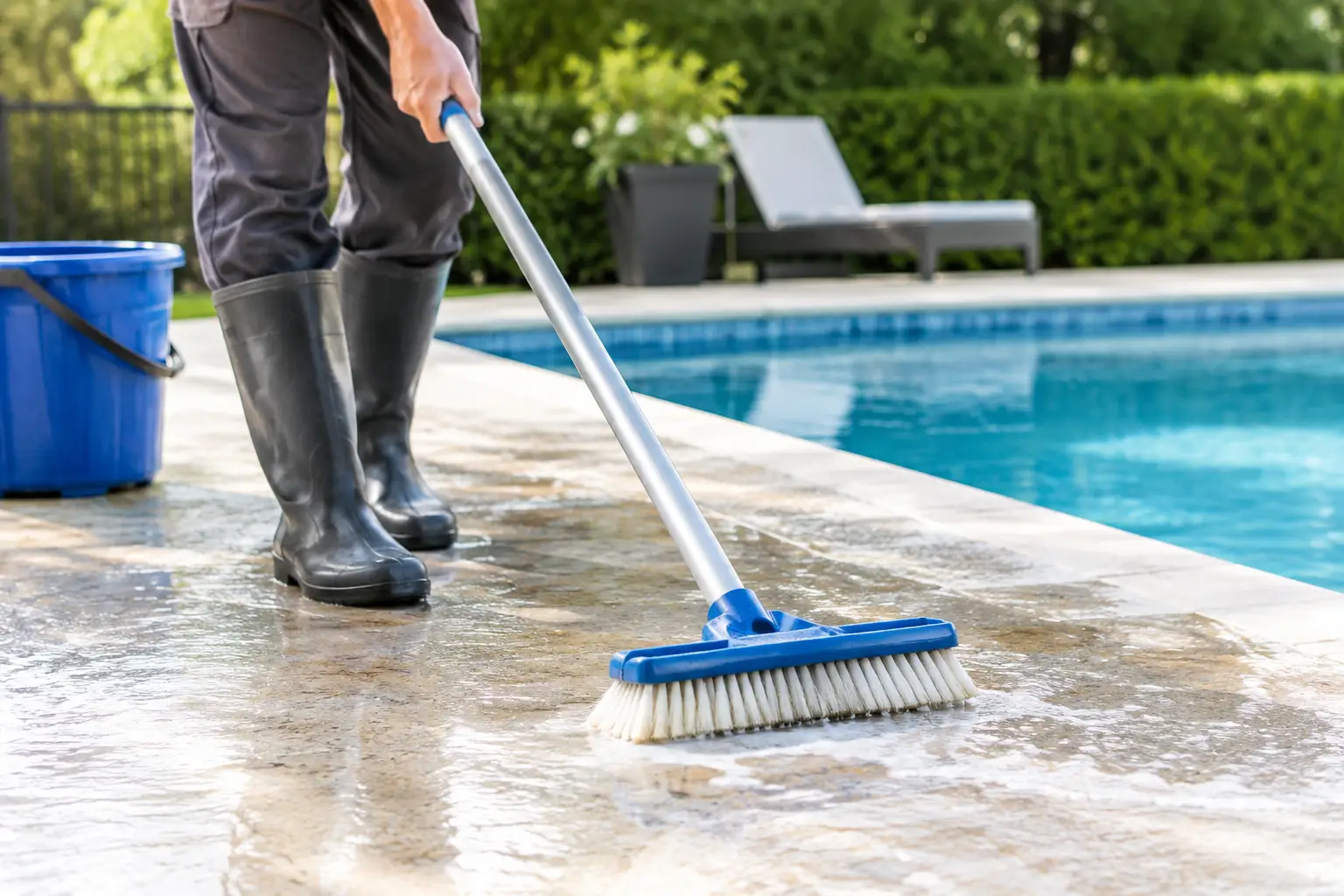
A soft- to medium-bristle deck brush can help lift embedded dirt, sunscreen residue, and light staining after the cleaning solution has had time to work. Work in manageable sections so the surface does not dry before rinsing. Avoid wire brushes, which can scar concrete, strip coatings, and leave metal fragments that may rust.
For oily food spills near grilling areas, use a degreaser approved for the deck material rather than adding more pressure. Rust stains from patio furniture, irrigation, or metal fixtures need a rust-specific treatment. Treating every stain as algae often leads to disappointing results.
Rinse with control, not force
A garden hose with a fan-style nozzle is often enough for light maintenance cleaning. When pressure washing is appropriate, use a wide fan tip, maintain a safe distance, and keep the spray moving in smooth, overlapping passes. Never concentrate the stream on one small section, especially along edges, grout lines, paver joints, or coated areas.
Surface cleaners can provide a more even result on suitable concrete decks, but they still need the correct pressure and flow settings. A machine that is too powerful can leave circular marks, expose aggregate, or create visible differences between cleaned and uncleaned areas. The surface may be tough, but the finish is not indestructible.
Keep Dirty Water Out of the Pool
Pool water and deck-cleaning products do not belong together. Before washing, turn off or protect nearby pool features as appropriate, remove loose items from the water, and plan your rinse direction away from the pool edge. Keep an eye on drainage so dirty water, cleaner, and loosened debris flow toward proper runoff areas instead of into the pool.
If runoff does enter the water, skim debris promptly and test the pool chemistry afterward. Depending on what entered the pool and how much, the water may need balancing before anyone swims. This is one reason professional cleaning crews take containment, application rates, and rinse control seriously.
Common Mistakes That Damage Pool Decks
The fastest-looking solution is not always the best one. Homeowners commonly rent a high-powered pressure washer, set it to the strongest setting, and discover faded spots or etched lines after the deck dries. Damage is especially visible on colored concrete, cool decking, and previously sealed surfaces.
Another mistake is cleaning only the visibly green areas. Algae spores and moisture conditions often extend beyond the darkest patches. Cleaning the whole deck evenly produces a more consistent appearance and helps slow the return of growth.
Avoid sealing a deck before it is fully clean and dry. Sealer can lock in discoloration, moisture, and leftover organic material. If the deck was recently cleaned, give it adequate drying time based on the material, weather, and sealer manufacturer’s directions.
How Often Should a Pool Deck Be Cleaned?
For most homes, routine sweeping and quick rinsing throughout pool season make major cleaning easier. A more complete cleaning once or twice a year is often enough for open, sunny deck areas. Decks beneath trees, beside wooded lots, or on the shaded side of the home may need attention more often.
Watch for early signs rather than waiting for a heavy buildup. A slippery feel, darkened concrete, green edges near coping, pollen film, and black spotting are all signals that cleaning should move up the maintenance list. Prompt service is usually easier, safer, and less expensive than correcting a deck that has been neglected for several seasons.
When Professional Pool Deck Cleaning Makes Sense
Professional help is a smart choice when the deck has widespread algae, stubborn staining, delicate coatings, natural stone, or large areas that need a uniform finish. It is also worthwhile when you want the surrounding patio, walkways, fencing, house exterior, or driveway cleaned at the same time.
A trained exterior cleaning team can match the method to the surface instead of treating every deck like rough concrete. WNC Wash Pro’s uses surface-safe soft washing and controlled pressure washing methods to remove mildew, algae, pollen, and grime while helping protect the materials that make your pool area enjoyable.
Your pool deck should feel like a clean, comfortable extension of your home, not another slippery weekend project waiting in the heat. Regular care and the right cleaning method keep that space ready for the next sunny afternoon.