
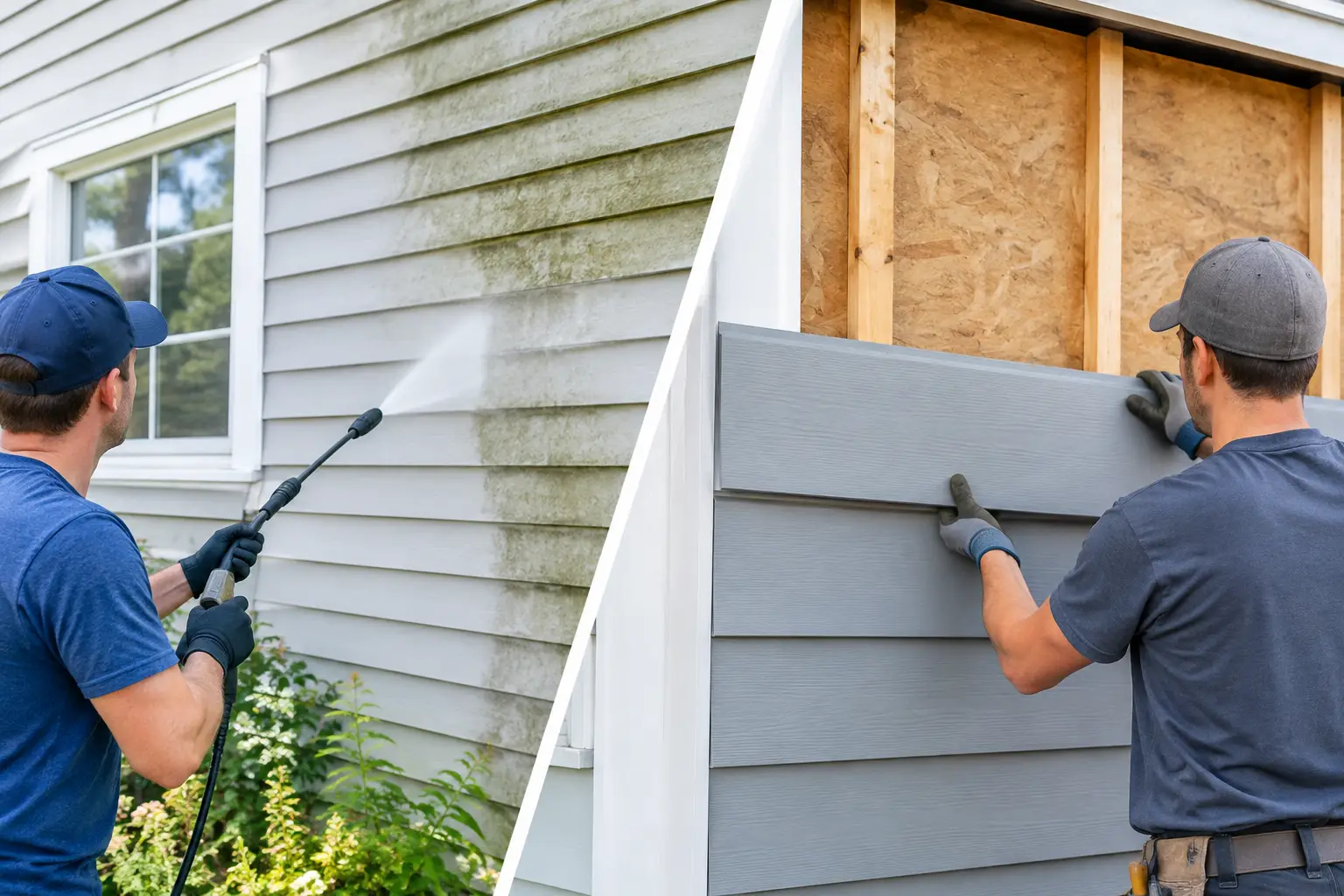
Siding Cleaning Versus Replacement – Which Fits?
Black or green streaks can make perfectly sound siding look old before its time. In Asheville and throughout Western North Carolina, humid weather, tree cover, pollen, and seasonal rain create ideal conditions for algae, mildew, and organic buildup. The question of siding cleaning versus replacement often comes down to one thing: is the problem on the surface, or has the siding itself reached the end of its useful life?
Replacing siding is a major investment, and it is the right call when materials are damaged or failing. But many homeowners replace panels that could have been safely restored with professional soft washing. A careful inspection and the right cleaning method can protect your home, improve curb appeal, and help you make a confident decision without spending more than necessary.
Start With What the Stains Are Telling You
Not every dark mark is damage. Vinyl, fiber cement, painted wood, and other siding materials can collect algae, mildew, mold spores, pollen, dirt, spider webs, and airborne pollutants. On lighter siding, organic growth often appears as scattered green patches, black streaks, or dingy areas beneath eaves and around shaded walls.
These contaminants can make siding look permanently discolored even when the material underneath is still solid. A professional soft wash uses a surface-safe cleaning solution and low-pressure application to treat the growth at its source. Rather than blasting the wall with high pressure, the process is designed to rinse away buildup without forcing water behind panels or damaging paint, seals, and delicate surfaces.
A house that looks tired after several wet seasons may simply need a proper wash. This is especially common on north-facing walls, areas beneath overhanging trees, and homes near wooded lots where moisture lingers longer.
Signs Cleaning Is Likely the Better Choice
Cleaning is usually the practical first step when siding is structurally intact but looks stained, faded by grime, or uneven in color. If the panels remain firmly attached, there are no cracks or holes, and the discoloration wipes or rinses differently than the surrounding material, organic buildup may be the issue.
Look closely at the pattern. Algae and mildew often collect in streaks, blotches, or shaded sections instead of appearing evenly across every wall. Dirt and pollen can leave a dull film that is most visible near entryways, porches, and low areas where rainwater splashes back from landscaping.
Professional cleaning also makes it easier to evaluate the true condition of your exterior. Once the buildup is gone, you can see whether a suspected defect is actual fading, a paint failure, or simply years of grime masking a healthy surface.
When Siding Replacement Is the Smarter Investment
Cleaning can restore appearance, but it cannot repair damaged siding. If moisture has penetrated the exterior, panels are warped, or the material is cracking and becoming brittle, replacement may prevent bigger repair bills later.
Pay attention to siding that feels soft, loose, or bowed. Wood siding with rot, widespread peeling paint, or insect damage needs repair beyond a wash. Vinyl with repeated cracks, broken sections, or severe warping may no longer provide dependable weather protection. Fiber cement can also require repair or replacement if it is chipped, improperly sealed, or allowing water to reach the wall system behind it.
Water-related warning signs deserve prompt attention. Bubbling paint, stains inside the home, swollen trim, persistent leaks around windows, or a musty odor can point to a flashing, caulking, gutter, or siding issue. Cleaning the surface may improve appearance, but it should never be used to cover up an active moisture problem.
Replacement may also make sense when repairs are widespread rather than isolated. Replacing one or two damaged boards is often reasonable. Replacing a large percentage of failing siding can be more cost-effective and gives homeowners the opportunity to improve insulation, weather barriers, and the overall exterior design.
Siding Cleaning Versus Replacement: Compare the Real Costs
The price difference between siding cleaning and replacement is significant, but cost alone should not make the decision. A professional house wash is a maintenance service that can remove years of visible buildup at a fraction of the cost of a siding project. It is often the best value when the siding is sound and the main concern is staining, curb appeal, or preparing the home for sale.
Replacement costs vary widely based on the siding type, home size, labor, trim work, repairs behind the walls, and material selection. It can be a smart long-term investment when siding has failed, but replacing a cleanable surface means paying for materials and labor that may not have been necessary.
There is also a middle ground. A homeowner may need limited repairs around a damaged corner, window, or lower wall, followed by professional cleaning for the rest of the home. This approach can preserve good material while correcting the areas that truly need attention.
For landlords and commercial property owners, routine cleaning can also help reduce surprise costs. Keeping exterior surfaces free of algae, mildew, and heavy grime makes visual inspections easier and supports a cleaner, more welcoming property for tenants, customers, and guests.
Why Cleaning Method Matters as Much as the Decision
A dirty exterior is not a reason to use aggressive pressure. High pressure can force water behind siding, strip oxidation, scar vinyl, damage wood, and create problems that were not there before. The wrong approach can turn a cleaning project into a repair project.
Soft washing is the safe alternative for many residential siding surfaces. It relies on appropriate detergents, controlled application, and a gentle rinse to break down organic contaminants. The goal is not just to knock visible green growth off the wall. It is to treat the mildew and algae so the clean result lasts longer.
That does not mean every surface receives the same treatment. Painted wood, older siding, oxidized vinyl, delicate trim, and areas near landscaping need a trained eye. A professional crew should identify the material, inspect vulnerable areas, protect plants, and adjust the process to the property.
WNC Wash Pro’s uses a surface-safe soft washing approach to remove organic buildup without damaging the siding you are trying to protect. For homeowners who are unsure whether the exterior needs cleaning, repairs, or both, starting with a knowledgeable assessment can take the hassle out of the decision.
Be Careful With Oxidation and Fading
One point often causes confusion: siding can be clean and still look faded. Vinyl siding may develop oxidation, a chalky film caused by sun exposure and age. Cleaning removes dirt and biological growth, but it cannot restore color that has been permanently lost to UV exposure.
Likewise, painted wood may look blotchy after washing if the paint itself is worn or failing. This is not necessarily a sign that cleaning damaged the surface. Often, grime had been hiding the true condition of the paint. In that case, cleaning is still valuable because it reveals whether repainting is enough or whether individual boards need attention.
A Simple Way to Make the Right Call
Begin with a visual check on a dry day. Look for loose panels, open seams, cracks, holes, rot, and evidence of water intrusion. If those issues are absent and the main concern is discoloration, algae, mildew, or accumulated grime, schedule a professional cleaning estimate first.
If serious damage is visible, arrange for a qualified siding contractor to inspect the affected areas before washing. When the answer is unclear, do not assume the entire exterior needs replacement based on appearance alone. A clean wall gives you a far more accurate picture of what your home actually needs.
Regular maintenance can help keep the decision simple. Clearing gutters, trimming vegetation away from walls, correcting drainage issues, and washing siding as buildup appears can reduce the moisture conditions that feed algae and mildew. In our mountain climate, this kind of care protects both curb appeal and the materials that protect your home.
Your siding should not have to look worn out just because it has had a few hard seasons. A careful inspection and safe cleaning can reveal a home that is still in much better shape than it first appears.