
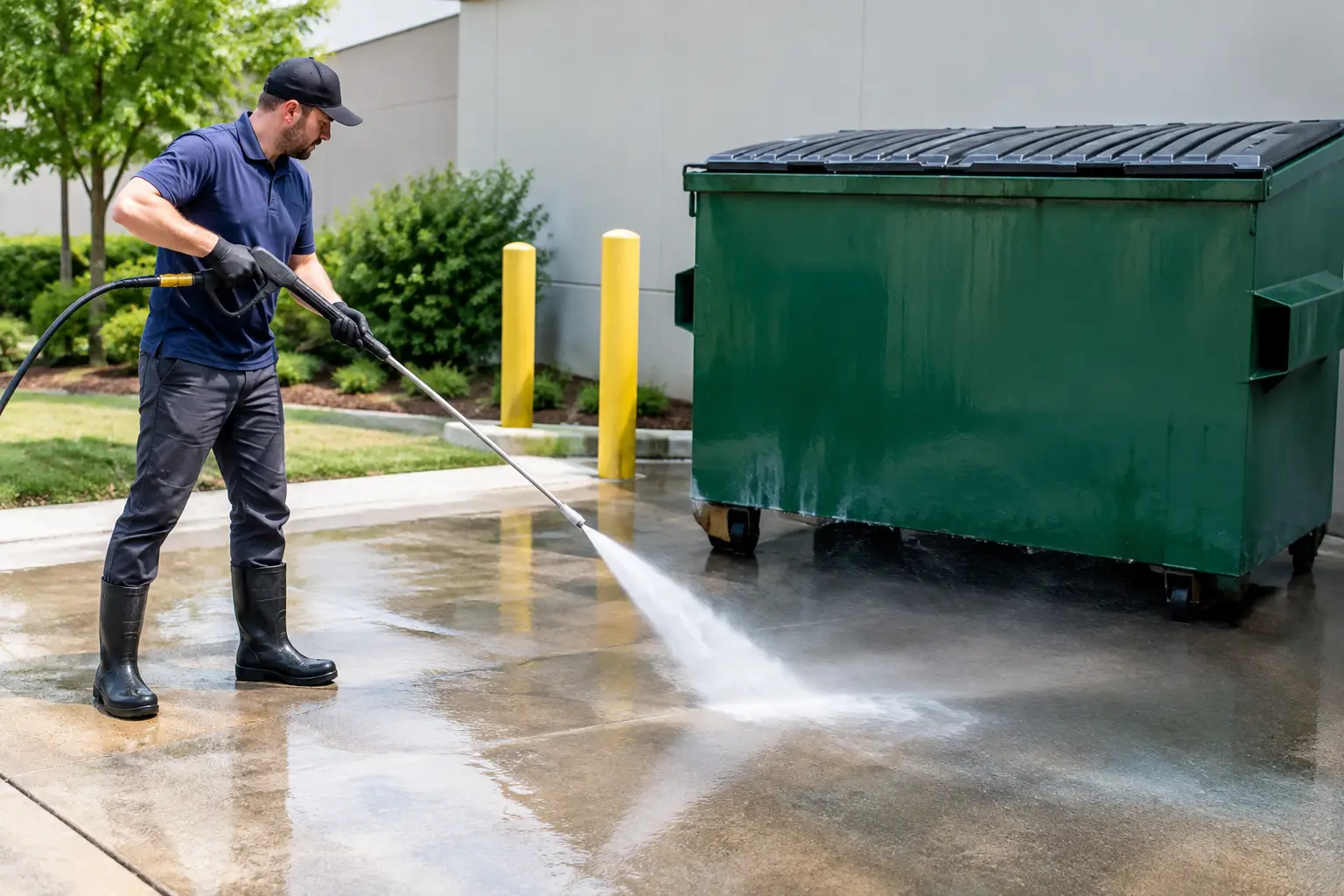
Commercial Dumpster Pad Cleaning That Protects Property
A dumpster enclosure can be out of sight without being out of mind. When grease, food residue, leaking bags, and standing water build up around the container, commercial dumpster pad cleaning becomes more than a cosmetic service. It helps protect the concrete, reduce unpleasant odors, improve footing for employees and waste crews, and keep a customer-facing property from looking neglected.
For businesses across Asheville and Western North Carolina, damp weather and seasonal heat can make this problem move quickly. Organic residue, mildew, algae, and trash runoff settle into porous concrete, especially in shaded areas. A pad that looked acceptable a few months ago can become dark, slick, and difficult to clean with a basic rinse.
Why Dumpster Pads Need Professional Attention
The area around a commercial dumpster handles a lot of abuse. Waste containers are moved, bags tear, lids are left open, and liquids make their way onto the pavement. Grease from restaurants, spilled beverages from retail centers, and regular tenant trash from multifamily properties can all leave behind staining that gets deeper over time.
Concrete is durable, but it is not impervious. Its pores hold oil, grease, bacteria, and organic matter. Once those contaminants settle in, water alone usually cannot remove them. High pressure used without the right cleaners or technique can also spread contaminated runoff, leave uneven cleaning marks, or damage weakened concrete and mortar joints around an enclosure.
A professionally maintained dumpster area supports the rest of your property. Clean storefronts, sidewalks, parking areas, and building exteriors make a strong impression, but a dirty dumpster pad can undermine all of that work. Customers, tenants, prospective renters, and inspectors notice the details, even when they do not say so directly.
What Commercial Dumpster Pad Cleaning Removes
Every pad is different, and the right approach depends on the type of business, the condition of the concrete, drainage, and the contaminants present. A restaurant dumpster area may need intensive degreasing, while an office park or apartment community may have more mildew, litter residue, and tire marks than food waste.
Professional cleaning commonly addresses grease and oil staining, food residue, grime, mildew and algae growth, beverage spills, leaking-trash residue, and unpleasant odors caused by buildup around the container. It can also improve the appearance of blackened concrete walls, gates, curbs, and surrounding pavement when those surfaces are included in the service plan.
The goal is not simply to make the pad look lighter for a day. Effective cleaning breaks down the material causing the stain and odor, then removes it in a controlled way. That distinction matters when you are responsible for a busy restaurant, retail center, medical office, warehouse, apartment complex, or hospitality property.
Odor Is Often a Cleaning Issue Before It Is a Dumpster Issue
Replacing a dumpster or adding deodorizer may help temporarily, but it will not solve residue embedded in the pad. In many cases, the lingering smell comes from old grease, spoiled food particles, and bacteria sitting in cracks, low spots, and porous concrete.
A thorough service treats the surface beneath and around the container, not just what is visible on top. If odors return quickly, the property may also need more frequent service, better bagging practices, repairs to a damaged enclosure, or a review of where liquids are collecting after rain.
A Safer Process Than Simply Blasting the Concrete
The right equipment matters, but the process matters more. Commercial cleaning should begin with an assessment of the pad, nearby doors, landscaping, drainage routes, electrical fixtures, and the condition of the concrete. This helps determine which cleaning solution, water pressure, dwell time, and recovery method fit the job.
For heavy grease, a trained crew may apply a commercial-grade degreaser designed to break down oily residue before rinsing. For mildew, algae, and organic buildup, surface-safe treatment can help clean at the source instead of relying on excessive pressure. Hot-water washing can also be useful on certain grease-heavy pads, though it is not necessary for every location.
Wastewater management deserves special attention. The dirty water leaving a dumpster pad may carry grease, food particles, cleaning chemicals, and debris. It should not be carelessly pushed toward a storm drain, landscaped area, or neighboring property. A professional provider evaluates drainage and uses appropriate containment or recovery practices based on the site conditions and local requirements.
This is one reason a quick do-it-yourself wash can create more problems than it solves. The visible dirt may disappear, but contaminated runoff, damaged concrete, or chemical overspray can leave the property manager with a bigger cleanup issue afterward.
How Often Should a Dumpster Pad Be Cleaned?
There is no single schedule that works for every commercial property. The amount and type of waste, the number of dumpsters, local weather, customer traffic, and how well the enclosure is maintained all affect the right frequency.
Restaurants, grocery stores, breweries, food-service facilities, and high-volume retail locations often benefit from monthly or quarterly cleaning. Their dumpster areas tend to collect grease and food residue quickly. Multifamily communities may need seasonal service or more frequent attention when containers are heavily used. Office buildings, warehouses, and professional properties may only need periodic cleaning, particularly if the pad remains dry and waste handling is well managed.
A practical approach is to schedule cleaning before the pad becomes a complaint. Waiting until odor, dark staining, flies, or slick spots are obvious usually means more intensive work is required. Recurring exterior maintenance can make budgeting easier and keeps the property looking cared for throughout the year.
Signs Your Property Is Due for Commercial Dumpster Pad Cleaning
Some warning signs are easy to spot: dark grease patches, a persistent odor, algae growth, sticky concrete, or trash residue that remains after pickup day. Others are more subtle. Employees may avoid walking near the enclosure after rain because the surface feels slippery. Customers may see overflowing debris around a visibly stained pad. A manager may notice that pressure washing no longer improves the appearance for long.
Pay attention to the enclosure walls and gates as well. If the concrete pad is dirty, nearby surfaces often carry splash marks, mildew, and grime. Cleaning the full area creates a more complete result and prevents a freshly cleaned pad from being framed by stained walls or curbs.
Protecting Concrete and Your Property’s Image
Regular cleaning is part of concrete care. Grease and organic buildup can make a pad look permanently stained, while trapped moisture and contamination can worsen existing surface wear. Cleaning will not repair cracked or failing concrete, but it can make developing problems easier to identify before they become more costly.
It also supports day-to-day operations. A cleaner dumpster area is more pleasant for employees handling trash, vendors making deliveries, and maintenance teams working around the enclosure. For customer-facing businesses, it reinforces the same standard of care reflected in a clean entryway, bright storefront, and maintained parking lot.
WNC Wash Pro’s approaches commercial exterior cleaning with trained crews, surface-appropriate methods, and a focus on visible results without unnecessary damage. A clear estimate should account for the pad size, contamination level, access, drainage, nearby surfaces, and whether the enclosure walls or surrounding concrete need attention too.
A clean dumpster pad will not be the feature customers praise first, but it is often part of the reason a property feels well managed. Address the buildup before it becomes a safety concern or an eyesore, and the rest of your commercial property has a better chance to make the impression it deserves.