
Can Pressure Washing Damage Mortar? Yes, Sometimes
A brick wall can look solid enough to handle anything, but the mortar between those bricks is often the part that needs the most care. Can pressure washing damage mortar? Yes, especially when the cleaning is too aggressive, the mortar is already weak, or the person holding the wand treats every surface like concrete.
For homes and commercial properties across Asheville and Western North Carolina, moisture, shade, pollen, algae, and mildew can leave brickwork looking dark and neglected. Cleaning can make a dramatic difference in curb appeal. The goal, however, is to remove organic buildup without stripping out the material that keeps the masonry stable.
Can Pressure Washing Damage Mortar?
Pressure washing can damage mortar by eroding its surface, blasting loose particles from failing joints, or driving water deeper into cracks and gaps. This is most likely with older brick, soft or sandy mortar, deteriorating tuckpointing, and high-pressure equipment used at close range.
Mortar is not as hard as brick. A strong stream directed into a joint can remove the outer face of the mortar, leaving it rough, recessed, or hollowed out. What begins as a cosmetic issue can eventually allow more water into the wall. In a climate with frequent rain, temperature swings, and humid summers, that extra moisture can encourage further deterioration.
The risk is not limited to historic homes. Newer mortar can be damaged too if excessive pressure, a narrow spray tip, or poor technique is used. A pressure washer is a powerful cleaning tool, but power is not the same thing as surface-safe cleaning.
Why Mortar Fails During Aggressive Cleaning
A masonry wall may already have problems that are easy to miss from the ground. Hairline cracks, crumbling areas, missing mortar, and white powdery deposits can all signal that the joints are vulnerable. Pressure washing does not always create the underlying issue, but it can expose and worsen a problem that was already developing.
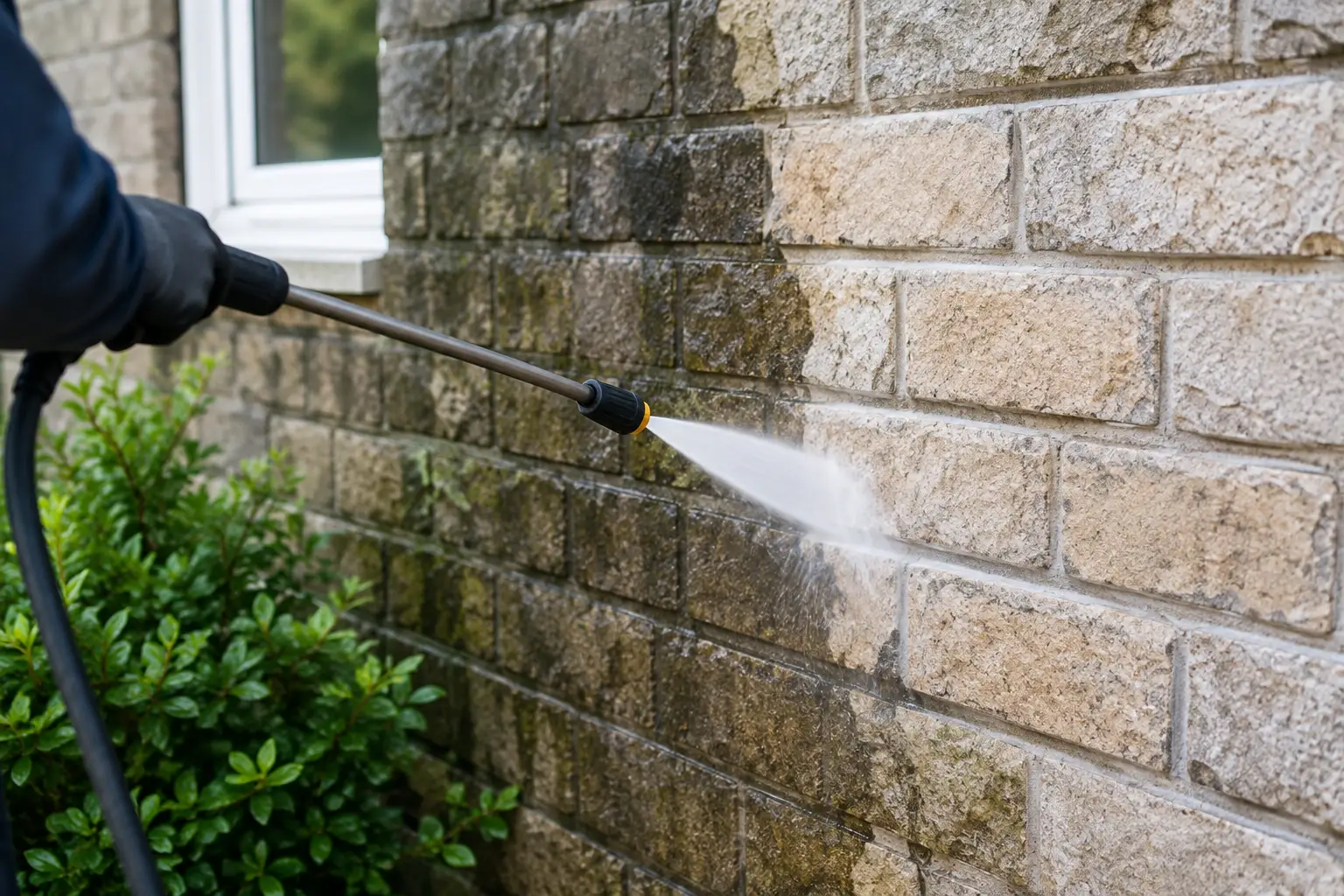
High pressure is only one concern. Water volume, spray angle, distance from the wall, and cleaning products all matter. Spraying directly into horizontal or vertical joints is far more likely to cause damage than using a controlled rinse across the face of the brick. Holding the wand too close can turn a manageable cleaning job into a repair project within seconds.
Some DIY attempts cause trouble because the wall looks dirty enough to need force. In reality, algae, mildew, and surface grime usually respond better to the right cleaning solution and adequate dwell time than to brute pressure. When the growth releases properly, there is no reason to scour the brick or mortar to get a clean result.
Older Brick Requires Extra Caution
Older homes often have softer, more porous brick and lime-based mortar. These materials were designed to manage moisture differently than many modern masonry systems. They deserve a gentler approach.
A hard blast may remove dirt, but it can also remove the protective outer layer of aged mortar. If the joints are already soft when touched, visibly recessed, cracking, or shedding sand, cleaning should wait until a qualified masonry professional evaluates the repairs needed. Washing over failed mortar does not restore it.
Historic brickwork should never be treated as a standard pressure washing surface. The safest method depends on the brick’s condition, the mortar type, and the source of the staining.
Signs Your Mortar May Not Be Ready for Washing
Before any exterior cleaning begins, inspect the wall in good daylight. You do not need to be a mason to notice obvious warning signs. Look for mortar that is missing between bricks, cracks that follow the joints, sections that feel soft or sandy, or brick faces that are flaking away.
White staining, called efflorescence, is another reason to slow down. It occurs when moisture moves through masonry and leaves mineral salts behind. The stain itself may be removable, but the moisture source needs attention. High-pressure cleaning can push more water into the wall and make the cycle worse.
Also watch for loose bricks, damp patches that remain after dry weather, crumbling chimney mortar, or vegetation growing from joints. These conditions point to maintenance needs beyond a surface wash. Cleaning may still be possible after repairs, but the method must be selected carefully.
A Safer Way to Clean Brick and Mortar
For most brick exteriors with algae, mildew, pollen, and general organic grime, a low-pressure soft washing process is the safer alternative. Rather than relying on force, soft washing uses a surface-appropriate cleaning solution to break down the growth, followed by a controlled, low-pressure rinse.
This approach is especially useful for shaded walls, brick patios, retaining walls, entryways, and commercial facades that collect moisture and green buildup. It can restore a cleaner, more welcoming appearance while reducing the chance of etching brick or eroding healthy mortar joints.
That does not mean every brick surface should receive the same solution or treatment strength. Rust stains, paint, graffiti, mineral deposits, and heavy oil staining are different problems. Each may require a specific product, test area, dwell time, and rinse process. A trained exterior cleaning crew evaluates the material and stain before choosing the method.
Technique Still Matters
Even low-pressure cleaning requires good judgment. The operator should avoid forcing water into open joints, window edges, vents, electrical fixtures, and gaps around trim. A wide, controlled spray pattern and proper distance protect the wall while providing an even rinse.
The wall should also be allowed to dry naturally after cleaning. If a section reveals loose or recessed mortar once the buildup is gone, that is useful information. It is better to schedule repointing early than to let rainwater continue working behind the brick.
When Higher Pressure May Be Appropriate
Not all masonry cleaning calls for soft washing alone. Dense concrete block, some newer hard-fired brick, and certain horizontal surfaces may tolerate carefully managed pressure. The key word is managed.
A professional may use more pressure on a durable surface when the staining requires it, but only after considering the condition of the joints, the age of the installation, and the material itself. The pressure setting, nozzle choice, angle, and distance should all be adjusted for the surface.
For example, a brick walkway with sound joints may need a different approach than the brick veneer on a 90-year-old home. Likewise, a concrete patio can often withstand cleaning methods that would be inappropriate for a chimney or retaining wall. There is no single safe PSI number that applies to every masonry project.
Protect the Work After Cleaning
Once the brick is clean and fully dry, take a fresh look at the mortar. Cleaning often makes maintenance needs easier to see. Small areas of deterioration can be repaired before they become larger water-entry points.
Avoid applying a sealer simply because the wall was washed. Some masonry needs to breathe and release moisture naturally. The wrong coating can trap moisture behind the surface, causing more trouble over time. If sealing is being considered, the product must be compatible with the specific brick and mortar system.
Routine cleaning also helps avoid the need for aggressive cleaning later. Removing algae, mildew, and pollen before they become heavy staining lets property owners use gentler maintenance methods. That is better for brickwork, better for curb appeal, and easier on the budget.
For homeowners and property managers, the safest choice is not always the strongest machine. It is the right method for the surface in front of you. WNC Wash Pro’s uses surface-safe cleaning practices to help local properties look refreshed without putting valuable brick and mortar at unnecessary risk. When mortar looks questionable, address the repair first, then clean with care so your masonry can keep doing its job for years to come.