
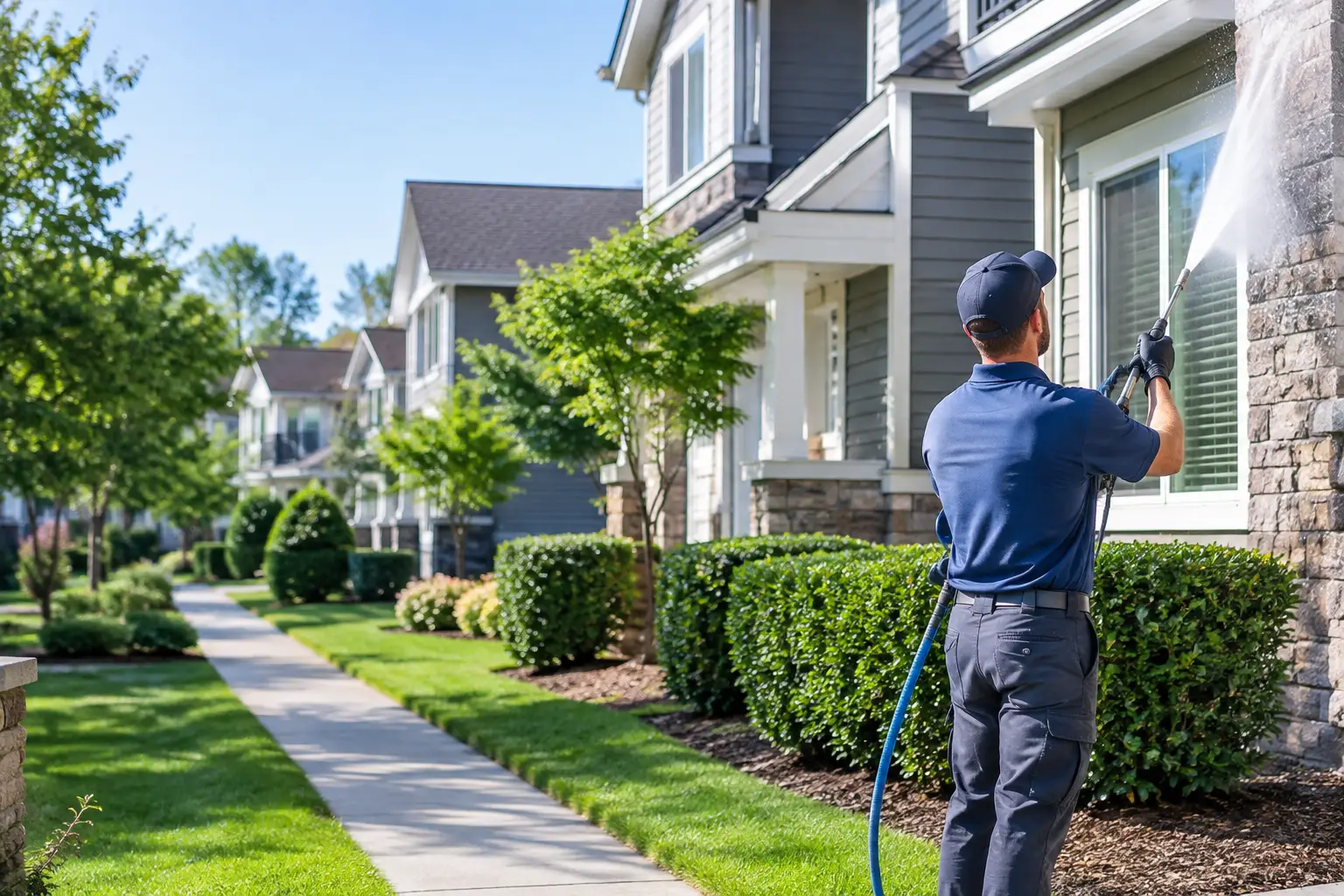
Exterior Cleaning for HOA Communities That Lasts
A community can look well managed on paper and still feel neglected the moment residents drive past stained entry signs, blackened sidewalks, algae-covered siding, or gutters spilling over after a mountain rain. Exterior cleaning for HOA communities is not simply a cosmetic expense. In Western North Carolina’s humid climate, it is a practical part of protecting shared property, maintaining curb appeal, and giving residents confidence that their dues are being put to work.
For HOA boards and community managers, the challenge is rarely deciding whether cleaning is needed. The challenge is creating a plan that addresses the right surfaces, uses methods that will not cause damage, and keeps disruption to homeowners at a minimum.
Why HOA Exterior Maintenance Needs a Plan
Mold, mildew, algae, pollen, leaf debris, and red clay stains do not build up at the same pace on every surface. North-facing buildings may develop green algae long before sunny elevations do. Shaded sidewalks can become slick, while roofs under mature trees collect debris that holds moisture against shingles. In Asheville, Hendersonville, and surrounding mountain communities, wet weather and tree cover make these conditions especially common.
Waiting until the property looks noticeably dirty can turn routine upkeep into a larger project. Algae growth can leave siding dull and discolored. Organic buildup on roofs can shorten the clean, cared-for appearance owners expect. Clogged gutters may contribute to water overflow near foundations, landscaping, and walkways. On concrete, mildew and algae can create a safety concern as well as an appearance problem.
A scheduled maintenance approach gives boards greater control. Rather than responding to complaints one building at a time, the association can evaluate common areas, set priorities, budget more accurately, and communicate a clear service schedule to residents.
What Exterior Cleaning for HOA Communities Should Cover
Each property has different needs, but most HOA communities benefit from looking beyond building siding alone. A thorough walkthrough often identifies several high-visibility surfaces that affect how the entire neighborhood is perceived.
Building exteriors and siding
Vinyl, fiber cement, painted wood, stucco, brick, and other exterior materials can collect organic staining over time. The right method depends on the surface and the source of the discoloration. High pressure is not the answer for every building. In fact, using too much pressure on siding, trim, windows, or painted surfaces can force water where it does not belong or cause visible damage.
Soft washing is often the safer alternative for building exteriors. This method uses low-pressure application and professional cleaning solutions to break down mold, mildew, algae, and grime, followed by a controlled rinse. It delivers a clean finish without treating every surface like a driveway.
Roofs and gutters
Roof cleaning requires special care. Black streaking and dark organic growth should not be blasted away with high pressure, which can damage shingles and reduce their useful life. A trained soft-wash approach is designed to treat roof stains safely while preserving the roofing material.
Gutter cleaning also deserves a place in the HOA maintenance calendar, especially in communities with mature trees. Clearing leaves, pine needles, and debris helps water flow as intended during heavy rain. Boards may choose to schedule gutter service seasonally or focus on buildings with the heaviest tree coverage.
Sidewalks, curbs, drive lanes, and pool decks
Concrete cleaning makes an immediate difference in common areas. Entry sidewalks, mail kiosk pads, clubhouse walkways, retaining-wall paths, curbs, and pool decks can all collect dirt, algae, rust stains, and vehicle drips. Clean concrete brightens the property, but the larger benefit is reducing slippery buildup in frequently traveled areas.
Concrete can typically handle pressure washing when it is done correctly. Still, a professional should adjust the approach for aged concrete, decorative finishes, pavers, or areas near landscaping. The goal is a consistent clean without leaving striping, etching, or damaged joints behind.
Community features that shape first impressions
The surfaces residents and guests notice first are often the ones boards overlook: monument signs, neighborhood entrances, fences, mailbox stations, benches, gazebos, dumpsters, and retaining walls. These areas may be smaller than a row of buildings, but they have an outsized effect on curb appeal.
Graffiti removal, rust removal, and spot treatment for stubborn stains can also be valuable for communities near busy roads, construction activity, or shared commercial areas. Addressing these issues promptly helps prevent one neglected-looking feature from defining the appearance of the whole community.
Set Priorities Before Requesting Quotes
A good cleaning proposal begins with a good scope of work. Before requesting estimates, walk the property with a board member, manager, or maintenance lead and note the conditions that need attention. Photographs are helpful, particularly for upper-story staining, roof growth, drainage issues, and areas residents have reported.
Start with safety and property protection. Slippery walkways, overflowing gutters, heavy algae growth, and surfaces with worsening stains should take priority over lower-impact cosmetic work. Then consider visibility. Entrance features, clubhouse areas, community sidewalks, and front-facing buildings often provide the strongest return because they improve the daily experience for everyone who enters the neighborhood.
It also helps to separate immediate needs from recurring maintenance. For example, a full community building wash may be needed now, while annual entrance cleaning and seasonal gutter cleaning can become scheduled services afterward. This approach prevents the budget from being consumed by emergency work year after year.
Choose Cleaning Methods by Surface, Not Convenience
One of the most important questions an HOA can ask is not, “Do you pressure wash?” It is, “What method will you use on each surface, and why?” The answer should be specific.
Pressure washing is effective for durable surfaces such as concrete, certain masonry, and some hardscape areas. Soft washing is better suited to roofs, siding, painted surfaces, wood, and other materials that can be harmed by aggressive pressure. A capable exterior cleaning contractor should know when to use each method and when a stain needs a specialty treatment instead.
Chemical handling and landscape protection should also be part of the conversation. Professional crews should prepare the work area, protect sensitive plants as needed, manage runoff responsibly, and rinse surrounding surfaces thoroughly. A low price is not a value if it comes with damaged landscaping, streaked siding, or homeowner complaints.
Communicate Clearly With Residents
Even an excellent cleaning project can create frustration if homeowners do not know it is happening. Give residents advance notice that includes the service dates, expected work hours, affected areas, and any actions they need to take. They may need to move vehicles, keep windows closed, clear patio items, or avoid walkways while cleaning is underway.
For larger communities, cleaning in phases can reduce disruption. A contractor may work building by building or section by section, allowing the HOA to communicate a more precise schedule. Weather can affect exterior work, so notices should also explain that dates may shift if rain, lightning, or unsafe conditions delay service.
Residents are more likely to support the project when they understand the reason behind it. A brief explanation that the service is intended to remove algae, protect exterior surfaces, and improve shared spaces goes further than a simple parking notice.
Build a Reliable Maintenance Cycle
There is no single schedule that fits every association. Tree cover, building orientation, surface materials, traffic levels, and local weather all matter. Many communities benefit from an annual review of common-area exteriors, with more frequent attention for gutters, heavily shaded walkways, pool areas, and high-traffic entry points.
A simple maintenance record helps boards plan ahead. Document the date of service, surfaces cleaned, recurring trouble spots, and any repairs that should be addressed before the next visit. Over time, this record makes budgeting easier and provides useful continuity when board members or management companies change.
WNC Wash Pro’s provides trained, surface-safe cleaning for communities that want visible results without unnecessary risk to siding, roofs, concrete, decks, fences, and other shared exterior features. The right contractor should make the process straightforward, provide a clear estimate, and stand behind the completed work.
A clean community entrance, safer sidewalks, and well-kept buildings do more than photograph well for listings. They signal daily care to the people who already call the neighborhood home. When an HOA treats exterior cleaning as planned property maintenance rather than a last-minute reaction, it protects both the appearance of the community and the pride residents feel when they pull into it.