
How to Remove Tire Marks Concrete Safely
Those dark, curved streaks near the garage door or at the end of a driveway are not always dirt. Tire marks can bond to concrete surprisingly fast, especially on warm pavement after a vehicle has been parked, turned sharply, or braked hard. Knowing how to remove tire marks concrete safely helps restore curb appeal without leaving behind etched spots, faded areas, or pressure-washer stripes.
For homeowners and property managers in Asheville and across Western North Carolina, the right approach depends on the age of the stain, the condition of the concrete, and whether oil or other automotive residue is part of the problem. A light surface mark may respond to a basic cleaner and a stiff brush. Heavy, repeated marks often need professional equipment and a controlled cleaning process.
Why Tire Marks Stick to Concrete
Modern tires contain plasticizers, carbon black, oils, and other compounds that improve grip and flexibility. When a hot tire rests on concrete, some of those compounds can transfer to the surface. Turning tires in place, quick stops, and spinning wheels create more friction, which can leave darker rubber deposits.
Concrete is also porous. Even a smooth-looking driveway contains tiny openings that hold contaminants below the visible surface. If the concrete has never been sealed, tire residue, motor oil, dirt, and organic buildup can settle in more easily. In our humid mountain climate, pollen, algae, and mildew can make the surrounding concrete look dull as well, making tire marks stand out even more.
The good news is that rubber transfer marks are usually removable. The key is treating them as a surface-contamination issue, not attacking them with excessive pressure or harsh chemicals.
How to Remove Tire Marks From Concrete at Home
Start with the least aggressive method that fits the stain. This protects the concrete finish and gives you a clear sense of whether the mark is simple rubber residue or a deeper stain mixed with oil and grime.
Begin with a cleaner and stiff brush
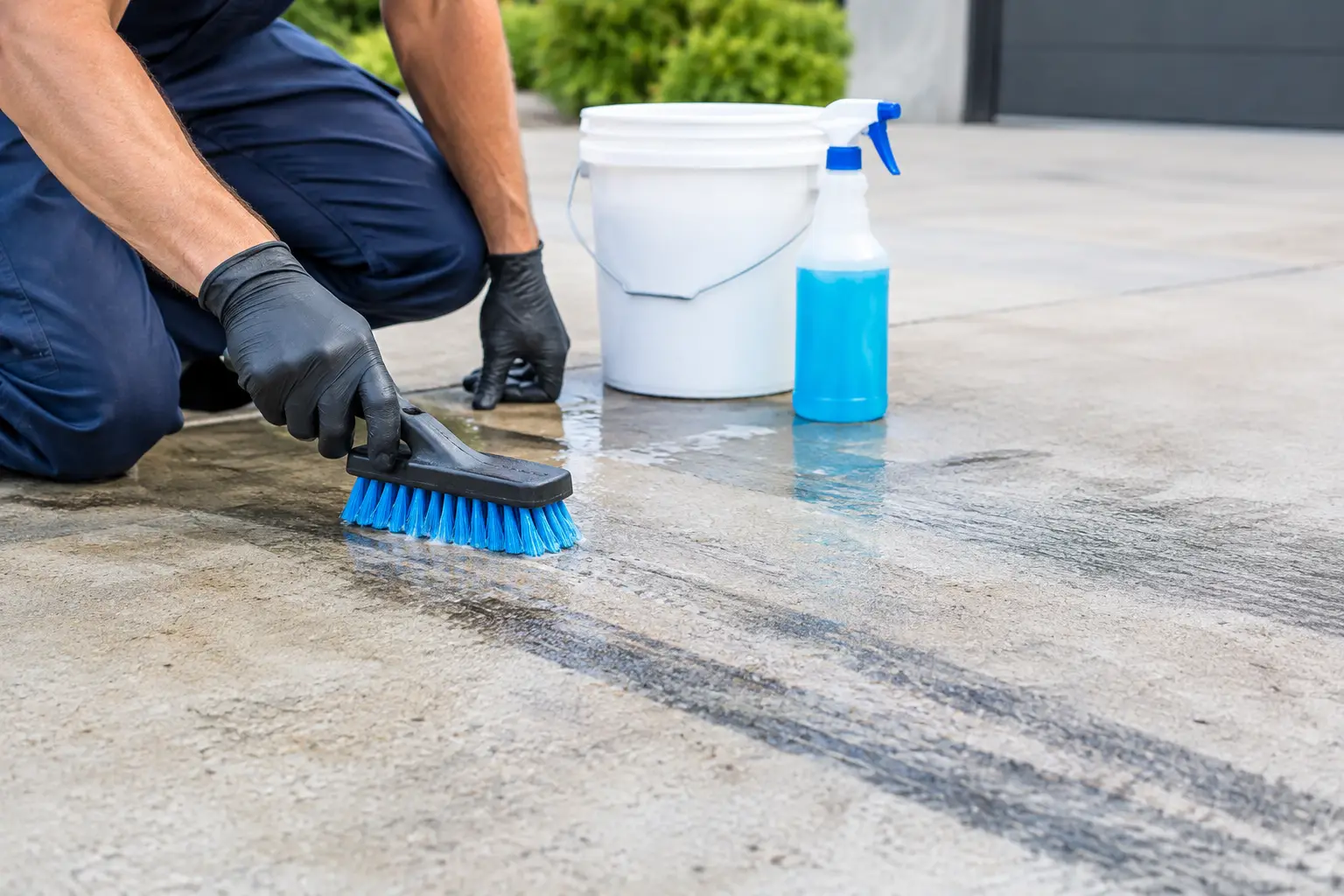
Sweep away grit, leaves, and loose debris first. Apply a concrete-safe degreaser or a mild detergent solution to the dry tire marks, following the product label for dilution and dwell time. Letting the cleaner sit briefly gives it time to loosen the rubber residue.
Scrub the area with a stiff nylon-bristle brush, then rinse thoroughly. A nylon brush is firm enough to work the cleaner into the concrete texture without the risk of metal bristles leaving rust particles behind. For newer, lighter tire marks, this may be all that is needed.
Avoid using dish soap as your only solution for stubborn marks. It can help with light soil, but it is not designed to break down heavy rubber transfer or automotive residue. It may also leave a film if it is not rinsed completely.
Use a concrete-safe degreaser for stubborn marks
If brushing with mild cleaner does not produce a clear improvement, use a purpose-made degreaser rated for concrete. This is particularly helpful when tire marks appear shiny, sticky, or darker in the center, which can signal a mix of rubber and petroleum-based residue.
Apply it only to a manageable section. Keep the cleaner from drying on the concrete, scrub as directed, and rinse well. Test any new product in a less visible corner first, especially on colored, stamped, polished, or decorative concrete. What works on a standard gray driveway may alter the appearance of a specialty finish.
Rinse with controlled pressure
A pressure washer can remove loosened tire residue, but more pressure is not automatically better. Too much force, a narrow nozzle, or holding the wand too close can scar the surface. Those marks often look like pale lines or zebra stripes after the concrete dries, and they can be more difficult to correct than the original tire marks.
For small areas, use a fan-tip nozzle and maintain a consistent distance from the surface. Keep the spray moving. Do not concentrate the stream in one spot to force a stain out. If the driveway is older, flaky, cracked, or showing exposed aggregate, skip aggressive pressure washing altogether.
What Not to Use on Tire Marks
Strong acids, bleach-heavy mixtures, and wire brushes are common shortcuts that can create bigger problems. Acid can etch concrete, weaken the surface paste, and change its color. It may remove one visible mark while leaving a permanently uneven finish.
Bleach is useful for certain organic stains such as mildew or algae when used correctly, but it is not a primary tire-mark remover. It does not reliably dissolve rubber transfer, and runoff can harm landscaping. Likewise, solvents may soften some residues, but they can drive contaminants farther into porous concrete or create disposal concerns.
Do not try to hide a tire mark with concrete paint or sealer before it is fully cleaned. A coating can lock in discoloration and prevent a uniform finish. Clean first, allow the area to dry completely, then decide whether sealing is appropriate.
When Tire Marks Need Professional Concrete Cleaning
A single light mark is a reasonable do-it-yourself project. It is time to call a trained exterior cleaning professional when the marks cover a large area, return after each cleaning, or sit alongside oil stains, rust, algae, and deep grime. Commercial parking areas, garages, loading zones, and high-traffic driveways often need a more complete process than hand scrubbing can provide.
Professional concrete cleaning combines the right chemistry with calibrated water pressure and surface-cleaning equipment. A surface cleaner helps maintain even results across broad areas, reducing the striping that can happen when a wand is used inconsistently. Pretreatment matters as much as the rinse because it separates rubber and oily residue from the concrete before the cleaning equipment does its work.
The trade-off is simple: a rental pressure washer may seem less expensive upfront, but poor technique can permanently mark a driveway or push loose concrete from an already worn surface. A trained crew can assess the slab, adjust methods for the condition of the concrete, and clean adjoining areas so the finished surface looks consistent rather than spot-treated.
WNC Wash Pro’s uses professional surface-cleaning methods to help homeowners, landlords, and businesses restore concrete while protecting the surrounding property. For a driveway, patio, garage entrance, or customer-facing walkway, the goal is not just stronger pressure. It is a cleaner, more even result without unnecessary damage.
Can Sealing Concrete Help Prevent Future Tire Marks?
A quality concrete sealer can make future cleaning easier by reducing how quickly contaminants soak into the surface. It is especially useful for newer driveways, decorative concrete, patios, and commercial walkways that see regular vehicle or foot traffic. Sealer is not a force field, though. Hot tires can still leave transfer marks on sealed concrete, particularly with some topical or glossy sealers.
The best choice depends on the concrete type, moisture conditions, and the desired appearance. Penetrating sealers generally protect without dramatically changing the look, while film-forming products may deepen color or add sheen. Before sealing, concrete must be properly cleaned and dry. Applying sealer over dirt, algae, or tire residue can create blotchy results.
Keeping Driveways and Lots Cleaner Between Services
Regular sweeping keeps abrasive grit from grinding into the concrete under tires. Address oil leaks quickly, rinse away seasonal pollen and mud, and avoid spinning tires or making tight, stationary turns on hot concrete whenever possible. Those simple habits reduce new marks and help the entire surface age more evenly.
If your concrete has widespread discoloration, do not judge success only by whether one dark streak disappears. The best result is a uniformly clean surface that complements the rest of the property. A well-maintained driveway or storefront entry quietly tells visitors that the property is cared for – and that is worth protecting.