
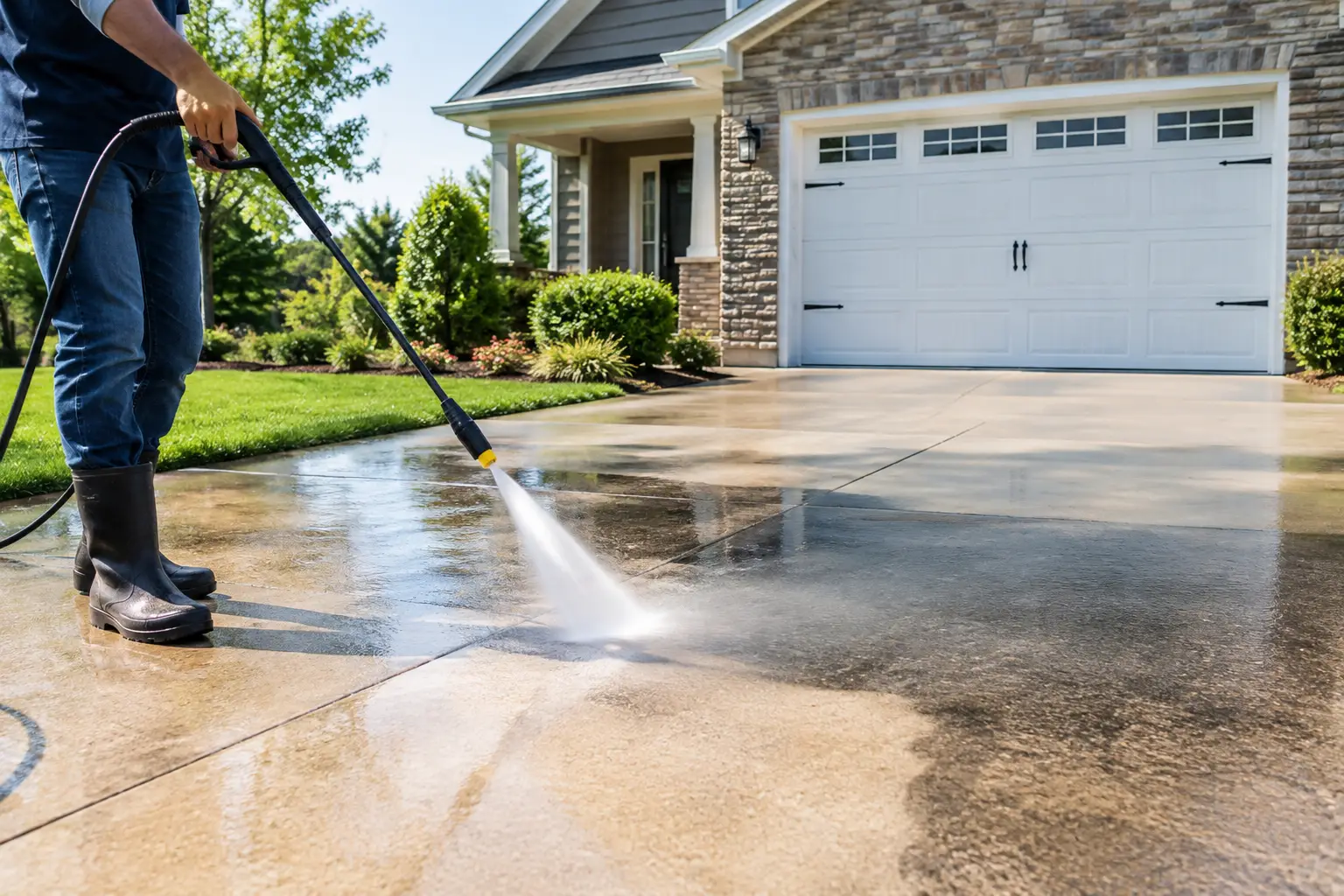
12 Driveway Cleaning Tips for Safer, Better Curb Appeal
A clean driveway changes the first impression of your home before anyone reaches the front door. In Asheville and across Western North Carolina, shaded concrete can quickly collect black mildew, green algae, yellow pollen, red clay, and vehicle stains. These driveway cleaning tips help you improve curb appeal while avoiding the surface damage that can come from using the wrong cleaner, pressure setting, or technique.
1. Identify the Stain Before You Start
Not every dark mark needs the same treatment. Organic growth such as algae, mildew, and moss usually appears in damp, shaded sections and can make concrete slippery. Oil leaves darker, concentrated spots near parked vehicles. Rust often looks orange or reddish-brown, while tire marks tend to be gray or black and sit on the surface.
Knowing what you are treating keeps you from wasting time with a one-size-fits-all cleaner. More importantly, it helps protect the concrete. A product that works well on mildew may do very little for oil, and an aggressive rust remover can discolor surrounding surfaces if it is used carelessly.
2. Choose a Dry, Mild Day
Weather affects both safety and results. A dry day gives cleaners time to work properly and lets the driveway dry after rinsing. Avoid cleaning when rain is expected soon, when temperatures are near freezing, or during intense midday heat that can cause cleaning solutions to dry too quickly.
In the mountain climate around Asheville, spring pollen and humid summer weather can make buildup return faster. Cleaning after peak pollen season or before putting a home on the market often delivers a more noticeable result. If your driveway sits under heavy tree cover, plan on more frequent maintenance than a sunny, open driveway would need.
3. Clear the Surface and Protect Nearby Areas
Move vehicles, planters, toys, grills, and outdoor furniture out of the work area. Sweep away leaves, gravel, soil, and loose debris before applying water or cleaner. This simple preparation prevents debris from becoming muddy streaks and makes it easier to see which areas still need attention.
Cover or thoroughly pre-wet nearby plants, especially when using any chemical treatment. Keep cleaning runoff away from garden beds, storm drains, and ponds whenever possible. A professional crew also accounts for nearby siding, painted surfaces, natural stone, and landscaping before cleaning begins.
4. Treat Algae and Mildew at the Source
Green or black buildup is more than a cosmetic issue. It can create a slippery surface, particularly on sloped driveways, walkways, and areas that stay damp after rain. Scrubbing the visible layer may brighten the concrete briefly, but it does not always address the organic growth below the surface.
Use a concrete-safe treatment designed for algae and mildew, following the label directions for dilution and dwell time. Give the solution time to work before rinsing. For widespread organic buildup, a soft-wash approach is often safer and more effective than relying on extremely high pressure alone.
5. Give Oil Stains Time and Use an Absorbent First
Fresh oil is easier to remove than a stain that has baked into concrete for months. If a leak is recent, cover it with an absorbent material made for oil cleanup, then sweep it away once it has drawn up as much oil as possible. Follow with a degreaser formulated for concrete and work it into the stain with a stiff nylon brush.
Old oil stains can require repeated treatment. Avoid wire brushes, which may leave metal marks, and resist the urge to use harsh solvents without knowing how they will affect the concrete, nearby plants, or runoff. Some deep stains may lighten substantially without disappearing completely, especially on older or porous concrete.
6. Use Pressure Carefully, Not Aggressively
Pressure washing can produce dramatic results, but concrete is not indestructible. A pressure washer held too close, used with an overly narrow tip, or concentrated in one spot can leave permanent etching lines. Those light stripes and uneven patches are difficult to correct and may become more visible once the driveway dries.
Start with the least aggressive setting that can do the job. Keep the spray moving in steady, overlapping passes, and maintain a consistent distance from the surface. A surface cleaner attachment often gives a more even finish over large concrete areas than a wand alone.
The right pressure depends on the age and condition of the driveway. Newer concrete, cracked concrete, exposed aggregate, decorative finishes, and areas with flaking surface material all need extra care. When in doubt, test a small, inconspicuous area first.
7. Do Not Ignore Rust, Fertilizer, and Battery Stains
Orange staining may come from metal furniture, tools, sprinkler water with high iron content, fertilizer, or a vehicle battery. These stains call for a dedicated concrete-safe rust treatment, not more pressure. Pressure alone usually will not remove rust and can roughen the surface while leaving the color behind.
Apply rust products precisely and rinse as directed. Never assume that an acid-based product is safe for every driveway or adjacent surface. It may affect colored concrete, pavers, natural stone, painted curbs, and nearby metal fixtures. If the source of the stain remains, such as an iron-rich irrigation system, the problem can return after cleaning.
8. Work From High Areas Toward the Street
Water carries dirty runoff downhill, so plan your cleaning path before you begin. Start near the garage or upper edge of the driveway and work toward the street in manageable sections. This reduces the chance of walking through dirty water and tracking grime back onto areas you have already cleaned.
Rinse thoroughly enough to remove loosened dirt and cleaning residue. Leaving residue behind can create blotches, attract dust, or affect nearby landscaping. Pay special attention to edges, expansion joints, and the transition between the driveway and garage floor, where dirty water often collects.
9. Clean Expansion Joints Without Damaging Them
Expansion and control joints naturally collect soil, pine needles, weeds, and organic debris. Clear these areas gently before cleaning so water can flow properly and the driveway looks finished from edge to edge. If weeds are growing through joints, remove them carefully rather than blasting deeply into the gap with a pressure washer.
High pressure directed into joints can remove joint material or push water where it does not belong. The goal is to clean the surface, not excavate the driveway. For cracked joints or visible settling, cleaning may improve appearance, but it will not replace needed repair.
10. Know When Sealing Makes Sense
After the driveway is fully clean and completely dry, sealing may help reduce water absorption and make future staining easier to manage. It can be especially worthwhile for newer concrete, high-traffic driveways, or surfaces exposed to frequent tree debris, automotive fluids, and moisture.
Sealing is not always the first step. Concrete with active cracking, spalling, trapped moisture, or remaining contamination may need repair or additional preparation first. The wrong sealer can also leave a shiny appearance, darken concrete, or become slippery when wet. Choose a product suited to your driveway and the finish you want, or ask a trained professional for guidance.
11. Avoid Common Driveway Cleaning Mistakes
The fastest route to a disappointing result is combining strong chemicals with maximum pressure and hoping for the best. Avoid using muriatic acid as a general cleaner, mixing chemical products, or applying bleach-based solutions without protecting plants and following proper safety instructions. Do not use a zero-degree pressure tip on concrete, and do not clean cracked or deteriorating areas as if they were sound, new slabs.
Another common mistake is cleaning only the center of the driveway. The edges, apron, side paths, and entrance near the garage often hold the most visible grime. A consistent approach creates the even, cared-for appearance homeowners are looking for.
12. Call a Professional for Heavy Buildup or Delicate Surfaces
A homeowner-grade pressure washer can handle light maintenance, but deep algae growth, old oil, widespread rust, and heavily soiled concrete often require specialized products and equipment. Professional cleaning is also the safer choice when the driveway borders delicate landscaping, painted surfaces, retaining walls, or drainage areas.
WNC Wash Pro’s uses trained, surface-conscious methods to clean concrete without treating every stain like a high-pressure problem. A professional assessment can determine whether soft washing, controlled pressure cleaning, stain treatment, or sealing is the right fit for your property. That approach saves time and helps avoid costly marks or damage caused by trial-and-error cleaning.
A driveway does not need to look brand new to look well cared for. Regular sweeping, quick attention to fresh spills, and a careful seasonal cleaning routine can keep it safer underfoot and more welcoming from the curb – one practical way to keep cleaning your castle a little easier.