
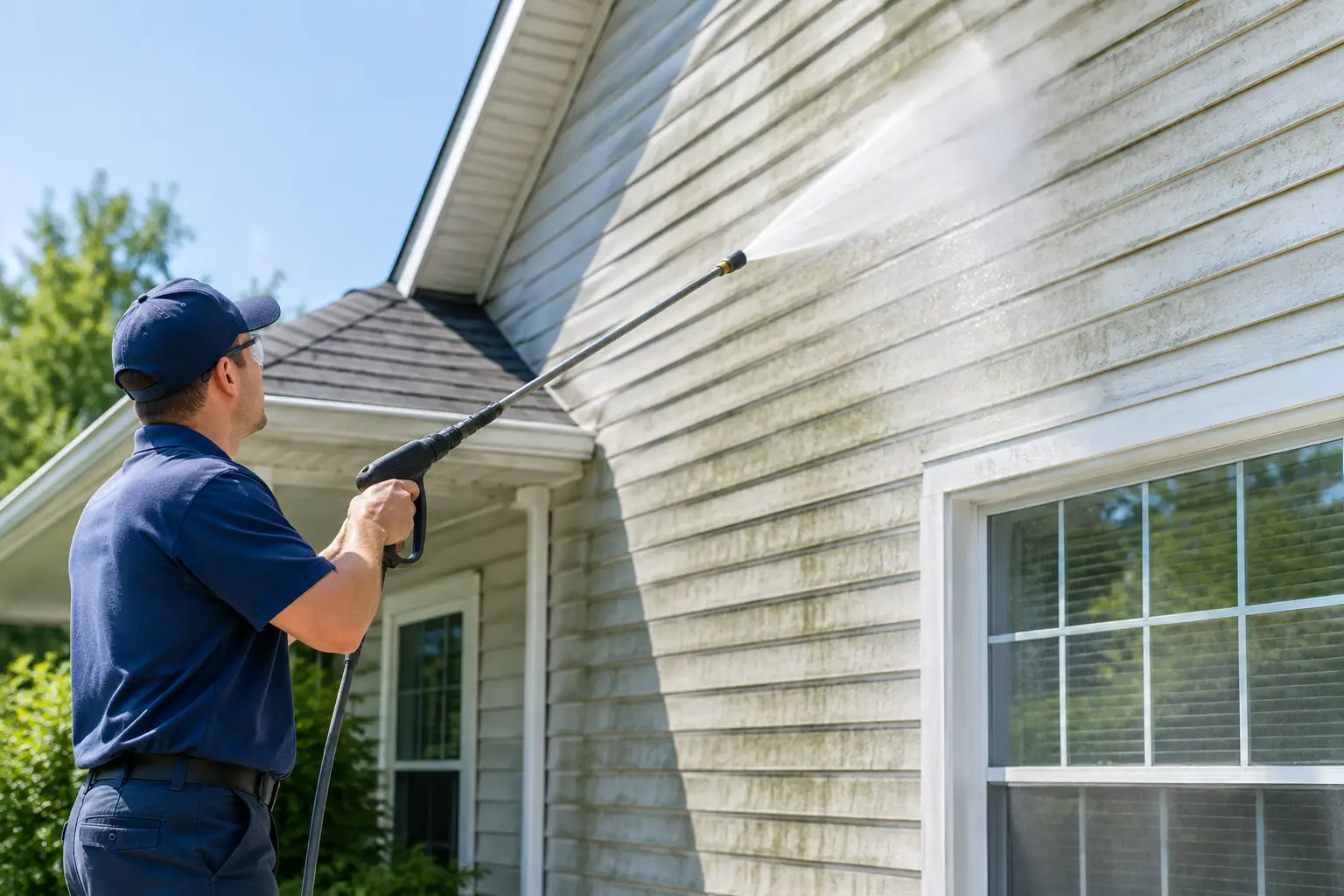
Soft Washing for a Cleaner, Safer Exterior
A black-streaked roof, green siding, or slippery patio can make an otherwise well-kept property look neglected fast. In Western North Carolina’s humid mountain climate, soft washing is the surface-safe answer to the algae, mildew, mold, pollen, and organic buildup that return season after season.
Unlike a one-size-fits-all blast of water, professional soft washing is designed around the material being cleaned. It gives homeowners and property managers a practical way to restore curb appeal while protecting the surfaces they have invested in.
What Is Soft Washing?
Soft washing is a low-pressure exterior cleaning method that uses carefully selected cleaning solutions to treat and remove organic growth and grime. The solution does the heavy lifting, while low-pressure water is used to rinse away contaminants without the force associated with traditional pressure washing.
This distinction matters. High pressure has a place on durable materials such as certain concrete surfaces, but it can be the wrong choice for roof shingles, vinyl siding, painted wood, stucco, older brick, and delicate trim. Soft washing is the safe alternative when the goal is to clean thoroughly without driving water behind siding, stripping paint, disturbing shingles, or damaging softer materials.
The method is especially effective against living contaminants. Algae, mildew, mold, moss, and lichen do not simply sit on a surface like loose dirt. They attach, spread, and leave stains behind. Rinsing alone may improve the appearance temporarily, but a proper soft wash treats the growth at its source so the result lasts longer.
Why Exterior Growth Is So Common Locally
Asheville, Buncombe County, Hendersonville, Biltmore Forest, and nearby communities have plenty of trees, changing weather, and moisture. Those are great conditions for mountain living, but they also create ideal conditions for exterior buildup.
Shade slows drying after rain. Tree cover drops pollen, leaves, needles, and sap. Humid stretches encourage mildew and algae on north-facing walls, shaded rooflines, fences, decks, and walkways. Even properties that look clean from the street may have growth forming along gutters, under eaves, or on the side of the home that receives less sun.
For commercial properties, the same conditions affect storefronts, sidewalks, entryways, retaining walls, dumpster areas, and building exteriors. A stained facade or slick walkway can leave customers with the wrong first impression. Regular exterior cleaning helps a property look cared for before a visitor ever walks through the door.
Where Soft Washing Works Best
Soft washing is not a replacement for every exterior cleaning method. It is a specialized approach for surfaces that need a gentler touch and for stains caused by organic growth. A trained cleaning professional evaluates both the material and the type of buildup before choosing the right process.
It is commonly used for roofs with dark algae streaks, vinyl or painted siding with green mildew, stucco and painted exteriors, wood and composite fences, screened porches, exterior trim, soffits, gutters, and many types of outdoor furniture. It can also be the right option for delicate stonework, decorative features, and areas where aggressive pressure could cause damage.
Concrete driveways, patios, and sidewalks often benefit from a different approach. These surfaces are typically durable enough for controlled pressure washing, sometimes combined with treatment for algae or mildew. The best cleaning plan may use soft washing on the house and roof, then professional pressure washing for concrete. That is why the right method depends on the surface, not just the stain.
Soft Washing a Roof Without Taking Risks
Roof cleaning is one of the clearest examples of why method matters. Those dark streaks on asphalt shingles are often algae, not ordinary dirt. Left alone, organic growth can hold moisture, affect the roof’s appearance, and make an otherwise sound roof look prematurely aged.
A roof should never be treated like a driveway. High-pressure washing can dislodge granules, lift or crack shingles, force water where it does not belong, and create expensive problems. Professional roof soft washing applies a roof-appropriate treatment at low pressure, allowing the solution to break down the growth before a controlled rinse or natural weathering clears the surface.
Not every roof stain disappears at the same speed. Heavy lichen, moss, or long-standing growth may take additional time to release safely. Patience is part of protecting the roof. A responsible contractor will set clear expectations instead of using unnecessary force to chase an instant result.
The Value Goes Beyond Curb Appeal
A freshly cleaned exterior changes how a property feels. Siding looks brighter, trim stands out, and rooflines regain a more uniform color. That visible improvement can be valuable before listing a home, welcoming guests, preparing for an event, or maintaining a professional commercial location.
There are practical benefits, too. Removing mildew and algae from walkways can help reduce slick conditions. Cleaning organic buildup from siding, gutters, and trim makes it easier to spot small maintenance issues before they become larger repairs. For landlords and property managers, scheduled exterior care can help keep common areas and rental properties presentable between tenants.
Soft washing is also about protecting materials. Dirt may be mostly cosmetic, but organic growth can trap moisture against surfaces. Regular cleaning does not replace repairs, painting, or roof maintenance, yet it supports a sensible long-term care plan for the exterior of a home or business.
Why DIY Soft Washing Can Go Wrong
Homeowners can buy pressure washers and cleaning products, but the equipment alone does not make a job surface-safe. Too much pressure can damage siding, screens, caulking, window seals, wood fibers, and roofing. The wrong solution strength can discolor materials, harm nearby landscaping, or leave uneven results.
There is also the issue of water control. Exterior cleaning requires attention to plants, electrical fixtures, doors, windows, outdoor outlets, and drainage. Roof work brings another layer of risk because ladders, wet surfaces, and steep pitches are involved.
Professional soft washing crews use the appropriate equipment, dilution methods, application techniques, and rinsing process for the job. They also know when not to use soft washing. For example, loose siding, failing paint, damaged shingles, or active leaks should be identified before cleaning so the property owner can address the underlying condition.
What to Expect From a Professional Soft Washing Service
A quality service starts with an evaluation, not a guess. The crew should identify the surface material, staining, access needs, water source, landscaping concerns, and any damaged areas that may need special attention. From there, the cleaning method can be matched to the property.
Before treatment begins, nearby plants and sensitive areas should be protected and thoroughly rinsed as needed. The cleaning solution is applied at low pressure, given time to work, and then rinsed carefully. The goal is an even, clean result without unnecessary force.
For homeowners, the process should feel straightforward. Move vehicles and outdoor items when requested, close windows, keep pets indoors, and let the crew handle the exterior cleaning. For commercial property managers, scheduling can often be coordinated to reduce disruption to customers, tenants, and daily operations.
WNC Wash Pro’s brings trained local crews and a 100% satisfaction guarantee to this work, because cleaning your castle should not mean worrying about damage or being left with an unfinished result.
How Often Should You Schedule Soft Washing?
There is no single calendar that fits every property. A sunny home with little tree cover may stay clean longer than a heavily shaded home near dense woods. North-facing walls, roof valleys, gutters, and damp areas often need attention sooner than the rest of the exterior.
Many homeowners benefit from an annual inspection and cleaning as conditions require. Properties with persistent shade, heavy pollen, nearby trees, or recurring mildew may need more frequent service. Commercial locations with customer-facing sidewalks and entrances may also need a regular maintenance schedule to keep the property safe and welcoming.
The best time to act is before buildup becomes heavy. When green staining first appears on siding or dark streaks start spreading across a roof, a professional evaluation can help preserve the clean look of the property with less hassle. A free estimate is a simple first step toward choosing the right care for every surface outside your door.