
Best Cleaners for Vinyl Siding That Work Safely
Green streaks on vinyl siding are not just dirt. In Asheville, Hendersonville, and throughout Western North Carolina, humid weather, shade, pollen, and frequent rain create ideal conditions for algae, mildew, and organic buildup. The best cleaners for vinyl siding remove that growth without leaving a chalky finish, fading color, killing nearby plants, or forcing water behind the panels.
Vinyl is durable, but it is not indestructible. The wrong chemical concentration, a harsh solvent, or too much pressure can create a bigger problem than the staining you started with. The right choice depends on what is on the siding, how widespread it is, and whether you can safely reach and rinse the area.
What a Vinyl Siding Cleaner Needs to Do
A good vinyl siding cleaner should match the stain instead of simply being the strongest product on the shelf. Most exterior discoloration falls into a few categories: loose dirt and pollen, mold or mildew, algae, rust, grease, or oxidation. A cleaner that handles one may do little for another.
For routine dust, pollen, and light soil, a mild exterior house wash solution is usually enough. These cleaners loosen surface grime so it can be rinsed away with a garden hose or very low-pressure water. They are often the safest starting point for siding that is generally clean but looks dull after a heavy pollen season.
Dark green, black, or brown spotting usually calls for a cleaner formulated to address organic growth. In our mountain climate, algae and mildew often collect on the north side of a home, beneath rooflines, around gutters, and behind landscaping where the siding stays damp. A product designed for mold and mildew can work well, but it needs proper dwell time and a thorough rinse to avoid streaking.
Rust-colored drips below nails, vents, fixtures, or irrigation overspray are different. They require a dedicated rust remover that is labeled safe for vinyl. Do not try to scrub these stains away with an abrasive pad or use a harsh acid product without understanding the surface and runoff risks.
The Best Cleaners for Vinyl Siding by Problem
There is no single bottle that is best for every house. These are the cleaner types that make the most sense for common siding conditions.
Mild house wash for dirt and pollen
A non-abrasive, general-purpose exterior cleaner is the practical option for dusty siding, light pollen, spider webs, and ordinary road film. Look for one that is specifically approved for vinyl, biodegradable when possible, and intended to rinse clean. Use a soft brush only where needed, working from the bottom upward to reduce visible drip marks, then rinse from the top down.
This approach is useful for maintenance cleaning, especially on sunny sides of the house that do not have heavy biological growth. It will not fully solve entrenched green or black staining, however. Repeated scrubbing with a mild cleaner can waste time and still leave colonies behind.
Mold and mildew cleaner for organic staining
For algae, mildew, and mold staining, a siding-safe cleaner with an appropriate antimicrobial or oxidizing component is generally more effective than soap alone. Many homeowner products rely on bleach-based chemistry. When properly diluted and carefully applied, this type of solution can remove organic buildup quickly.
The trade-off is that bleach-based cleaners demand care. They can damage plants, discolor fabrics, irritate skin and eyes, and leave uneven results if they dry on the surface. Pre-wet shrubs and grass, protect sensitive plants, wear appropriate protective gear, and rinse generously. Never mix bleach with ammonia, acids, or any other household chemical.
A cleaner marketed as “bleach-free” may be a good choice for lighter mildew, regular upkeep, or homes with sensitive landscaping. Just set realistic expectations. Bleach-free formulas often require more agitation, more than one application, or a longer contact time on heavy organic growth.
Specialty rust and oxidation cleaners
Orange stains, metallic drips, and chalky white residue need a more targeted solution. Rust removers made for exterior surfaces can lift iron deposits without damaging vinyl when used according to the label. They should be spot-tested in an inconspicuous area first, particularly on older siding.
Oxidation is another issue that can be mistaken for dirt. If colored vinyl leaves a powdery residue on a cloth or looks faded in patches, aggressive washing may make the appearance worse. Oxidized siding is often a restoration or replacement conversation, not a standard cleaning job. A trained exterior cleaning professional can help determine whether the problem is removable buildup or a change in the siding itself.
Why Pressure Is Usually Not the Answer
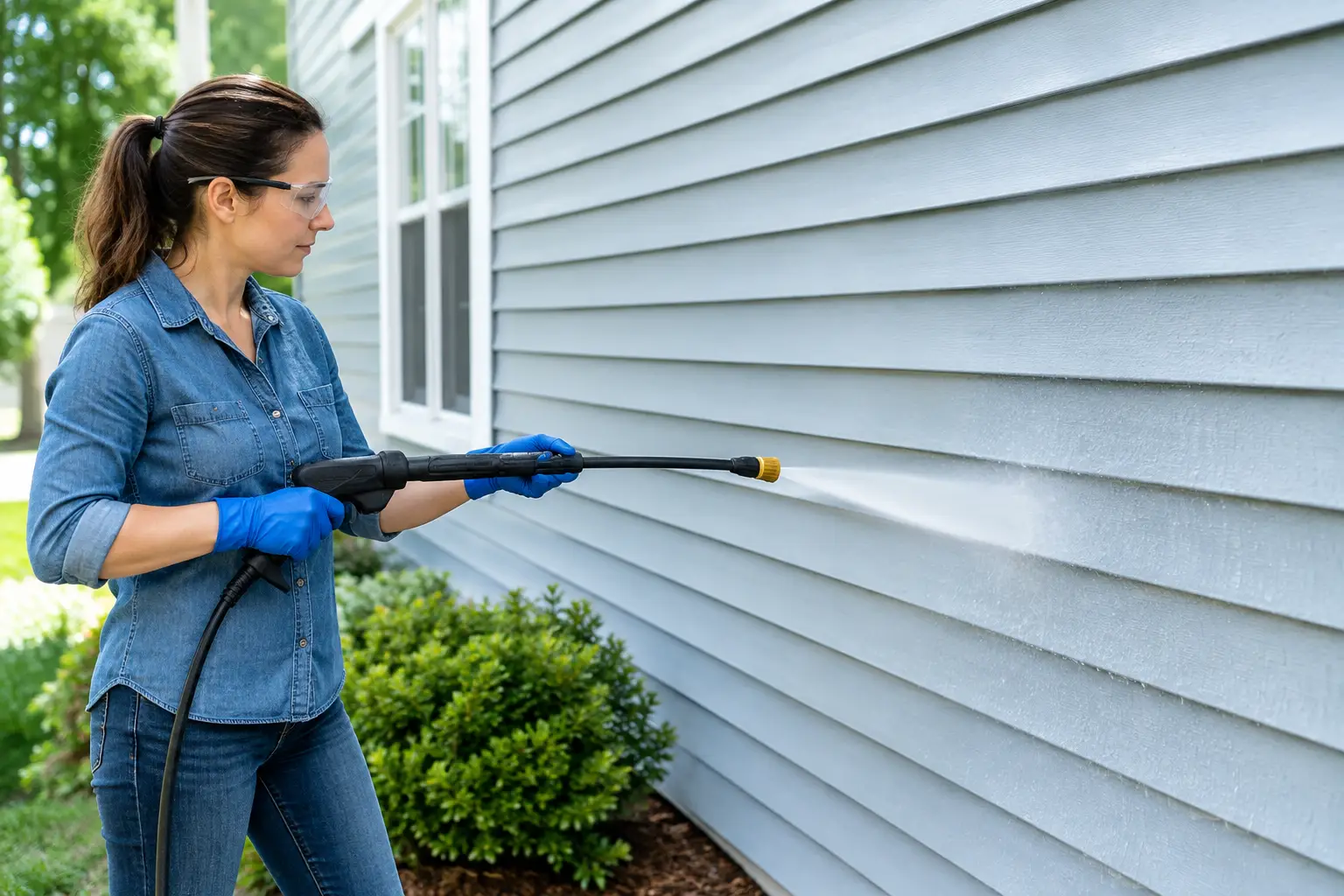
Many homeowners assume a pressure washer is the fastest way to clean siding. It can be fast, but high pressure is rarely the safest approach. Vinyl panels have seams and edges that can allow water behind the siding. That trapped moisture can contribute to staining, insulation issues, or damage that does not show up immediately.
High pressure can also crack brittle panels, force loose pieces out of place, scar trim, and strip paint from nearby surfaces. A narrow spray tip aimed upward is especially risky because it drives water directly behind the laps.
Soft washing is the safer alternative for most vinyl siding. It uses a carefully selected cleaning solution and low-pressure application to treat the organic growth at its source, followed by a controlled rinse. The goal is not to blast the siding clean. It is to remove the contamination while protecting the surface, the caulking, the landscaping, and the home itself.
A Safer Way to Clean Vinyl Siding at Home
If you are tackling a small, reachable section yourself, start conservatively. Test your cleaner on a hidden area, follow the dilution instructions exactly, and avoid cleaning in direct, hot sun when products can dry too quickly. Close windows, move outdoor furniture, and cover or rinse nearby plants before beginning.
Apply cleaner to a manageable area and allow it to work for the recommended time. Do not let it dry. For stubborn spots, use a soft-bristle brush with light pressure rather than a scouring pad, steel wool, or abrasive sponge. Rinse thoroughly with a garden hose or a low-pressure rinse.
Pay attention to what happens after the surface dries. If green staining reappears quickly, the solution may not have fully treated the growth. If you see dull patches, streaks, or chalking, stop before cleaning more of the house. Those signs can point to oxidation, chemical residue, or a technique issue that needs professional attention.
When Professional Soft Washing Makes More Sense
DIY cleaning is reasonable for a small section of low-level siding with light dirt. It becomes less practical when staining covers multiple sides of the home, reaches second-story areas, returns season after season, or sits near delicate landscaping. It is also wise to call a professional when the siding is older, visibly oxidized, or close to wood trim, roofing, painted surfaces, or electrical fixtures.
A trained crew can identify whether the stains are algae, mildew, rust, or another issue before selecting the cleaning method. They can also control chemical strength, protect surrounding surfaces, and rinse consistently without the risks that come with high-pressure washing. For homeowners who want clean siding without spending a weekend on ladders, this is often the most reliable route.
At WNC Wash Pro’s, surface-safe soft washing is designed for exactly these conditions: humid weather, persistent organic buildup, and homes that deserve careful treatment. A professional cleaning can restore the look of your exterior while helping protect the investment you have made in your property.
Fresh siding changes how a home feels before anyone even walks through the door. When the stains are more than a little pollen on a reachable wall, choosing a careful cleaning method is one of the simplest ways to keep your castle looking cared for.