
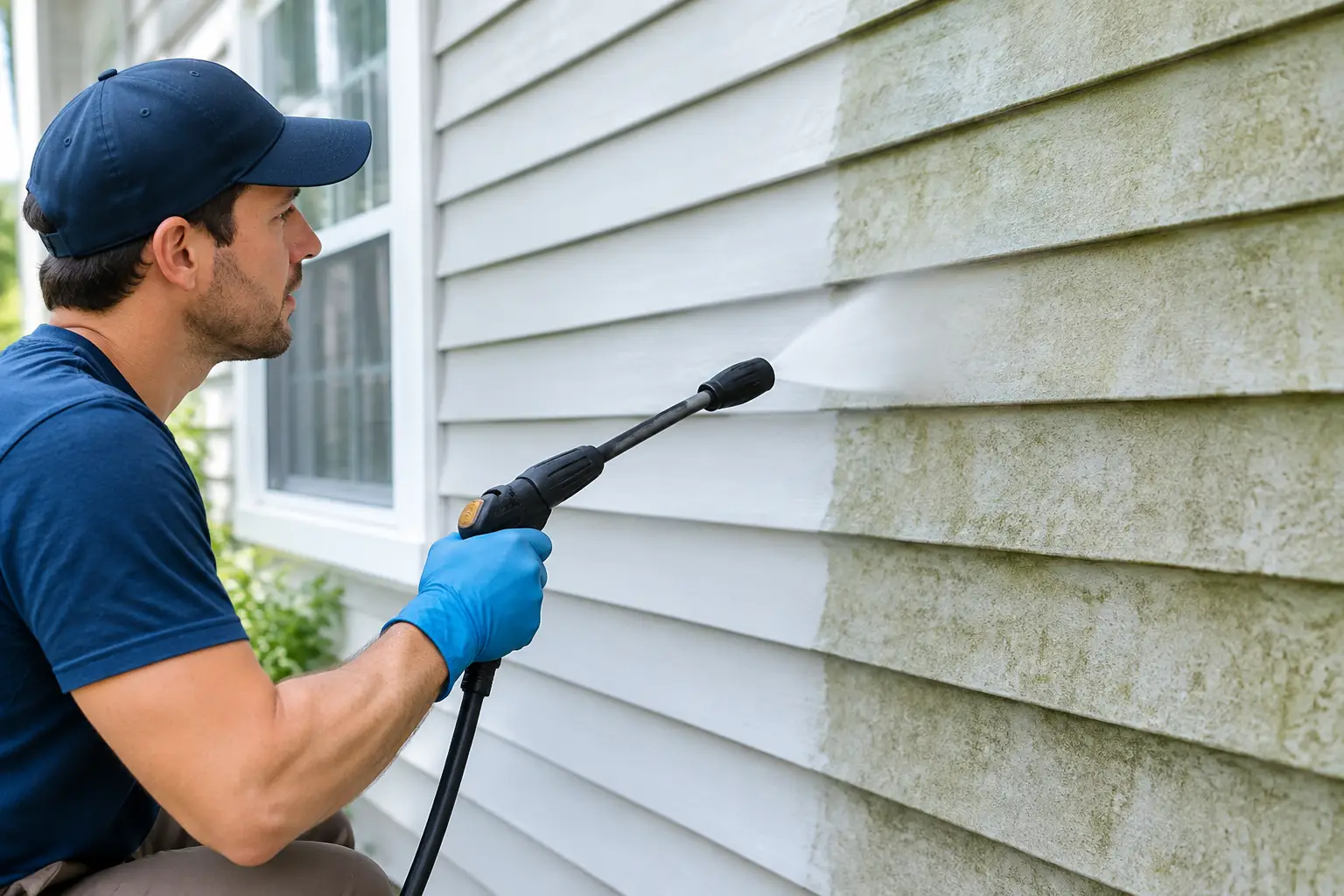
How to Remove Oxidation From Siding Safely
That dull, chalky film on your siding is not always dirt. In fact, homeowners often try to remove oxidation from siding with a stronger cleaner or more pressure, only to create bright streaks, uneven color, or permanent surface damage. In Western North Carolina’s wet, pollen-heavy climate, siding can collect organic growth and oxidation at the same time. The right solution begins with knowing which problem you are looking at.
Oxidation is a normal part of aging for many exterior materials, especially vinyl and painted aluminum siding. It needs a surface-safe approach, not a one-size-fits-all pressure washing treatment.
What Oxidation on Siding Looks Like
Oxidation occurs when sun, weather, moisture, and time break down the outer finish of siding. On vinyl, it often appears as a pale, powdery residue that rubs off on a dark cloth or your fingertips. The surface may look faded, cloudy, or uneven, particularly on walls that receive the most afternoon sun.
Painted aluminum siding can also oxidize. Instead of a uniform, smooth finish, it may develop a chalky coating and lose some of its original color. On either material, oxidation is commonly mistaken for mildew, dust, or dried soap residue.
A quick visual check can help. Algae and mildew usually create green, black, or dark gray spotting, especially on shaded and damp sides of a home. Pollen looks yellow or greenish and tends to sit on the surface. Oxidation is usually lighter in color and leaves a chalk-like transfer when wiped.
It is also common to see both conditions on the same wall. A house may have algae along the lower siding and oxidation across the upper, sun-exposed areas. Cleaning the organic buildup can make the oxidation more noticeable, simply because the surrounding siding now looks cleaner.
Why High Pressure Is the Wrong First Move
Pressure washing has a place in exterior maintenance, but oxidation is one of the clearest examples of why more force is not always better. A concentrated pressure stream can strip away already weakened material unevenly. The result may be visible wand marks, patchy color, or lines that are difficult to correct.
High pressure can also force water behind siding panels, disturb loose caulk, and damage older finishes. That risk increases around windows, trim, electrical fixtures, and siding that has become brittle with age. If a wall is chalking heavily, aggressive washing may expose the difference between more-oxidized and less-oxidized areas.
A trained technician begins with the surface, the condition of the finish, and the actual source of the discoloration. Soft washing uses low pressure and properly selected cleaning solutions to remove mold, mildew, algae, pollen, and grime without blasting the surface. It is the safe alternative for most house-washing needs, but it is not a magic cure for every case of oxidation.
How to Remove Oxidation From Siding Without Creating Streaks
The best method depends on whether the oxidation is light surface chalking or significant finish deterioration. Before any broad cleaning, test a small, less-visible area. This tells you how the siding responds and helps prevent a whole-wall surprise.
Start With a Gentle House Wash
If the siding has dirt, pollen, algae, or mildew covering the oxidation, a professional soft wash should come first. Removing that buildup reveals the true condition of the finish and restores much of the home’s clean appearance without unnecessary pressure.
The work should be done with controlled solution application, adequate dwell time, and a gentle rinse. Windows, landscaping, outlets, painted trim, and nearby surfaces all need protection. Rinsing is especially important because leftover chemical residue can leave its own streaks or contribute to an uneven-looking finish.
For many Asheville-area homes, this alone makes a major difference. Humidity, tree cover, and seasonal pollen can make siding look faded when the real issue is a layer of organic buildup. Once that film is gone, the siding may look much more even.
Treat Light Chalkiness Carefully
When a clean wall still leaves white residue on a cloth, a siding-safe oxidation cleaner or restoration product may be appropriate. These products are formulated to lift or condition chalky residue, but results depend on the siding material and its age.
Work in manageable sections and follow the product directions exactly. Do not let a cleaner dry on the surface. Applying it across a large wall on a sunny afternoon is a common way to end up with lap marks or uneven results. Rinse thoroughly and evaluate the section before moving forward.
Avoid household shortcuts such as abrasive scrub pads, harsh degreasers, or highly concentrated cleaners. A product that looks effective while wet can leave dull spots after drying. Scrubbing too hard can also create permanent glossy patches on vinyl, which are just as noticeable as the original oxidation.
Know When Cleaning Cannot Restore the Color
Oxidation removal and color restoration are not always the same service. If ultraviolet exposure has permanently broken down the siding finish or faded the pigment, washing can remove chalk and contamination but cannot bring back the original factory color.
At that point, a restoration coating, repainting where appropriate, or siding replacement may be the better long-term answer. Painted aluminum siding is often a candidate for repainting after proper preparation. Vinyl can sometimes be coated with products made specifically for vinyl, but the siding must be in sound condition and the work should be handled by an experienced professional.
Honest advice matters here. No homeowner should pay for aggressive cleaning with the expectation that it will reverse years of sun damage. A reputable exterior cleaning contractor will explain what can be cleaned, what can be improved, and what has reached the point of restoration rather than washing.
Common Mistakes That Make Oxidized Siding Look Worse
The most frustrating results usually come from treating oxidation like ordinary dirt. One mistake is using a pressure washer too close to the wall. Another is cleaning only the visibly dirty sections, which can leave obvious contrast between treated and untreated panels.
Cleaning in direct sun can be another problem. Fast-drying solutions may leave streaks, and hot siding is less forgiving when cleaners are applied. Working from the bottom up with solution application can help prevent drip marks, while a careful rinse from top to bottom keeps runoff from drying on clean sections.
Homeowners should also be cautious with older painted surfaces. If the paint is peeling, cracking, or unstable, washing may reveal more underlying failure. Homes built before 1978 require extra caution because disturbed old paint can present lead-related concerns. In that situation, do not sand, scrape, or aggressively wash until the surface has been evaluated properly.
When to Call a Professional for Oxidized Siding
A professional evaluation is worthwhile when the siding looks uneven after routine washing, leaves heavy chalk on your hand, has visible streaking, or includes a mix of vinyl, painted trim, aluminum, and delicate exterior finishes. It is also a smart call for multi-story homes where safe access and consistent application matter.
WNC Wash Pro’s uses surface-safe soft washing to remove the mold, mildew, algae, pollen, and grime that can hide or worsen the appearance of oxidation. Before cleaning, a trained crew can help distinguish between removable buildup and a finish that needs a restoration plan. That keeps you from using the wrong method on a major investment like your home’s exterior.
For rental properties, listings, and commercial buildings, this distinction can protect both curb appeal and maintenance budgets. A thorough exterior wash may be the practical answer before photos, showings, or a seasonal property inspection. If the siding still appears faded afterward, you have a clearer basis for deciding whether repainting or replacement is worth the investment.
Keep Siding From Looking Chalky So Soon
You cannot stop oxidation completely, particularly on siding with years of direct sun exposure. You can, however, prevent organic buildup from making it look worse. Regular low-pressure house washing removes pollen, mildew, algae, and airborne grime before they hold moisture against the surface.
Trim back branches that keep walls shaded and damp, make sure gutters are directing water away from siding, and address sprinkler overspray where possible. These small maintenance steps are especially helpful around Asheville, Hendersonville, and other humid mountain communities where moisture lingers after rain.
If your siding feels chalky or looks faded, resist the urge to turn up the pressure. A careful inspection and a surface-safe cleaning plan can restore what is cleanable, protect what is still sound, and give you a straightforward answer about what your home needs next.