
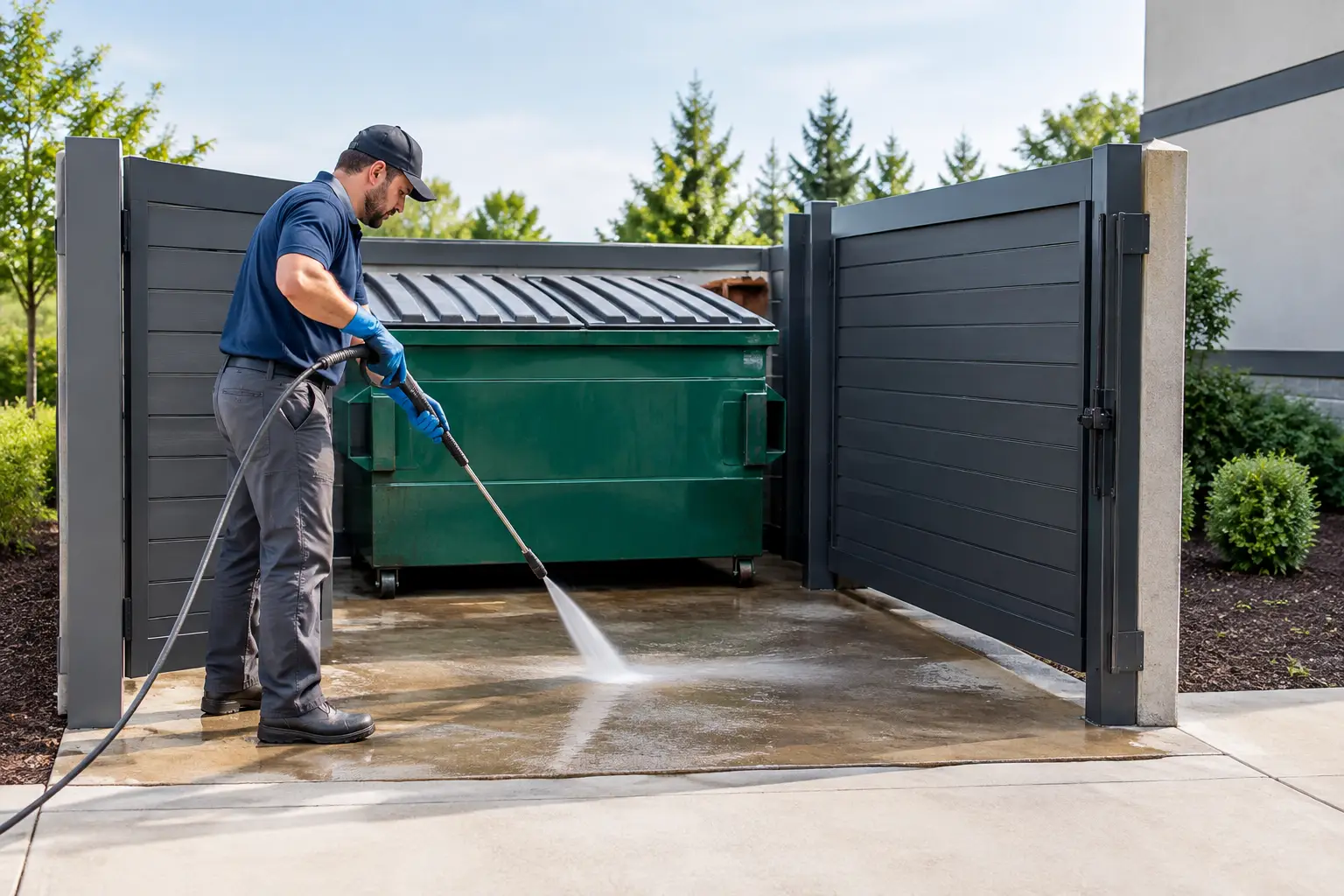
How to Maintain a Clean Dumpster Enclosure
The dumpster area can change how customers, tenants, guests, and prospective buyers view an entire property in seconds. A clean dumpster enclosure tells people that the property is managed with care. A stained, odor-filled enclosure with overflowing debris can create the opposite impression, even when the building, landscaping, and parking lot are otherwise well maintained.
For restaurants, retail centers, apartments, offices, medical facilities, and rental homes across Western North Carolina, dumpster cleaning is more than a cosmetic task. It helps control odors, reduce slippery buildup, discourage pests, and protect the concrete, walls, gates, and surrounding pavement from long-term staining. In Asheville’s humid climate, moisture and organic growth can make an already messy area harder to manage.
Why Dumpster Enclosures Get Dirty So Fast
Dumpster pads collect a difficult combination of contaminants. Leaking bags, food residue, grease, beverage spills, cardboard debris, trash runoff, and windblown litter build up quickly. During rainy periods, water carries grime across the concrete and into low spots, where it can leave dark stains and unpleasant odors behind.
The enclosure itself also takes a beating. Painted block walls, metal gates, fencing, vinyl panels, and wood screening can develop mildew, algae, rust marks, cobwebs, and grime. If the area is near a kitchen, loading dock, or high-traffic parking lot, grease and tire residue can add another layer of cleaning difficulty.
A common mistake is treating the dumpster area as something that only needs attention when it becomes embarrassing. By that point, stains may be deeply set, organic buildup may have made walking surfaces slick, and odors may be hard to control. Routine maintenance is usually easier, safer, and less costly than an occasional emergency cleanup.
What a Clean Dumpster Enclosure Does for Your Property
A well-maintained enclosure supports the professional appearance of the entire site. Customers may never compliment a freshly cleaned dumpster pad, but they notice when an area looks neglected. For property managers and business owners, that quiet confidence matters.
Cleaning also improves day-to-day safety. Grease, algae, mildew, and wet food residue can create slick walking surfaces for employees, delivery drivers, waste-hauling crews, and maintenance staff. Clearing these contaminants helps make the route to the dumpster safer, particularly during wet mountain weather.
There is also a practical property-protection benefit. Grease and spilled waste can discolor porous concrete. Organic growth holds moisture against surfaces, while grime can hide damage to gates, fencing, and masonry. Regular washing makes it easier to spot cracked concrete, failing paint, loose hardware, or drainage problems before they grow into bigger repairs.
For landlords and multifamily property owners, a cleaner trash area can encourage better tenant behavior. People are more likely to place trash inside the dumpster, break down boxes, and report issues when the enclosure is orderly instead of already overflowing and stained.
The Right Way to Clean a Dumpster Area
Dumpster enclosure cleaning needs more care than simply blasting everything with a pressure washer. The right approach depends on the surface material, the type of buildup, the nearby landscaping, and where wash water can travel.
Start With Debris and Drainage
Loose trash, cardboard, broken glass, and other debris should be removed before washing begins. Cleaning around piles of debris only pushes contaminants into corners, landscape beds, and drains. Check whether the dumpster is leaking and whether the pad drains properly. If water regularly pools near the enclosure, cleaning will provide temporary improvement, but a drainage correction may be needed for a lasting solution.
Match the Method to the Surface
Concrete dumpster pads often need professional pressure washing to lift embedded dirt, grease, and surface staining. However, pressure alone is not always enough. Appropriate cleaning solutions and dwell time can help break down oily residue before rinsing, reducing the temptation to use excessive pressure.
Walls, painted surfaces, vinyl, wood, and many types of fencing require a gentler touch. Soft washing is often the safer alternative for removing mildew, algae, and organic staining without damaging coatings or forcing water behind panels. High pressure used too close to aging paint, mortar joints, wood, or gate hardware can cause more harm than good.
Metal gates may need special attention for rust stains, grease, and buildup around hinges. A trained exterior cleaning crew can choose the right process for the material instead of applying one aggressive method to every surface.
Manage Runoff Responsibly
Dumpster cleaning can create dirty runoff containing grease, food waste, chemicals, and loose debris. That water should not be allowed to flow carelessly into storm drains or across customer walkways. A professional cleaning plan considers containment, rinse direction, drain locations, and the conditions of the surrounding area.
This is one reason commercial dumpster cleaning is not always a good do-it-yourself project. A homeowner-grade pressure washer may remove some visible grime, but it does not solve runoff concerns or safely address deep grease, odors, and mixed surface materials.
How Often Should You Schedule Cleaning?
The best schedule depends on the property’s use. A busy restaurant, grocery store, apartment community, or medical facility may need monthly or quarterly attention because food waste and heavy use create rapid buildup. A small office, retail property, or low-traffic commercial site may do well with seasonal cleaning plus spot treatment as needed.
For residential rental properties, cleaning the enclosure or designated trash area before a new tenant moves in can make a meaningful difference. It helps reset the property, removes odors, and presents a better-maintained space from the first walk-through.
Watch for signs that it is time to schedule service: dark or greasy concrete, visible mildew on walls or fencing, persistent odors after trash pickup, slippery areas, insect activity, stains around the dumpster wheels, or a buildup of grime near gates and entry points. Waiting for every sign to appear at once usually means the job will take more time and effort.
Small Habits That Keep the Area Cleaner Between Visits
Professional washing delivers the deep clean, but basic site habits help results last. Keep dumpster lids closed when possible, and ask staff or tenants to bag waste securely. Flattening cardboard prevents overflow, while placing a clear responsibility on a manager, maintenance team, or tenant contact helps small problems get handled before they become larger ones.
It also helps to inspect the enclosure after waste pickup. Hauling day is when leaks, spills, damaged lids, and scattered debris are most likely to show up. A quick sweep and spot cleanup can prevent fresh residue from being ground into the concrete by vehicle or foot traffic.
If your enclosure is surrounded by shrubs or trees, trim back vegetation that traps moisture and blocks access. Better airflow and clear access make routine cleaning more effective. Just avoid using harsh chemicals or high pressure near landscaping without understanding how those products and runoff may affect the area.
When Professional Cleaning Makes the Most Sense
A professional service is especially valuable when stains have been sitting for months, odors persist, concrete is slick, walls show algae or mildew, or the enclosure is part of a customer-facing commercial property. It is also the safer choice when the site includes multiple materials, sensitive landscaping, drainage concerns, or nearby entrances and parked vehicles.
WNC Wash Pro’s uses trained cleaning methods tailored to the surface, whether that means targeted pressure washing for durable concrete or a surface-safe soft wash approach for organic buildup on walls, fencing, and exterior structures. The goal is not just to make the area look better for a day. It is to remove the buildup causing the problem while treating the property with care.
A clean dumpster area will never be the centerpiece of your property, and that is exactly the point. When it is managed well, visitors can focus on your storefront, home, community, or business instead of the mess behind it. A regular cleaning plan keeps that part of the property working quietly in your favor.