
Sidewalk Gum Removal That Restores Curb Appeal
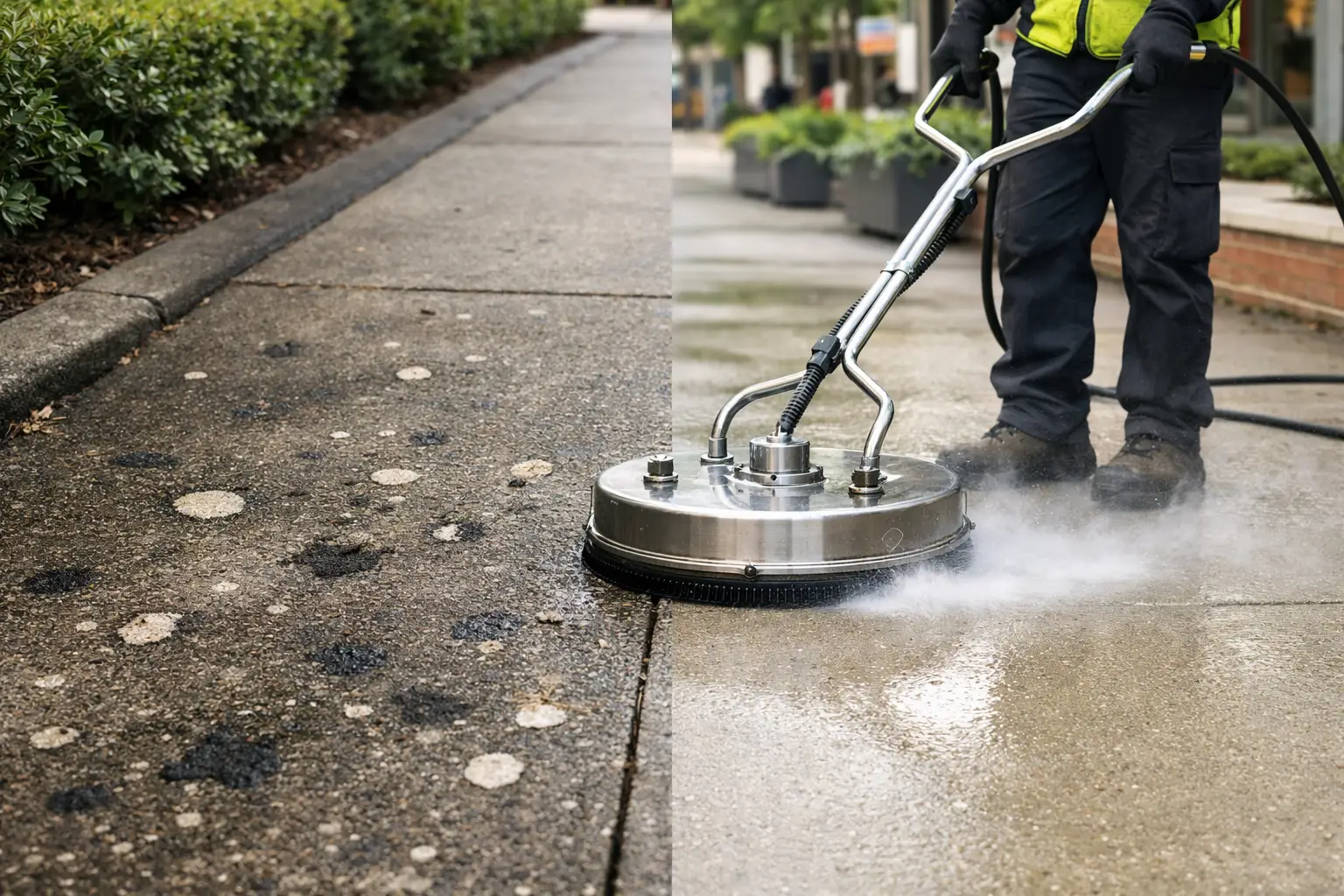
A piece of gum on a sidewalk may look minor, but it sends the wrong message fast. When gum accumulates near an entry, patio, storefront, walkway, or community common area, it makes otherwise clean concrete look neglected. Professional sidewalk gum removal removes those stubborn spots without turning the surface into a patchy, damaged mess.
For Asheville-area homeowners and commercial property managers, this is often part of a larger exterior-cleaning need. Pollen, algae, mildew, leaf stains, mud, and foot traffic already put concrete through a lot in Western North Carolina. Gum adds a sticky, dark mark that regular sweeping and rain will not touch.
Why Gum Sticks Around on Concrete
Chewing gum is made to stay flexible and sticky. Once it is pressed into porous concrete by a shoe, stroller wheel, or cart tire, it settles into small surface openings. Sun warms it, foot traffic flattens it, and dirt bonds to it. What began as a light-colored piece of gum can become a dark, hardened spot that is much more noticeable than the gum itself.
Older sidewalks can make the problem more challenging. Concrete naturally becomes more porous as it weathers, especially where it has not been sealed. A rougher finish holds gum more tightly than a smooth, newer slab. That does not mean the sidewalk cannot be cleaned. It means the cleaning method needs to match the condition of the concrete.
Commercial properties tend to see the most buildup around doors, benches, parking areas, bus stops, outdoor dining spaces, and walkways leading from a parking lot. At a residence, gum commonly shows up on front walks, driveways, pool decks, patios, and near mailboxes or curbside pickup areas.
Sidewalk Gum Removal Is Not Just a Cosmetic Detail
Clean sidewalks help create a better first impression before anyone reaches the front door. For a business, that affects how customers perceive the care put into the property. For a homeowner preparing to sell, rent, host guests, or simply enjoy a well-kept exterior, clean concrete supports the curb appeal that landscaping and house washing work hard to create.
There is also a practical maintenance benefit. Gum spots collect dirt, grit, and organic debris. On shaded sidewalks where algae or mildew is already developing, these dark spots can make the entire surface appear dirtier than it is. Removing them as part of routine concrete cleaning gives the walkway a more even, cared-for appearance.
The right approach also avoids a common mistake: cleaning only the gum spot with excessive pressure. That can leave a noticeably lighter circle in the concrete. The gum is gone, but the sidewalk now has a different kind of visual problem. A trained exterior-cleaning crew looks at the full surface and blends the cleaned area into the surrounding concrete whenever possible.
How Professional Gum Removal Works
Effective gum removal usually combines controlled heat, appropriate cleaning solutions, agitation, and pressure washing. The exact process depends on the age of the gum, the concrete finish, nearby landscaping, drainage, and how much buildup is present.
Fresh gum may lift more easily with heat and careful agitation. Old, flattened gum often needs more time to soften and release from the pores of the concrete. A professional can treat the spot without using harsh scraping tools that may gouge the surface or leave visible scratch marks.
Once the gum has loosened, a commercial-grade pressure-washing setup can rinse away the residue and embedded dirt. Surface cleaners are often useful for the broader sidewalk area because they provide consistent cleaning rather than leaving uneven wand marks. If algae, mildew, or grime is present, the crew may use a surface-appropriate treatment before or during the concrete-cleaning process.
This is not a one-pressure-setting job. Too little pressure may leave residue behind. Too much pressure, held too close to the concrete, can etch the surface. Etching creates permanent lines or rough areas that collect dirt faster in the future. The best results come from experienced technicians who adjust the process to the material in front of them.
Hot Water Can Make a Meaningful Difference
Hot-water pressure washing is especially useful for stubborn gum because heat softens the material. That helps it release more completely than cold water alone in many situations. It can also reduce the amount of aggressive scraping or pressure needed.
Still, hot water is not automatically the answer for every sidewalk. Nearby surfaces, expansion joints, sealers, delicate landscaping, and drainage patterns all matter. The goal is not simply to blast away the gum. It is to restore the walkway safely and leave it looking consistently clean.
Why DIY Gum Removal Often Falls Short
Homeowners can sometimes remove a single fresh piece of gum with ice, a plastic scraper, and patience. Freezing the gum can make it brittle enough to lift from a smoother surface. This may be reasonable for a small, isolated spot on a patio, provided the scraper is used carefully.
The trouble starts when gum is old, ground in, or spread across a larger walkway. Metal scrapers can scratch concrete or chip coatings. Household degreasers may not fully dissolve the gum and can leave slippery residue if not rinsed correctly. Renting a pressure washer may seem like a quick fix, but inconsistent pressure can create stripes, wand marks, and etched areas that are difficult to correct.
A homeowner also has to consider wastewater. Gum fragments, dirt, cleaning products, and debris should not be pushed carelessly into storm drains or landscaping beds. Professional crews plan the work area, manage runoff responsibly, and use equipment suited to the scale of the job.
For a few small spots, a careful DIY attempt may be enough. For a storefront entrance, apartment community, HOA sidewalk, restaurant patio, or heavily used walkway, professional service is usually the more efficient and better-looking choice.
Pair Gum Removal With Complete Concrete Cleaning
Spot treatment works best when the rest of the concrete is in good shape. If the surrounding sidewalk is gray with grime, green with algae, or streaked by runoff, a perfectly clean gum-free circle can stand out. Cleaning the full walkway creates a consistent finish and helps the property look maintained from edge to edge.
Sidewalk gum removal can be paired with driveway cleaning, patio washing, curb cleaning, building washing, and exterior entrance maintenance. Property managers often schedule this work before an event, opening, seasonal rush, inspection, or tenant turnover. Homeowners may include it before listing a home or after a long, wet season has left outdoor surfaces looking tired.
Concrete sealing may also be worth discussing after deep cleaning, particularly for newer concrete or surfaces that see frequent foot traffic. A quality sealer can help limit moisture absorption and make future stains easier to manage. It will not make a sidewalk immune to gum, but it can reduce how deeply grime and staining settle into the surface. Sealing should only be done after the concrete is thoroughly cleaned and fully dry.
Choosing a Sidewalk Cleaning Professional
A good contractor should be able to explain how they will handle gum, general concrete grime, and any organic growth without treating every exterior surface the same way. Ask whether they use commercial equipment, how they avoid etching, and whether they clean the full sidewalk or only individual spots. For commercial properties, ask how they will coordinate work around customers, tenants, deliveries, and business hours.
Local experience matters in mountain and Upstate climates, where moisture, shade, pollen, and seasonal debris create recurring exterior-cleaning needs. WNC Wash Pro’s uses trained methods tailored to the surface, with a focus on visible results and a 100% satisfaction guarantee. The right crew takes the hassle out of restoring high-traffic concrete while protecting the property you have worked hard to maintain.
A clean sidewalk does more than remove a sticky nuisance. It gives visitors, customers, and neighbors a clear sense that the property is cared for before they ever step inside.