
Why Siding Stains and What They Mean
A clean house can start looking neglected faster than most homeowners expect. In Asheville and across Western North Carolina, humid summers, shaded lots, pollen seasons, and mountain rainfall create ideal conditions for exterior buildup. Understanding why siding stains helps you choose the right solution before a cosmetic issue becomes a harder-to-remove problem.
Why Siding Stains in Western North Carolina
Siding is constantly exposed to moisture, wind, sun, tree debris, insects, and airborne contaminants. Some stains develop slowly enough that they are easy to overlook. Others seem to appear after a single wet season. The color, location, and pattern of a stain can often reveal what is causing it.
The good news is that most siding discoloration does not mean the siding has failed. In many cases, it is organic growth or surface contamination that can be safely removed with the right cleaning method. The key is avoiding a one-size-fits-all approach, especially on vinyl, painted wood, fiber cement, and delicate trim.
Green stains are usually algae
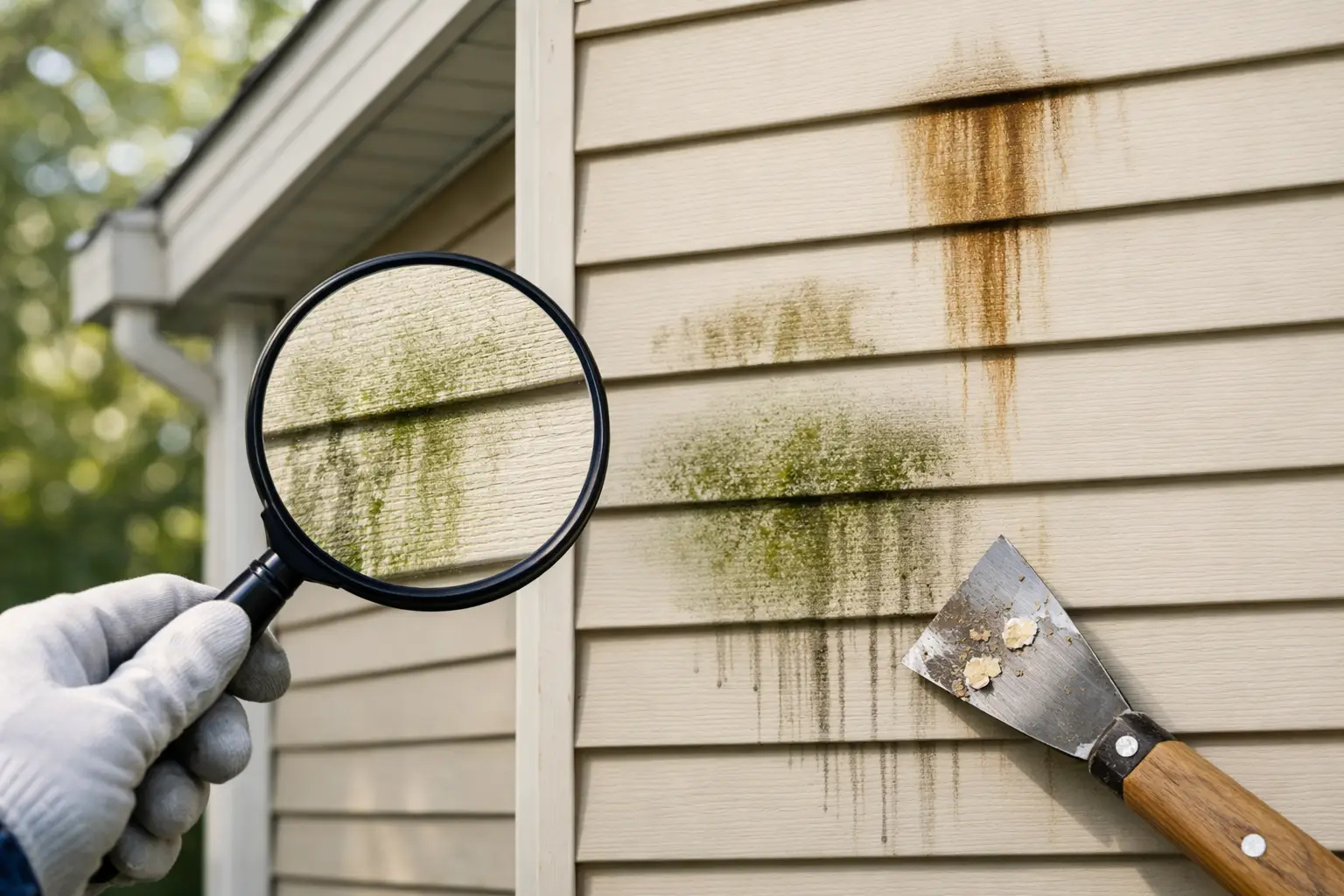
Green streaks or patches are commonly algae. They tend to show up on the north side of a home, beneath roof overhangs, behind shrubs, and anywhere that stays damp or receives limited direct sunlight. Vinyl siding is particularly likely to show algae because its light, smooth surface makes discoloration easy to see.
Algae can return if the underlying conditions remain unchanged. Nearby trees, heavy shade, poor airflow, and water that regularly splashes against the home all contribute. Cleaning removes the visible growth, while trimming vegetation and managing moisture can slow its return.
Black stains may be mildew, mold, or grime
Black spotting often points to mildew or mold growth, especially in humid areas around gutters, downspouts, windows, and shaded corners. Surface mildew is different from a structural moisture problem inside a wall, but it still deserves attention. It can make siding look dingy, spread across large areas, and create a persistent dirty appearance.
In some cases, black marks are simply atmospheric grime. Homes near busy roads, construction areas, wood-burning sources, or commercial zones may collect soot and airborne dirt. A trained exterior cleaning professional can identify whether the staining is organic, environmental, or a combination of both.
Yellow and brown stains often come from pollen or runoff
Spring pollen can leave a yellow-green film across siding, windows, porches, and gutters. While pollen is usually easier to remove than algae or mildew, it can stick to damp surfaces and combine with dirt to create dull, uneven staining.
Brown streaks are often caused by runoff. Rainwater can carry dirt from a roof, wash debris from gutters, or flow over metal fasteners and fixtures. If streaking appears directly beneath gutters, roof lines, vents, or window trim, follow the stain upward to find the source. Cleaning the siding without correcting overflowing gutters or a leaking downspout may only provide a temporary improvement.
Orange stains can signal rust or mineral deposits
Orange or reddish-brown marks may come from rusting nails, metal fixtures, irrigation water, well water, or fertilizer runoff. In Western North Carolina, mineral-rich water can leave stubborn deposits where sprinklers repeatedly hit siding, brick, concrete, or fencing.
Rust removal requires more care than ordinary house washing. The wrong cleaner can set the stain, damage paint, or discolor surrounding surfaces. It also matters whether the stain is coming from a corroding fixture, a rusty fastener, or water exposure. Removing the visible mark is helpful, but addressing the source prevents the same problem from returning.
Not Every Siding Stain Needs the Same Cleaning Method
A common mistake is treating every stain with high-pressure washing. Pressure has a place on durable surfaces such as some concrete areas, but it is not the safest answer for most siding. High pressure can force water behind panels, disturb caulking, strip paint, damage wood fibers, or leave visible marks on softer materials.
For house washing, a professional soft washing process is often the safer alternative. Soft washing uses low-pressure application and properly selected cleaning solutions to break down algae, mildew, mold, pollen, dirt, and organic buildup. The cleaning action comes from the solution, not from blasting the surface.
That distinction matters on older homes, painted siding, vinyl, fiber cement, soffits, trim, and areas around windows and doors. A careful technician adjusts the process for the surface, protects nearby landscaping, and rinses thoroughly. There are trade-offs: severely oxidized siding, failing paint, or damaged caulk may need repairs before or after cleaning. Cleaning can reveal preexisting wear, but it should not create it.
Where Stains Start and What to Check
Stains often form where water lingers. Before scheduling cleaning, take a walk around the property after a rainstorm. Look for overflowing gutters, splashback at the foundation, downspouts that empty too close to the house, and shrubs pressed tightly against the siding.
Pay attention to these common trouble spots:
- The shaded north and east sides of the home
- Areas under trees, decks, porches, and roof overhangs
- Siding behind bushes or landscaping that blocks airflow
- Sections below clogged gutters or leaking downspouts
- Exterior walls reached by irrigation spray
- Areas near dryer vents, HVAC equipment, or roof runoff
These observations help separate a normal cleaning need from a water-management issue. For example, a small green patch beside a shaded shrub may be routine algae growth. A large recurring stain beneath a gutter joint may indicate a leak that should be repaired before the next cleaning.
How to Prevent Siding Stains From Returning Too Soon
No exterior stays spotless forever, particularly in a moist mountain climate. Prevention is about extending the time between cleanings and reducing the conditions that feed organic growth.
Keep gutters clear so rainwater moves where it should. Make sure downspouts direct water away from the foundation and do not splash repeatedly onto lower siding. Trim branches and shrubs back from the house to improve sunlight and airflow. If sprinklers hit the exterior, adjust them so they water the landscape rather than the building.
Regular maintenance also makes cleaning more effective. When algae and mildew are removed before they become heavy, the home typically needs less aggressive treatment. Many homeowners find that an annual or seasonal exterior check keeps small issues from becoming a major curb-appeal problem.
When Staining May Point to a Bigger Issue
Most discoloration is surface-level, but a few signs call for closer inspection. Soft or warped siding, bubbling paint, persistent water marks inside the home, loose panels, or staining that quickly returns in one exact location can point to leaks or trapped moisture. Cleaning improves the appearance, but it cannot repair damaged flashing, failing gutters, or water intrusion behind siding.
It is also wise to be cautious with older painted surfaces. If paint is already peeling or chalking, cleaning should be tailored to avoid making a failing finish look worse. A professional assessment can help determine whether the surface is ready for washing or needs a repair plan first.
For homeowners who want a clean exterior without the risk of damage, WNC Wash Pro’s uses surface-safe soft washing to treat organic buildup and restore the appearance of siding, trim, and other exterior surfaces. The goal is simple: take the hassle out of caring for your castle while protecting the materials that make it yours.
A stain on siding is often your home’s way of showing where moisture, shade, runoff, or airborne debris is collecting. Address the cause, use a safe cleaning method, and your home can keep the fresh, well-cared-for appearance that neighbors and future buyers notice.