
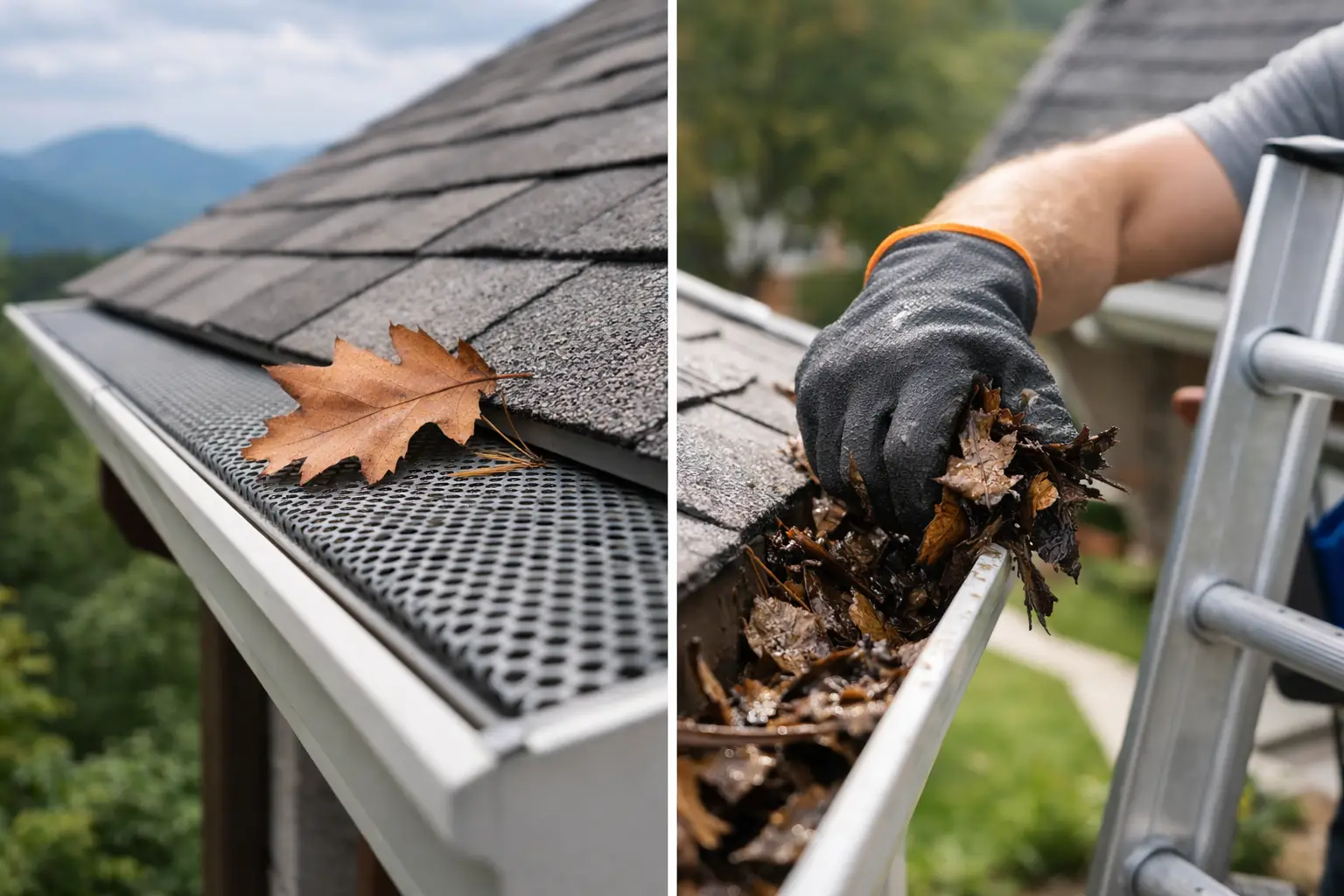
Gutter Guards Versus Gutter Cleaning for WNC Homes
A hard rain in Asheville can expose a gutter problem fast. Water spilling over the front edge, wet mulch washing out below, or a dark stain forming on the fascia are all signs that the system is not moving water where it should go. When homeowners weigh gutter guards versus gutter cleaning, the right answer is rarely as simple as “install guards and forget about them.”
Gutter guards can reduce the amount of debris that enters an open gutter. Professional gutter cleaning removes the leaves, roof grit, seedlings, and packed organic buildup that have already found their way in. For many Western North Carolina homes, the best choice depends on the trees overhead, roof design, guard type, and willingness to keep up with maintenance.
Why gutters need attention in Western North Carolina
Our mountain climate gives gutters plenty to handle. Spring pollen, summer storms, fall leaves, pine needles, acorns, and winter debris can all collect along the roofline. Shaded properties often deal with moss, algae, and damp organic material that clumps together instead of washing through the system.
A gutter is only useful when water can travel freely to the downspout and away from the foundation. When debris blocks that path, water may overflow onto siding, pool near the home, soak landscaping, or back up beneath roof edges. Over time, heavy, water-filled gutters can pull away from the fascia board or create conditions that encourage wood rot.
That is why gutter maintenance is more than a curb appeal task. It is basic water management for your home.
Gutter guards versus gutter cleaning: the real difference
Gutter guards are covers, screens, inserts, or surface-tension systems installed over the gutter opening. Their job is to keep larger debris out while allowing water to enter. They can be helpful, especially on homes surrounded by broadleaf trees, but no guard eliminates maintenance completely.
Gutter cleaning is the hands-on removal of debris from the gutter troughs and downspouts. A thorough service also checks that downspouts are flowing, removes buildup at the outlets, and identifies visible issues such as loose sections, sagging gutters, or overflowing trouble spots.
The key distinction is this: guards are a preventive accessory, while cleaning is a maintenance service. Guards may reduce how often you need cleaning, but they do not replace inspection or periodic removal of debris.
What gutter guards do well
A quality guard can keep a significant amount of leaves and large debris out of an otherwise open gutter. That may mean less frequent cleaning for a home with manageable tree cover. Guards can also make it harder for birds and small animals to nest inside the gutter channel.
For a homeowner who has a simple roofline, properly sized gutters, and mostly large leaves, guards may be a worthwhile addition. The reduced debris load can make routine upkeep easier and help the gutter system perform better between service visits.
Guards are also appealing for homes where gutters are difficult to access. A steep roof, multiple stories, or landscaping below the eaves can make DIY cleaning risky. In those cases, reducing debris entry can be a practical part of a larger maintenance plan.
Where gutter guards can fall short
Guards are not one-size-fits-all, particularly in a region with pine needles, small seed pods, roof granules, and heavy pollen. Fine debris can settle on top of a guard, collect in its openings, or work its way beneath it. Once material builds up, rainwater may skim over the edge instead of entering the gutter.
Some guard systems also make future cleaning more involved. If debris gets underneath the cover, sections may need to be lifted or removed for proper access. Low-cost mesh and foam products can bend, clog, degrade, or shift over time. Even premium systems need occasional inspection after storms and during leaf season.
Installation quality matters just as much as the product itself. A guard that interferes with roof drainage, is fastened poorly, or does not fit the gutter profile can create new overflow problems. Before investing, consider the roof pitch, nearby tree species, gutter condition, and how water behaves during a hard rain.
The value of professional gutter cleaning
Professional cleaning addresses the debris that guards cannot always stop. It clears the gutter channel, flushes or verifies downspout flow, and gives a trained crew a close look at the roofline. This is especially valuable after fall leaf drop, major storms, or a season of heavy pollen and seed debris.
Cleaning also avoids the risk of climbing a ladder with tools and debris buckets. Many gutter injuries happen when homeowners overreach, use unstable ladders, or work near slippery roof edges. Hiring a trained local team takes the hassle out of a job that is easy to postpone and difficult to do safely.
For homes in Asheville, Hendersonville, Biltmore Forest, and surrounding communities, a twice-yearly cleaning schedule is often a good starting point: once after spring debris and again after the main fall leaf drop. Homes beneath dense hardwoods or pines may need more frequent attention. A property with little tree cover may need less. The visible condition of the gutters and the performance of the downspouts should guide the final schedule.
Cost: upfront protection versus ongoing care
Gutter guards generally cost more upfront than a cleaning visit. The total depends on the guard material, linear footage, roof height, access, and whether gutters need repair before installation. A guard system can make financial sense over time if it meaningfully reduces maintenance on a property with recurring leaf buildup.
Still, it is worth comparing the installation cost with the cost of periodic cleaning over several years. If a home needs only one or two cleanings annually and has relatively open exposure, cleaning may be the more practical value. You are paying for work that directly restores flow rather than investing in a product that still requires monitoring.
For a heavily wooded property, the decision may be more balanced. Guards can reduce the volume of debris, while scheduled cleaning ensures the system stays clear at downspouts and along roof valleys. That combination often delivers better results than relying on either option alone.
How to decide what your home needs
Start with the kind of debris your property produces. Large maple or oak leaves behave differently from pine needles, small twigs, shingle grit, and spring pollen. Next, look at your roofline. Complex valleys and long roof runs can send concentrated water and debris into a small section of gutter, even when guards are installed.
Also consider the condition of the existing system. If gutters are loose, improperly pitched, undersized, or missing effective downspout extensions, guards will not solve the underlying drainage issue. Cleaning may reveal maintenance needs that should be handled before any guard installation.
A simple test is to watch the gutters during a steady rain. Water should enter the gutter instead of jumping over it, move through the downspout without backing up, and discharge away from the foundation. Overflow in one area may point to a clog, but it can also indicate a pitch issue, a blocked outlet, or a gutter that is too small for the roof section above it.
A practical maintenance plan
For most homeowners, the safest approach is not choosing guards or cleaning as if they are opposites. Treat guards as an optional tool for reducing debris and treat cleaning as the service that keeps the entire drainage system honest.
If you already have guards, schedule an inspection and cleaning when debris is visible on top, water spills over during rain, or downspouts appear slow. If you do not have guards, regular cleaning may be all your home needs. WNC Wash Pro’s can help take the hassle out of keeping gutters clear, with professional service focused on protecting your exterior surfaces and your property.
A clean, free-flowing gutter system is one of the quieter ways to care for your castle. Before the next heavy rain, look up at the roofline, check where water is landing, and give your home the maintenance that keeps small drainage issues from becoming expensive repairs.