
Shingle Stain Treatment That Protects Your Roof
Those dark roof streaks are rarely just dirt. In Asheville and across Western North Carolina, shingle stain treatment often means addressing living organic growth that thrives in our humid summers, tree cover, and frequent rainfall. Left alone, roof staining can make an otherwise well-kept home look older, conceal areas that need attention, and continue spreading across the shingles.
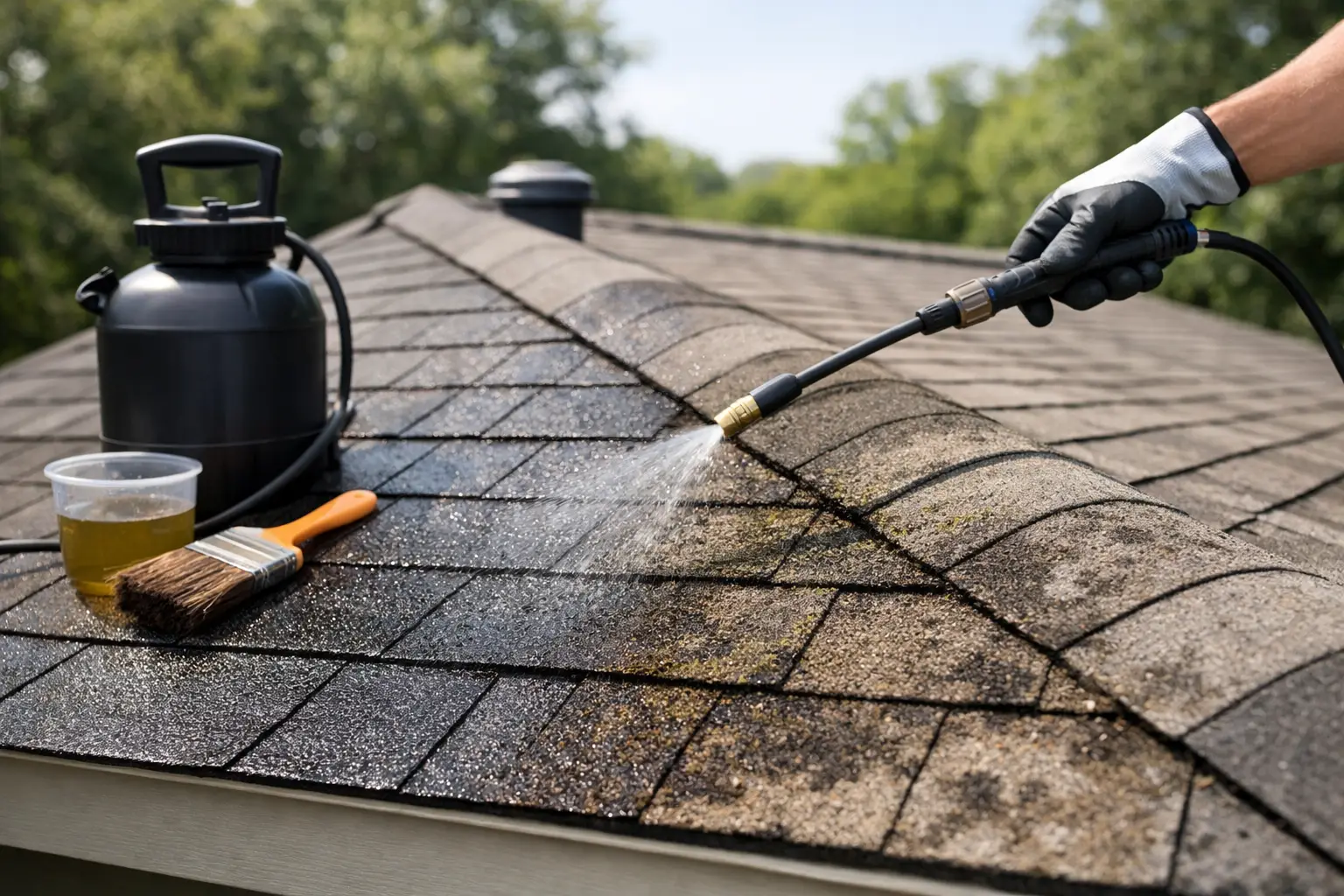
The good news is that most stained asphalt-shingle roofs do not need to be replaced. They need the right cleaning method. A trained soft-wash approach can remove algae, mildew, moss, and other organic buildup without the high pressure that can damage roofing materials.
What Causes Stains on Asphalt Shingles?
The familiar black or dark gray streaks on an asphalt roof are commonly caused by algae. This growth feeds on moisture and airborne nutrients, then spreads as conditions allow. North-facing roof slopes, shaded sections beneath trees, and areas near valleys or chimneys often show staining first because they stay damp longer.
Moss and lichen can also appear on shingles, particularly on homes surrounded by mature trees. Unlike surface-level algae stains, moss has a thicker, root-like structure that can hold moisture against the roof. It needs careful treatment rather than aggressive scraping, which can loosen granules or damage the shingle surface.
Pollen, leaves, and general grime add to the problem. They may not be the source of the dark streaks, but they create the damp, nutrient-rich conditions that allow organic growth to take hold. A roof can look stained after one wet season, especially when gutters are full or overhanging branches limit sunlight and airflow.
Why Professional Shingle Stain Treatment Matters
Asphalt shingles are built with protective granules. Those granules help shield the roof from sunlight and weather, and they are not meant to withstand a pressure washer blasting water at close range. High-pressure roof washing can strip granules, lift shingle edges, force water beneath the roofing system, and shorten the service life of a roof.
Professional shingle stain treatment uses a surface-safe soft-wash process instead. The cleaning solution is applied at low pressure to treat the organic growth at its source. This is the key difference between washing away a visible stain and actually addressing the algae, mildew, or moss causing it.
Results are often immediate for black algae streaks, while heavier moss or lichen may release more gradually after treatment. That is normal. Trying to force every bit of growth off the roof in one visit can create more harm than good. The right process protects the shingles first, then allows the treatment to do its work.
For homeowners, the practical benefits go beyond appearance. A clean roof supports curb appeal, helps a property look cared for during an appraisal or listing, and makes it easier to spot missing shingles, flashing concerns, or other maintenance needs. It is a straightforward way to care for one of the most expensive systems on your home.
What a Safe Roof Cleaning Process Looks Like
A quality roof cleaning starts with an inspection of the roof surface, surrounding landscaping, gutters, and access points. Every roof is different. The right approach depends on the amount of staining, roof pitch, shingle condition, nearby plants, and whether moss or lichen is present.
Before treatment begins, crews should protect landscaping and wet down sensitive vegetation as needed. Downspouts and runoff areas deserve attention as well. Roof-cleaning solutions are effective because they are designed to treat organic growth, so proper application and plant protection are essential.
The solution is then applied with low pressure, not pressure-washed onto the shingles. The goal is even coverage without mechanical damage. After treatment, technicians inspect the roof and surrounding areas to confirm that the stains have been addressed and that the property has been cared for throughout the process.
At WNC Wash Pro’s, roof cleaning is built around this damage-free soft-wash philosophy. A roof does not need to be blasted clean to look clean. It needs a trained team that understands how to remove the growth while respecting the roofing material underneath.
When Roof Stains Need More Than Cleaning
Shingle stain treatment can make a dramatic difference, but cleaning is not a repair service. If shingles are cracked, curled, missing, or nearing the end of their lifespan, those issues should be evaluated by a qualified roofing professional. Cleaning a worn roof can improve its appearance, but it cannot restore failed materials.
The same is true for persistent moisture problems. If a section of roof repeatedly develops heavy moss, look for the cause. Clogged gutters, branches resting against the roof, poor attic ventilation, and deep shade can all contribute. Addressing those conditions can reduce how quickly staining returns.
Homeowners should also be cautious about warranties and insurance documentation. Many roof manufacturers advise against high-pressure cleaning, and some insurance providers expect homeowners to maintain roofs that show visible organic growth. Keeping records of professional maintenance can be useful, especially when selling a home or responding to a request from an insurer.
How to Help Roof Stains Return More Slowly
No exterior roof stays spotless forever in a mountain climate. Rain, humidity, pollen, and shade are part of life in Western North Carolina. Still, a few maintenance habits can make a real difference between professional treatments.
Keep gutters clear so water can move away from the roofline instead of backing up along shingle edges. Trim branches that touch the roof or heavily shade it, while working with a qualified tree professional when limbs are large or difficult to access. Remove leaf piles from valleys when it can be done safely from the ground or by a professional, and make sure attic ventilation is functioning as intended.
Some roofs are simply more prone to staining than others. Homes beneath dense tree canopies and homes with north-facing slopes may need cleaning more often. That does not mean something is wrong with the roof. It means a maintenance schedule should reflect the environment around it.
Avoid These Common DIY Roof Cleaning Mistakes
Roof cleaning may look like a weekend project, but the risks are higher than many homeowners expect. Falls are the most obvious concern, especially on damp shingles or steep rooflines. There is also a real risk of turning a cosmetic stain into costly roof damage.
Avoid four common mistakes: using a pressure washer on shingles, scrubbing aggressively with stiff tools, applying unapproved chemicals without protecting plants, and walking across fragile or wet areas of the roof. Household cleaners and bleach mixtures can also create problems when mixed incorrectly or allowed to run uncontrolled into landscaping.
If the stains are limited to a small, easily visible area, it can be tempting to spot-clean. But uneven treatment can leave a patchy appearance, and roof stains often extend farther than they appear from the ground. A professional assessment provides a safer view of the roof’s actual condition and a plan that treats the full affected area.
Choosing the Right Time for Treatment
The best time for shingle stain treatment is before staining becomes heavy enough to dominate the roofline. Early treatment is usually simpler, produces a more uniform result, and prevents moss and debris from holding moisture against the shingles.
Spring and fall are common times for homeowners to schedule exterior maintenance, but roof cleaning can be appropriate whenever weather conditions allow. The deciding factors are safe working conditions, the roof’s condition, and the amount of organic growth present. If you can see dark streaks from the street, it is worth getting a professional opinion rather than waiting for another season of rain and shade to deepen the problem.
A clean roof changes the way the whole property feels. More importantly, a safe treatment lets you take care of your castle without gambling with the shingles that protect it. When stains begin showing up, choose a trained local team that can make the roof look better while treating the surface with the care it deserves.