
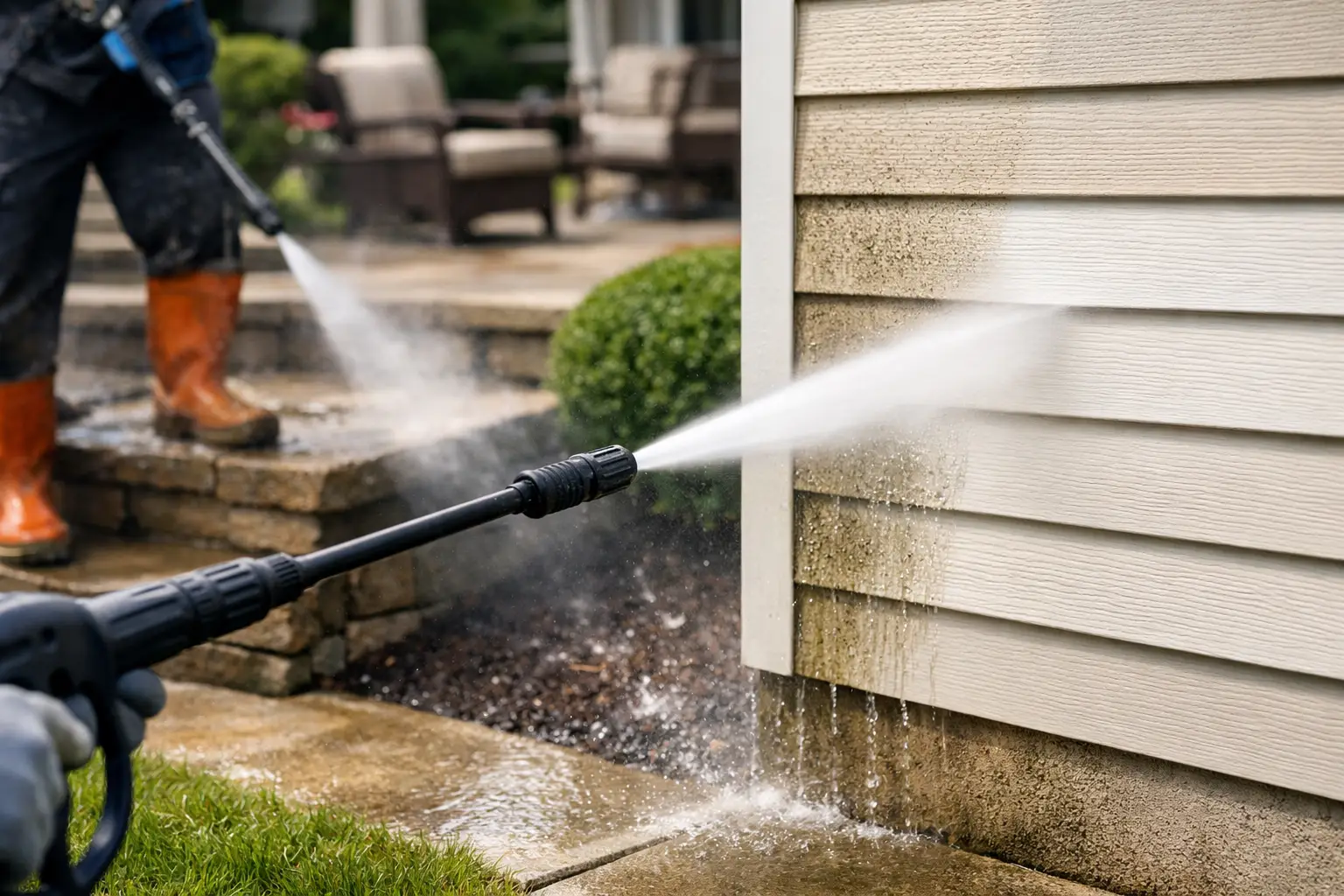
Pressure Washing: Safe Cleaning for Your Home
A green film on siding is rarely just dirt. In Asheville and across Western North Carolina, damp shade, spring pollen, summer humidity, and falling leaves create the perfect conditions for algae, mildew, and organic buildup to take hold. Pressure washing can make a dramatic difference in a single visit, but choosing the wrong method can leave behind more than a clean surface – it can cause costly damage.
The goal is not simply to blast away stains. Professional exterior cleaning should remove buildup safely, improve curb appeal, and help protect the materials that make up your home or business. That means matching the cleaning approach to the surface, the stain, and the condition of the property.
What Pressure Washing Is Best For
Pressure washing uses a concentrated stream of water to remove embedded dirt, grime, mud, loose paint, and surface staining. It is especially effective on durable materials that can tolerate controlled pressure, including concrete driveways, sidewalks, patios, retaining walls, and many commercial flatwork areas.
A driveway may look permanently discolored after years of tire marks, red clay, algae, and oil spots. Often, it is not. The right combination of cleaning solution, dwell time, water pressure, and professional equipment can lift away years of buildup and reveal a much cleaner surface underneath.
Concrete cleaning is one of the clearest examples of why technique matters. Too little pressure may leave uneven results and visible striping. Too much pressure, or the wrong nozzle held too close, can etch the concrete and create permanent lines. Experienced technicians adjust their process to clean thoroughly without turning a maintenance project into a repair project.
Pressure washing is also useful for certain brick, stone, pavers, curbs, parking areas, and commercial walkways. However, even hard surfaces require an inspection first. Older mortar, loose pavers, cracked concrete, and deteriorating sealant may need a gentler approach or preparation before cleaning begins.
Pressure Washing vs. Soft Washing
Many homeowners use the term pressure washing for every exterior cleaning service. In practice, high pressure is only one tool. Soft washing is often the safer and more effective option for delicate exterior surfaces.
Soft washing applies specialized cleaning solutions at low pressure to break down algae, mildew, mold, pollen, and other organic growth. The surface is then rinsed carefully, leaving it clean without the force that can damage siding, roofing, wood, window seals, or painted finishes.
This distinction matters most on homes with vinyl siding, painted wood, stucco, Hardie board, composite materials, or aging exterior finishes. High pressure can force water behind siding, strip paint, scar wood grain, loosen caulking, and damage window or door seals. A surface-safe soft wash treats the cause of the staining instead of relying on force alone.
Roof cleaning should also be handled with low-pressure methods. Black roof streaks are often algae, not a sign that shingles need to be replaced. Aggressive pressure can dislodge protective granules and shorten the life of an asphalt shingle roof. A properly applied soft-wash treatment addresses the organic growth while protecting the roof system.
Why Asheville Properties Need Regular Exterior Cleaning
Mountain weather is beautiful, but it is demanding on exterior surfaces. Homes tucked beneath mature trees, properties near wooded areas, and north-facing walls tend to stay damp longer. That moisture feeds algae and mildew, especially on shaded siding, roofs, decks, fences, and concrete.
Pollen creates another challenge. During peak season, it settles across windows, siding, porches, and outdoor living spaces. Combined with rain and airborne dust, it can leave a dull yellow-green coating that makes a well-kept property look neglected.
Routine cleaning is not only about appearance. Algae and mildew can make walkways slippery. Organic growth on wood can hold moisture against the surface. Roof staining can spread across visible sections and affect the overall look of the home. For landlords, real estate professionals, and commercial property managers, these issues can also shape a visitor’s first impression before they ever step inside.
How often a property needs service depends on shade, tree cover, drainage, surface material, and the surrounding environment. Many homeowners benefit from an annual house wash, while heavily shaded homes or high-traffic commercial properties may need attention more often. A professional assessment is more useful than following a one-size-fits-all schedule.
Surfaces That Need a Different Approach
Exterior cleaning works best when each material is treated according to its limits. A concrete driveway and a cedar fence may both look dirty, but they should never be cleaned the same way.
Siding and painted exteriors
House washing generally calls for soft washing. The process removes mildew, algae, pollen, cobwebs, and grime while protecting siding and trim. Careful application and rinsing are particularly important around electrical fixtures, landscaping, windows, and exterior outlets.
Decks and fences
Wood is easy to damage with excessive pressure. A powerful stream can raise the grain, leave gouges, and create an uneven finish that absorbs moisture more readily. Gentle cleaning, appropriate solutions, and controlled rinsing help restore the look of wood without compromising it. If a deck or fence will be stained or sealed afterward, thorough preparation makes the finish look better and last longer.
Roofs and gutters
Roofs should be soft washed, never blasted. Gutters may need their own service, especially when leaves, pine needles, and debris interfere with drainage. Cleaning visible gutter exteriors can brighten the roofline, but removing interior debris helps prevent overflow that can affect fascia, landscaping, and foundations.
Commercial properties
Building washing, storefront cleaning, sidewalks, dumpster pads, loading areas, and graffiti removal all require a plan that respects operating hours, customer access, water control, and the materials being cleaned. A clean exterior communicates care, which matters for restaurants, retail spaces, offices, rental communities, and customer-facing facilities.
What a Professional Cleaning Visit Should Include
A quality service starts before water is applied. The crew should inspect surfaces, identify sensitive areas, note existing damage, and determine whether soft washing, pressure washing, or a combined method is appropriate. This protects both the property and the final result.
Landscaping and nearby features deserve attention as well. Plants should be pre-wet and rinsed as needed, outdoor furniture should be moved or protected, and windows, outlets, and fixtures should be treated carefully. A contractor should also explain what stains are likely to improve, what may require specialty treatment, and where age or prior damage may limit results.
The work should leave the property looking consistently clean, not streaked or partially treated. On concrete, that means avoiding zebra-striping. On siding, it means addressing the full visible surface rather than only the darkest areas. On roofs, it means using the correct low-pressure treatment and allowing time for the cleaning process to work safely.
When DIY Pressure Washing Can Go Wrong
Renting a pressure washer may seem like a quick weekend project, particularly for a small patio or short section of concrete. For sturdy surfaces and light buildup, it can be manageable if the user understands the equipment. The risk rises quickly when cleaning a house, roof, wood deck, tall exterior wall, or heavily stained surface.
Common mistakes include using too much pressure, standing too close to the surface, selecting the wrong tip, skipping cleaning solutions, and overlooking water intrusion risks. Homeowners can also injure themselves on ladders or lose control of a powerful wand. A clean patch created with excessive pressure may look acceptable at first, then reveal etched concrete, damaged paint, or fuzzy wood once it dries.
Professional equipment matters, but training matters more. The highest-rated results come from knowing when to use pressure, when to use soft washing, and when a specialty treatment is needed for rust, oil, graffiti, or stubborn organic staining.
A Cleaner Property Without the Hassle
Exterior maintenance does not need to become another long weekend project. WNC Wash Pro’s provides trained, surface-safe cleaning for homes and commercial properties throughout the region, with a focus on visible results and a 100% satisfaction guarantee.
If your siding has turned green, your roof is streaked, or your driveway no longer looks like the concrete you remember, the right cleaning method can make a meaningful difference. Start with a professional evaluation, choose the approach that protects the surface, and give your property the clean, cared-for appearance it deserves.