
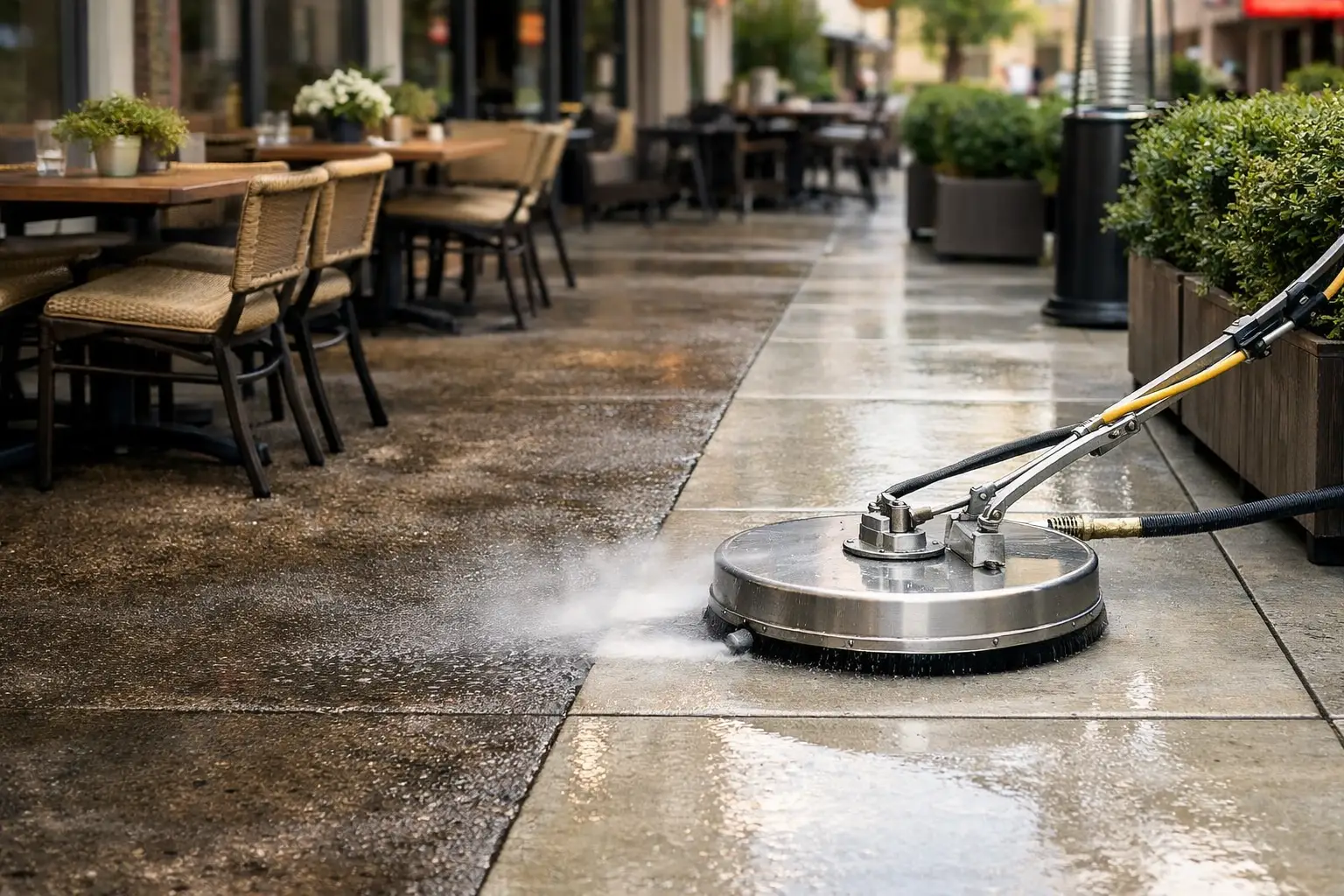
Restaurant Sidewalk Cleaning Results That Last
A guest can decide how they feel about a restaurant before they reach the host stand. Grease spots near the curb, darkened concrete at the entry, gum along the walkway, and a slick-looking patio all send a message. Strong restaurant sidewalk cleaning results do more than make concrete look lighter. They help create a cleaner, safer, more welcoming path from the parking lot to the table.
For Asheville-area restaurant owners and property managers, sidewalk buildup is rarely just dirt. Humid weather, mountain pollen, rain runoff, food and beverage spills, foot traffic, and nearby landscaping can leave concrete looking worn well before the rest of the property does. The right cleaning plan removes the visible buildup while treating the surface carefully and keeping disruption to guests and staff to a minimum.
What Restaurant Sidewalk Cleaning Results Should Look Like
The most noticeable result is usually color restoration. Concrete that has turned gray, green, or nearly black around entrances often has more of its original finish beneath the organic growth and traffic film. A professional cleaning can bring back a more even appearance, especially along walkways, curbs, patios, dumpster pads, drive-thru lanes, and outdoor dining areas.
But visual improvement is only part of the job. Quality results also mean the cleaning process addresses slippery algae and mildew, removes tracked-in grime from high-traffic paths, and improves the appearance of stain-prone areas near doors and outdoor seating. Guests may not comment on clean sidewalks, but they notice when an entrance feels cared for.
It is also important to have realistic expectations. Some stains are permanent changes in the concrete rather than surface-level dirt. Rust, fertilizer marks, oil that has soaked deeply into porous concrete, paint, and old efflorescence may require specialized treatment and may not disappear completely. A trained exterior cleaning crew should explain what is likely to improve before work begins instead of promising a brand-new slab where that is not possible.
Clean Concrete Is Not Always Bright White
Restaurant sidewalks do not need to look artificially bleached to look professional. The goal is a clean, consistent surface that complements the building, signage, landscaping, and dining experience. Overly aggressive pressure can leave striping, etching, or uneven patches that become even more visible once the concrete dries.
That is why effective cleaning balances cleaning agents, water pressure, heat when appropriate, dwell time, and proper rinsing. The method should fit the surface and the type of buildup, not simply use the strongest setting available.
Why Restaurant Entrances Get Dirty So Quickly
A restaurant exterior works harder than most commercial storefronts. On a busy weekend, hundreds of shoes can carry in dust, mulch, moisture, food residue, and street grime. Patio tables, takeout traffic, delivery activity, and trash pickup add another layer of wear around the property.
In Western North Carolina, shaded sidewalks can develop algae and mildew quickly after wet weather. Tree cover and humid conditions keep concrete damp longer, especially along north-facing walls, beneath awnings, and around landscaped borders. Pollen may seem seasonal, but it can mix with rain and soil to create a dull film that clings to textured concrete.
Grease is another common challenge. Even when a restaurant maintains a clean kitchen, small spills can happen near service entrances, loading areas, grease disposal locations, and outdoor trash enclosures. Cleaning those areas takes more than a quick rinse. Degreasing products need time to break down the buildup, and wastewater must be managed responsibly rather than pushed toward storm drains.
The Right Process Protects the Property
Professional sidewalk cleaning starts with an evaluation of the concrete, surrounding surfaces, drainage, and the source of the staining. This matters because a front entrance has different needs than a dumpster pad, and a decorative paver patio needs a different approach than standard broom-finished concrete.
The crew should clear loose debris and identify sensitive areas such as entry mats, outdoor furniture, landscaping, electrical fixtures, signage, and nearby windows. Targeted pre-treatment helps lift algae, mildew, food residue, and grime before the main cleaning begins. For grease-heavy surfaces, a proper degreaser is often necessary.
Surface cleaning equipment is especially useful on broad concrete areas because it delivers a more consistent result than cleaning with an open pressure-washing wand alone. Edges, corners, steps, curbs, and tight spaces can then be detailed separately. A final rinse removes loosened debris and cleaning residue so the area dries evenly.
For nearby building exteriors, soft washing may be the safer choice. Low-pressure application paired with the appropriate cleaning solution can remove organic growth from siding, awnings, painted surfaces, and other delicate materials without the damage risk associated with excessive pressure. WNC Wash Pro’s uses surface-appropriate methods because a clean sidewalk should never come at the expense of surrounding property.
Safety Is Part of the Visible Result
A sidewalk may look better after cleaning, but the more valuable result may be a reduced slip risk from algae, mildew, and greasy residue. No cleaning service can eliminate every slip-and-fall risk, particularly during rain or freezing conditions. Still, removing organic growth and buildup from walking surfaces is a practical part of maintaining a safer customer environment.
Timing matters here. Restaurants should avoid scheduling cleaning immediately before a lunch rush, dinner service, or special event. Sidewalks need time to be cleaned, rinsed, and dried. Early morning, overnight, or closed-day service can reduce disruption, depending on local noise rules, staffing needs, and the size of the property.
Restaurant managers should also use clear temporary signage when an area is wet. This is a simple step, but it reinforces the same attention to guests that a clean entrance is meant to communicate.
How Often Should a Restaurant Clean Its Sidewalks?
There is no single schedule that fits every property. A small restaurant with limited sidewalk exposure may only need a thorough professional cleaning once or twice a year. A busy downtown location, restaurant with patio seating, drive-thru operation, or property under heavy tree cover may benefit from quarterly service or more frequent spot cleaning.
The best indicator is not the calendar alone. Watch the entry after rain, during pollen season, and after high-volume weekends. If concrete begins to look dark around the edges, feels slick in shaded sections, or shows obvious gum and spill buildup, it is time to schedule service before the issue becomes part of the restaurant’s first impression.
Regular maintenance is usually easier and more cost-effective than waiting for severe staining. It can also help avoid the need for harsh cleaning attempts that may damage concrete, landscaping, or adjacent finishes.
Preparing for Better Restaurant Sidewalk Cleaning Results
A little coordination helps the work go smoothly. Restaurant teams should move portable furniture, planters, menu boards, and sidewalk displays from the work area when possible. Let the cleaning provider know about recurring grease spots, drainage concerns, loose concrete, sensitive landscaping, and guest access requirements.
It also helps to identify the areas customers see first. The front walk, curbside pickup zone, patio entrance, and path from parking are often higher priorities than less visible sections. A complete service plan can still include rear service areas, but cleaning the guest-facing route first protects the appearance of the business where it matters most.
Photos taken before and after service are useful for property records, especially for landlords, multi-tenant properties, and managers responsible for maintenance reporting. They also make it easier to track which areas need more frequent attention over time.
A Better Arrival Starts at the Curb
Restaurant owners put real care into menus, service, lighting, and atmosphere. The walkway leading to the door deserves the same attention. Clean concrete supports curb appeal, helps manage slippery buildup, and gives guests one less reason to question how the property is maintained.
If your entry is beginning to look darker than the rest of the building, schedule cleaning around a slower service window and address it before the next busy season. A well-kept sidewalk is a quiet but powerful way to welcome every guest.