
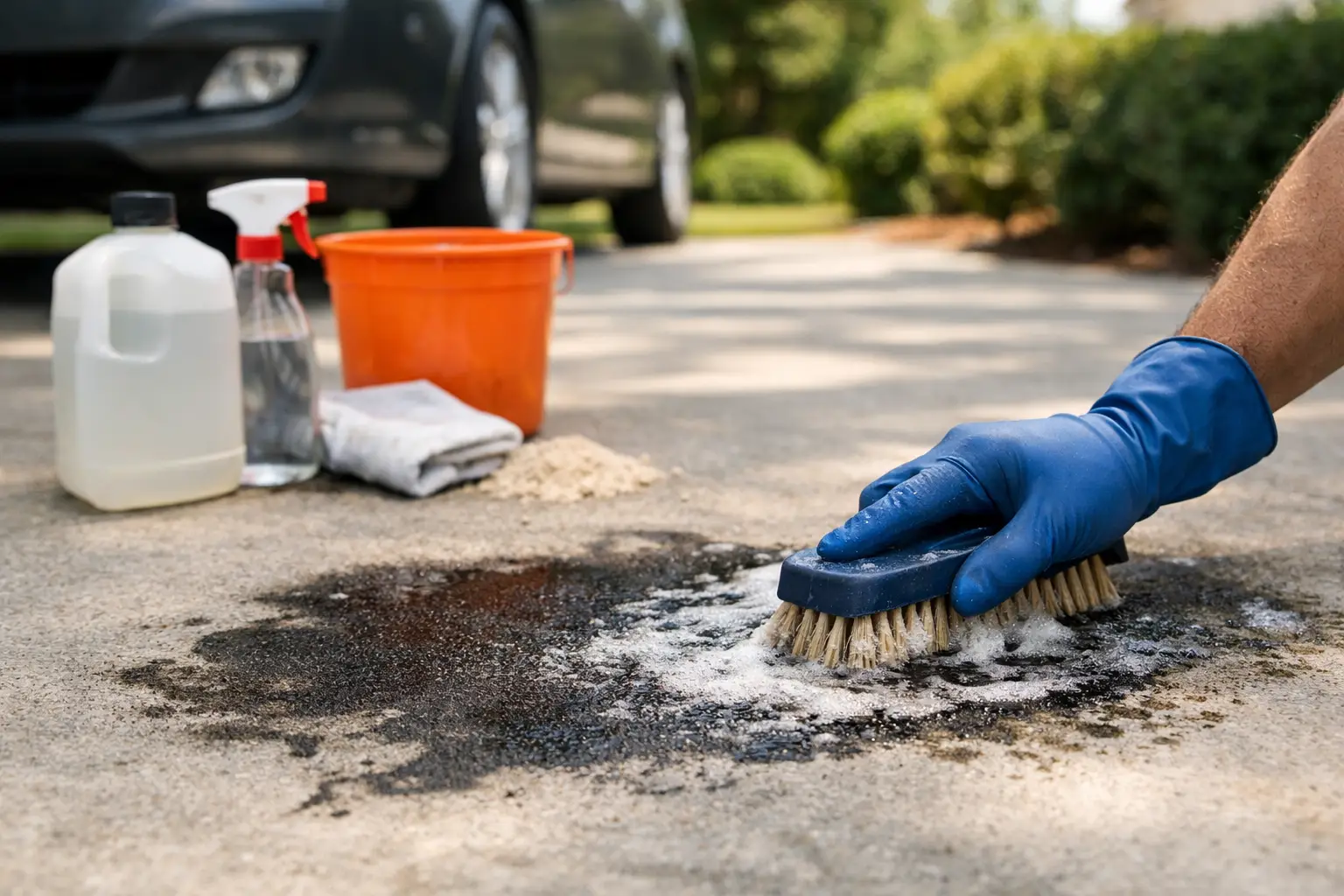
How to Remove Driveway Oil Stains Safely
A fresh oil spot can turn a clean concrete driveway into the first thing you notice when you pull in. The good news is that most homeowners can remove driveway oil stains when they act quickly, use the right cleaner, and avoid aggressive methods that harm the concrete or send oily runoff toward a storm drain.
Oil is different from ordinary dirt, pollen, or mildew. It sinks into the tiny pores of unsealed concrete, and hot tires can press it in further. That is why a quick rinse rarely works and why an old stain may need more than one treatment. Patience and proper product choice make a visible difference.
Start by Absorbing Fresh Oil
For a recent leak or spill, do not reach for the pressure washer first. Cover the affected area with an absorbent material such as clay-based kitty litter, oil-dry granules, baking soda, or a commercial oil absorbent. Gently work it over the spot with the sole of an old shoe or a stiff broom, then leave it in place for several hours or overnight.
Sweep up the material and dispose of it according to local guidance. Do not hose loose oil or absorbent debris into the street, where it can enter stormwater systems. If the spot still looks dark, repeat the absorption step before moving on to a cleaner.
Fresh stains respond best because there is less oil beneath the surface. A driveway that has been stained for weeks or months usually needs a degreaser and sometimes a poultice treatment to draw oil upward.
Use a Concrete-Safe Degreaser
Choose a degreaser labeled for concrete and petroleum-based stains. Read the directions closely, especially the recommended dwell time and dilution ratio. Stronger is not always better. An overly harsh product can discolor concrete, affect nearby landscaping, or leave a patchy result when used carelessly.
Wet the surrounding concrete first so the cleaner stays focused on the stain rather than soaking deeply into dry areas. Apply the degreaser to the oil spot, allow it to dwell as directed, then scrub with a stiff nylon-bristle brush. Avoid wire brushes, which can leave metal marks and roughen the surface.
After scrubbing, rinse thoroughly while controlling the runoff. A low-pressure rinse is often enough for a small spot. If you use a pressure washer, keep the tip moving and maintain a safe distance from the concrete. Concentrating a powerful stream in one area can create visible wand marks, etch softer concrete, and make one clean circle stand out from the rest of the driveway.
For a moderate stain, it is normal to need two or three applications. Let the driveway dry completely between attempts. Wet concrete can look darker than dry concrete, making it difficult to judge whether oil remains.
A simple household option for light stains
Dish soap can help with a very light, fresh drip because it is made to break down grease. Apply a generous amount, add a small amount of warm water, scrub, and rinse carefully. This approach is best for minor spots, not a deep engine-oil leak.
Laundry detergent, vinegar, and similar household products are often suggested online, but results vary widely. Vinegar is acidic and should not be treated as an all-purpose concrete cleaner. Repeated acid use can dull or weaken the surface, particularly on decorative, stamped, or older concrete. A purpose-made concrete degreaser is the more predictable choice for substantial oil staining.
How to Remove Driveway Oil Stains That Are Old
Older oil stains are challenging because the oil has migrated deeper into the slab. Surface scrubbing may lighten the mark without fully removing it. In this situation, a poultice can be useful.
A poultice combines an absorbent powder with a suitable solvent or commercial oil-stain remover to form a thick paste. The paste is spread over the stain, covered or left to dry according to product instructions, and then removed after it has drawn oil out of the concrete. Commercial poultice products are generally easier and safer to use than mixing solvents at home.
Expect gradual improvement rather than instant perfection. The age of the stain, type of oil, porosity of the concrete, weather exposure, and whether the driveway has been sealed all affect the result. A decades-old black mark may not disappear completely, but professional treatment can often reduce it substantially and improve the overall appearance of the concrete.
Do not try to burn oil off with a torch or use gasoline, brake cleaner, or other highly flammable solvents. These methods create a serious fire risk, can drive contaminants farther into the surface, and may damage nearby grass, landscaping, or asphalt edges.
Pressure Washing Helps, but It Is Not the Whole Fix
Pressure washing is highly effective for lifting surface dirt, algae, mildew, tire marks, and the gray film that builds up on driveways across Western North Carolina. It can also improve the appearance around an oil stain so the entire driveway looks more even.
However, water pressure alone does not dissolve oil. Without a proper degreaser, high pressure may simply spread oily residue across a larger area or push it deeper into porous concrete. The right process usually combines absorption, chemistry, controlled agitation, and professional-grade rinsing.
There is also a trade-off with DIY equipment. A consumer pressure washer may be safe but lack the heat, flow, and surface-cleaning consistency needed for larger stains. A machine with too much pressure in untrained hands can scar the concrete. For broad driveways, heavily stained garage aprons, commercial loading areas, or decorative concrete, trained cleaning is often the safer investment.
Protect Landscaping, Vehicles, and Nearby Waterways
Before cleaning, move vehicles away from the work area and protect nearby plants from overspray. Sweep loose leaves, gravel, and debris from the driveway so they do not hold cleaner against the concrete or interfere with rinsing.
Keep degreasers away from painted surfaces, natural stone, and asphalt unless the product specifically says it is safe for those materials. If your driveway drains toward a curb, creek, or catch basin, take extra care to contain wash water and oily residue. Cleaning a stain should not create a larger environmental problem downstream.
For properties with a recurring vehicle leak, address the source as soon as possible. Recleaning the same spot every few weeks is frustrating, and frequent oil exposure can eventually create a stubborn, widespread stain. A drip pan under a temporarily leaking vehicle can protect the driveway while repairs are arranged.
When It Makes Sense to Call a Professional
Professional concrete cleaning is a practical choice when the stain is large, old, widespread, or paired with years of dirt, algae, tire marks, and rust. It also makes sense before listing a home, hosting an event, or preparing a rental property for new tenants. Curb appeal starts at the street, and a stained driveway can make an otherwise well-maintained property feel neglected.
A trained exterior-cleaning crew can assess the concrete type, stain depth, surrounding surfaces, and drainage before selecting a treatment. The goal is not merely to blast the driveway with water. It is to get the best possible cleaning result while protecting the slab, landscaping, and property around it.
WNC Wash Pro’s provides professional concrete and driveway cleaning for homeowners and property owners who want a hassle-free, surface-conscious approach. For heavily stained concrete, experienced service can save time, reduce the risk of damage, and restore a cleaner first impression without turning your weekend into a trial-and-error project.
Help Prevent the Next Oil Stain
Once the driveway is clean and fully dry, consider concrete sealing if the surface is in good condition and appropriate for a sealer. A quality sealer does not make concrete stain-proof, but it can reduce how quickly oil, dirt, and moisture penetrate the pores. That gives you more time to absorb a future spill before it becomes permanent-looking.
Check parked vehicles for slow leaks, clean drips promptly, and avoid letting oily tools or lawn equipment sit directly on bare concrete. Small habits are easier than removing a dark stain after a full season of rain, heat, and vehicle traffic.
A cleaner driveway does more than improve a photo or a first impression. It helps you take care of the surface that carries your family, guests, tenants, and customers home every day.