
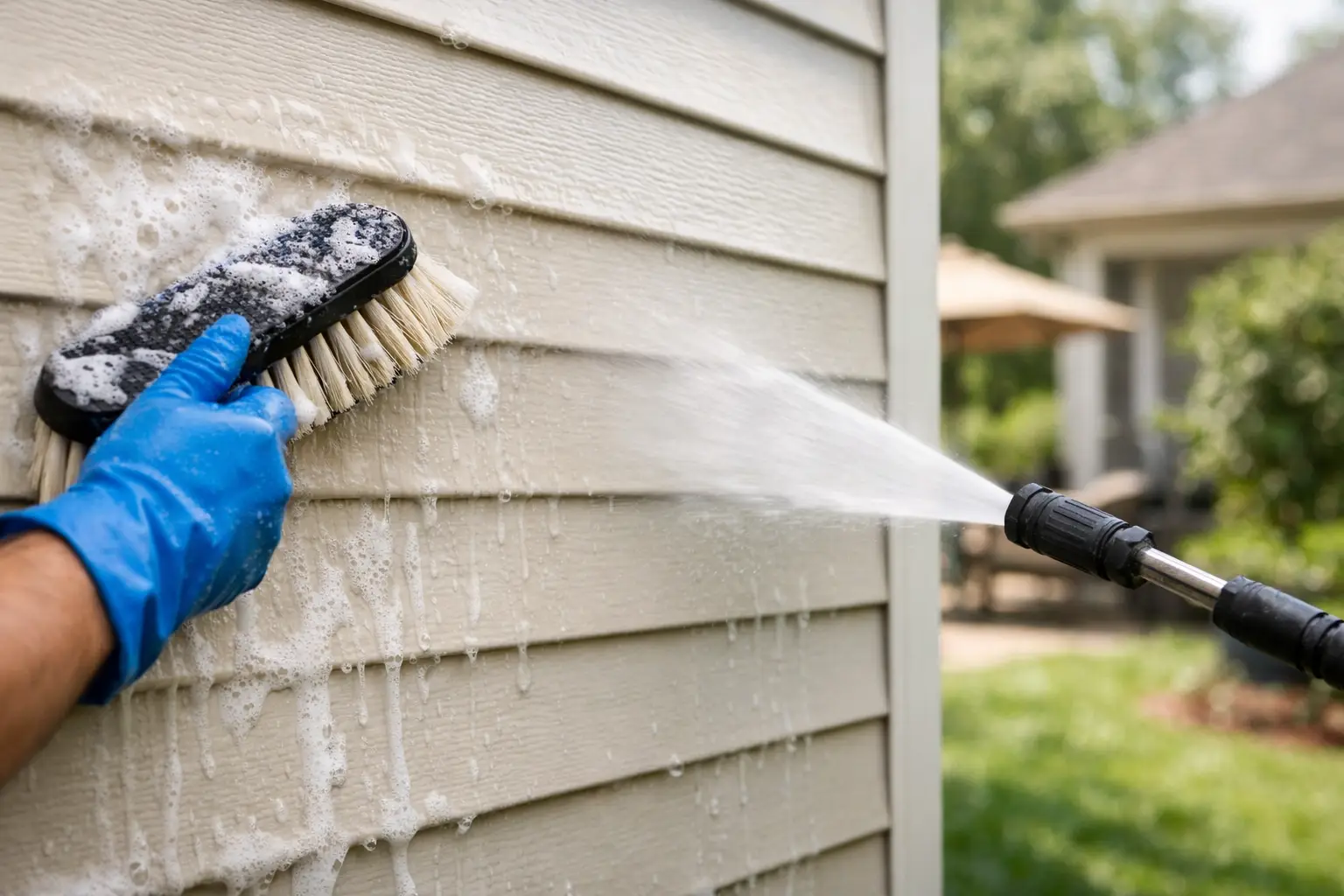
How to Wash Vinyl Siding Safely Without Damage
A green haze on vinyl siding is not just a curb-appeal problem in Western North Carolina. In Asheville’s humid mountain climate, algae, mildew, pollen, and grime can settle into shaded walls, beneath gutters, and along the north side of a home faster than many owners expect. Knowing how to wash vinyl siding safely means removing that buildup without forcing water behind the panels, stripping oxidation, or leaving streaks behind.
Vinyl is durable, but it is not invincible. The wrong pressure, harsh chemical mixture, or cleaning angle can create problems that are far more frustrating than dirty siding. A surface-safe approach protects your home while delivering the bright, even finish you want.
Why Vinyl Siding Needs a Gentle Cleaning Method
Vinyl siding is designed to expand and contract with changing temperatures. Its overlapping panels are not sealed like a solid wall, which means water can enter behind them if it is sprayed upward or driven in with too much pressure. Once moisture reaches the wall assembly, it may contribute to staining, trapped moisture, or damage to materials behind the siding.
High pressure also creates a visible risk on older siding. It can crack brittle panels, loosen pieces around trim, damage window seals, and leave uneven clean spots where oxidation has been disturbed. Oxidation is the chalky, faded layer that can develop as siding ages and weathers. If it is removed inconsistently, the result can be noticeable tiger striping or blotchy walls.
That is why professional house washing is usually a soft washing job, not a pressure washing job. Soft washing uses a low-pressure application and a properly diluted cleaning solution to break down organic growth at its source. The rinse is controlled and gentle, allowing the cleaning agents to do the hard work rather than relying on force.
What Is Growing on Your Siding?
Not every dark or green mark is the same, and the right treatment depends on the contaminant. In our region, the most common issue is algae, which often appears as green film on damp, shaded portions of a house. Mildew may look darker and thrive where airflow is limited. Pollen can leave a yellow-green coating in spring, while dirt, cobwebs, insect residue, and runoff stains create an overall dull appearance.
A quick rinse may temporarily improve the color, but it often does not remove the organic material that caused the staining. When algae and mildew are left behind, they can return quickly. The goal is to clean the surface thoroughly enough to address the growth while using a method suitable for vinyl, trim, windows, landscaping, and nearby exterior surfaces.
How to Wash Vinyl Siding Safely
Start by choosing a cool, overcast day when possible. Direct sun can cause cleaning products to dry too quickly, especially on darker siding, making rinsing harder and increasing the chance of streaks. Avoid cleaning when freezing temperatures are expected or when high winds could carry solution onto nearby vehicles, outdoor furniture, or plants.
Before applying any cleaner, walk around the property and inspect the siding. Look for cracked panels, loose pieces, open gaps around utility penetrations, damaged caulk, and windows that may not be fully sealed. Cleaning will not repair existing damage, and spraying water near an opening can make a small issue worse.
Protect the area around the home. Move lightweight furniture, cover or relocate delicate items, and pre-rinse landscaping with clean water. Healthy plants tolerate a properly managed house wash well when they are thoroughly watered before, during, and after the process. The details matter, particularly around ornamental shrubs, flowers, and newly planted landscaping.
Use a vinyl-safe exterior cleaner that is appropriate for organic staining, and follow the product directions for dilution and dwell time. Never assume stronger is better. An overly concentrated mixture can affect finishes, damage nearby materials, or create runoff concerns. For heavy algae or mildew, it is usually safer to apply the right solution and allow it time to work than to increase water pressure.
Apply cleaner from the bottom upward in manageable sections. This helps prevent runoff streaks on dry siding. Keep the application controlled and avoid saturating areas around vents, electrical fixtures, door openings, and window seals. Let the solution dwell as directed, but do not allow it to dry on the surface.
Rinse from the top down using low pressure and a wide spray pattern. Aim the water downward or straight at the siding, never upward beneath the lap. Keep the nozzle a safe distance from the wall and maintain a steady motion. If a stain does not release, do not move closer and blast it. Reapply cleaner, allow appropriate dwell time, and rinse again.
Common Mistakes That Can Damage Vinyl Siding
The biggest mistake is treating vinyl siding like concrete. A pressure washer can be useful around a property, but siding is not the place for an aggressive narrow nozzle or high-pressure setting. Water driven behind panels can cause hidden trouble, while close-range pressure can scar or crack the material.
Another common mistake is using abrasive brushes or scouring pads. These may remove surface grime, but they can scratch the finish and leave marks that catch dirt later. If gentle agitation is necessary on a stubborn spot, use a soft-bristle brush and minimal pressure.
Homeowners also run into trouble by mixing cleaning chemicals. Products containing bleach, acids, ammonia, or solvents should never be combined. Some cleaners are not compatible with vinyl, painted trim, metal fixtures, or landscaping. When in doubt, test a small, inconspicuous area first and use a product intended for exterior siding.
Finally, do not ignore water direction. Even low-pressure water can get behind siding if it is sprayed from underneath. This is especially important near the bottom edges of panels, around soffits, and where siding meets trim.
When DIY Cleaning Makes Sense
A homeowner can handle light pollen, dust, or small patches of surface dirt with a garden hose, a soft brush, and a vinyl-safe cleaning solution. This can be a practical option for a one-story home with easy access, sound siding, and no major organic growth.
It becomes less straightforward when the house has multiple stories, steep landscaping, extensive algae, fragile older siding, or staining near rooflines and gutters. Ladders, chemical handling, and pressure equipment each add risk. A home with significant buildup may also need a more complete exterior plan, including gutter cleaning, roof treatment, concrete cleaning, or deck and fence washing.
There is also the question of results. A rushed rinse may leave green traces in seams, under window trim, and in shaded corners. Professional soft washing is designed to treat those problem areas evenly, with the equipment and training needed to protect the property throughout the job.
A Safer Choice for Stubborn Buildup
For siding covered in mildew, algae, or years of accumulated grime, professional soft washing takes the hassle out of cleaning your castle. WNC Wash Pro’s uses surface-safe methods to remove organic buildup without relying on damaging pressure. The approach is tailored to the siding condition, surrounding landscaping, and the other exterior materials around your home.
Professional cleaning is particularly valuable before listing a property, after a heavy pollen season, or when a home’s shaded sides never seem to stay clean. Clean siding can make trim, windows, landscaping, and architectural details look sharper without the cost of a major exterior project.
How Often Should Vinyl Siding Be Cleaned?
Most homes benefit from a house wash every 12 to 24 months, but location matters. A shaded home surrounded by trees may need annual service because moisture, leaves, and limited sunlight encourage algae growth. Homes in open, sunny areas may stay clean longer, though pollen and storm runoff can still leave visible residue.
Watch for green film, dark spotting, dull siding, gutter runoff marks, or a noticeable difference between sunny and shaded walls. Addressing buildup early is usually easier than waiting until it becomes deeply established. It also helps preserve the clean, cared-for appearance that homeowners, neighbors, tenants, and potential buyers notice right away.
A clean exterior should never come at the expense of damaged siding or stressed landscaping. When the buildup is more than a simple hose-down can handle, a trained soft washing crew can provide the safer path to a home that looks refreshed and well cared for.