
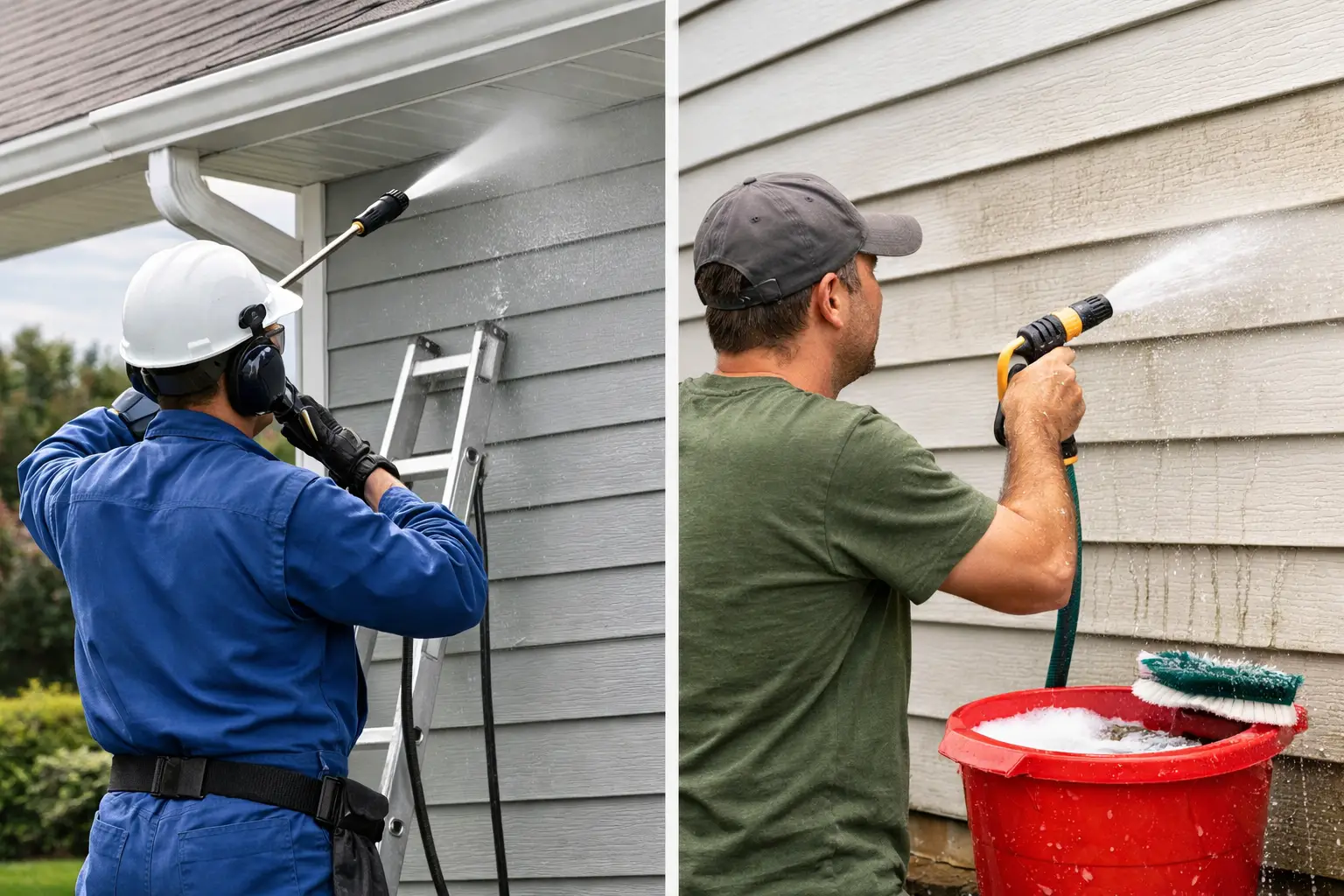
Professional Versus DIY House Washing Compared
A green film on siding, black streaks beneath gutters, and yellow pollen clinging to trim can make a well-kept home look neglected fast. When considering professional versus DIY house washing, the real question is not simply who can make the house look cleaner. It is whether the cleaning process removes organic growth safely, protects expensive exterior materials, and delivers results that last in Western North Carolina’s humid climate.
A homeowner can absolutely wash certain exterior surfaces themselves. For light dirt on a low, durable surface, the right equipment and a careful approach may be enough. But house washing is not one-size-fits-all. Vinyl, painted wood, Hardie siding, stucco, brick, trim, windows, landscaping, and electrical fixtures all call for different levels of care.
Why Asheville-Area Homes Need More Than a Rinse
Moisture, tree cover, pollen, and changing mountain weather create ideal conditions for algae, mildew, mold, and organic staining. What begins as a faint green or gray discoloration can spread across siding, soffits, gutters, decks, and shaded walls. A garden hose may rinse away loose dust, but it usually does not treat the source of the growth.
That distinction matters. If contaminants are only blasted or rinsed from the surface, remaining spores can return quickly. Proper soft washing uses an appropriate cleaning solution and controlled application to break down organic buildup, followed by a low-pressure rinse when needed. The goal is a clean exterior without forcing water behind siding or stripping paint from wood.
Professional Versus DIY House Washing: The Real Differences
The biggest difference is not just equipment. It is knowing which method belongs on which surface.
Pressure is not the answer to every stain
Many homeowners rent or buy a pressure washer expecting a quick weekend project. Pressure washing can be effective for durable concrete, some masonry, and heavily soiled flatwork when it is performed correctly. It is often the wrong approach for a home’s siding, roof, painted surfaces, older wood, and delicate trim.
Too much pressure can leave visible wand marks, carve grooves into wood, chip paint, scar vinyl siding, or damage window and door seals. Spraying upward can also push water behind siding, where moisture may contribute to rot, staining, or interior leaks. A surface may look clean in the moment while the damage shows up later.
Professional crews assess the material, the type of contamination, the condition of the surface, and the location of landscaping before choosing a method. For most house exteriors, a surface-safe soft wash is the safer alternative to high-pressure cleaning.
Cleaning solutions require knowledge and control
The right cleaning solution does more than brighten siding. It helps remove mold, algae, mildew, pollen, and other organic buildup at the source. But the wrong mix, a poorly timed application, or inadequate rinsing can harm plants, affect painted finishes, or leave uneven results.
A trained exterior-cleaning technician knows how to prepare the work area, pre-wet and protect landscaping, use appropriate dilution, manage runoff, and rinse thoroughly. This is especially valuable around gardens, mature shrubs, decorative stone, outdoor furniture, and sensitive surfaces that homeowners have invested in over the years.
DIY products can work for small spot treatments, but labels do not replace hands-on experience. Mixing chemicals incorrectly or combining incompatible products creates unnecessary risk. If a cleaner requires more caution than you can reasonably provide, calling a professional is the practical choice.
The cost comparison is more than the quote
DIY house washing can look less expensive at first. You may only be thinking about a rented pressure washer, detergent, and a few hours on a Saturday. The full cost can include equipment rental or purchase, extension wands, hoses, protective gear, cleaning products, plant protection, fuel or electricity, and time spent setting up and cleaning up.
There is also the cost of a mistake. Repainting damaged siding, replacing a broken window screen, repairing water intrusion, or restoring a scarred deck can exceed the price of professional service by a wide margin.
Professional house washing has an upfront service cost, but it includes trained labor, proper equipment, surface-specific cleaning methods, and the convenience of having the work completed without giving up your weekend. For homeowners preparing to sell, welcoming guests, or keeping up with seasonal maintenance, the time savings alone can be worthwhile.
When DIY House Washing Can Make Sense
A careful DIY approach may be reasonable when the job is small, low to the ground, and limited to light buildup. For example, rinsing pollen from accessible patio furniture, gently cleaning a small section of ground-level vinyl, or treating a minor stain with a manufacturer-approved product may be manageable.
Keep the work within reach. Avoid ladders, avoid spraying directly into vents or electrical fixtures, and do not use high pressure on siding, windows, roof materials, or painted wood. Test any cleaner in an inconspicuous area first. If the surface is older, already damaged, or showing stubborn black, green, or orange stains, the safer move is to have it evaluated.
DIY is usually a poor fit when the home is multi-story, heavily shaded, surrounded by landscaping, or affected by widespread mildew and algae. It is also not the place to learn pressure-washer technique for the first time.
What a Professional House Wash Should Include
A quality service begins with an inspection, not a spray wand. The crew should identify the siding material, evaluate staining, check for vulnerable areas, and explain the recommended cleaning approach. Clear communication matters, particularly if there are fragile plants, outdoor outlets, loose siding, aging paint, or areas of existing damage.
During the service, professionals should protect nearby landscaping and use controlled soft-wash application rather than treating every surface as heavy-duty concrete. They should also take care around windows, screens, light fixtures, vents, doorways, and outdoor living areas. The finished result should look clean and even, without streaks, residue, or pressure damage.
The best providers also stand behind their work. WNC Wash Pro’s combines trained local crews with surface-safe soft washing and a 100% satisfaction guarantee, so homeowners have a clear path to a clean exterior without the hassle or guesswork.
Consider the Roof, Driveway, Deck, and Gutters Separately
One common mistake is treating all exterior cleaning as the same job. Your driveway may benefit from controlled pressure washing, while your house siding needs low-pressure soft washing. A deck or fence may need a gentler technique to avoid raised wood grain and splintering. Roof stains require specialized treatment that does not involve pressure washing shingles.
Gutters add another consideration. Dark streaks on the outside may be oxidation or “tiger striping,” while debris inside the gutter can affect drainage. These are different problems with different solutions. A contractor who understands exterior surfaces can recommend the appropriate service rather than applying one method everywhere.
For commercial properties, the same principle applies. Building washing, storefront concrete cleaning, graffiti removal, and rust removal often require distinct processes. A clean, welcoming property supports curb appeal, tenant satisfaction, and a professional first impression, but only when the cleaning method respects the materials involved.
How to Decide With Confidence
Start by looking beyond how dirty the home appears. Ask what is causing the staining, what materials are involved, how high the work reaches, and what could be damaged if the job goes wrong. Then consider how much time, equipment, and comfort with chemical handling the project actually requires.
If the buildup is light and the work is simple, DIY may be a sensible way to freshen a small area. If algae is spreading, siding is delicate, the home has multiple stories, or you want dependable results without risking your castle, professional soft washing is usually the better value.
A clean exterior should feel like relief, not a weekend project that leaves you worrying about water behind the siding or plants along the foundation. Choose the approach that protects the home you have worked hard to maintain.