
How to Clean Pollen Off Siding Without Damage
That yellow-green film on your home is more than a springtime annoyance. In Western North Carolina, pollen can settle into siding seams, window trim, soffits, and shaded corners quickly, especially after a dry stretch. Knowing how to clean pollen off siding without damaging the finish helps protect your curb appeal and keeps organic grime from building up underneath.
Pollen itself is usually not as damaging as mold, mildew, or algae. The problem is what happens when it mixes with humidity, rain, dust, and tree debris. It can turn into a sticky layer that makes siding look dull and gives moisture-loving growth a place to take hold. A gentle, surface-safe cleaning method is the best answer.
Why pollen sticks to siding in our area
Asheville and surrounding mountain communities have a long, heavy pollen season. Pine pollen is especially visible, but flowering trees, grasses, and weeds all leave behind fine particles that travel on the wind. Vinyl siding, painted fiber cement, wood, stucco, and brick each have small surface textures where those particles can settle.
A quick rain does not always wash pollen away. Rainwater often creates streaks, pushing pollen into laps, trim joints, and areas beneath gutters. On north-facing walls or sides shaded by trees, pollen can combine with mildew and algae. That is why a home may look clean from the street while still showing dingy buildup around the porch, under eaves, or behind landscaping.
How to clean pollen off siding safely
The safest approach depends on your siding material, how long the pollen has been sitting, and whether you also see dark mildew, green algae, or black spotting. Fresh, loose pollen may only need a garden hose rinse. Heavier buildup usually needs a mild house-washing solution and low-pressure application.
Start with a gentle water rinse
Choose a mild day when temperatures are above freezing but not extremely hot. Rinsing in direct, intense sun can cause cleaning products to dry too quickly and leave residue. Close windows, move outdoor furniture, and cover delicate plants if you plan to use a cleaner.
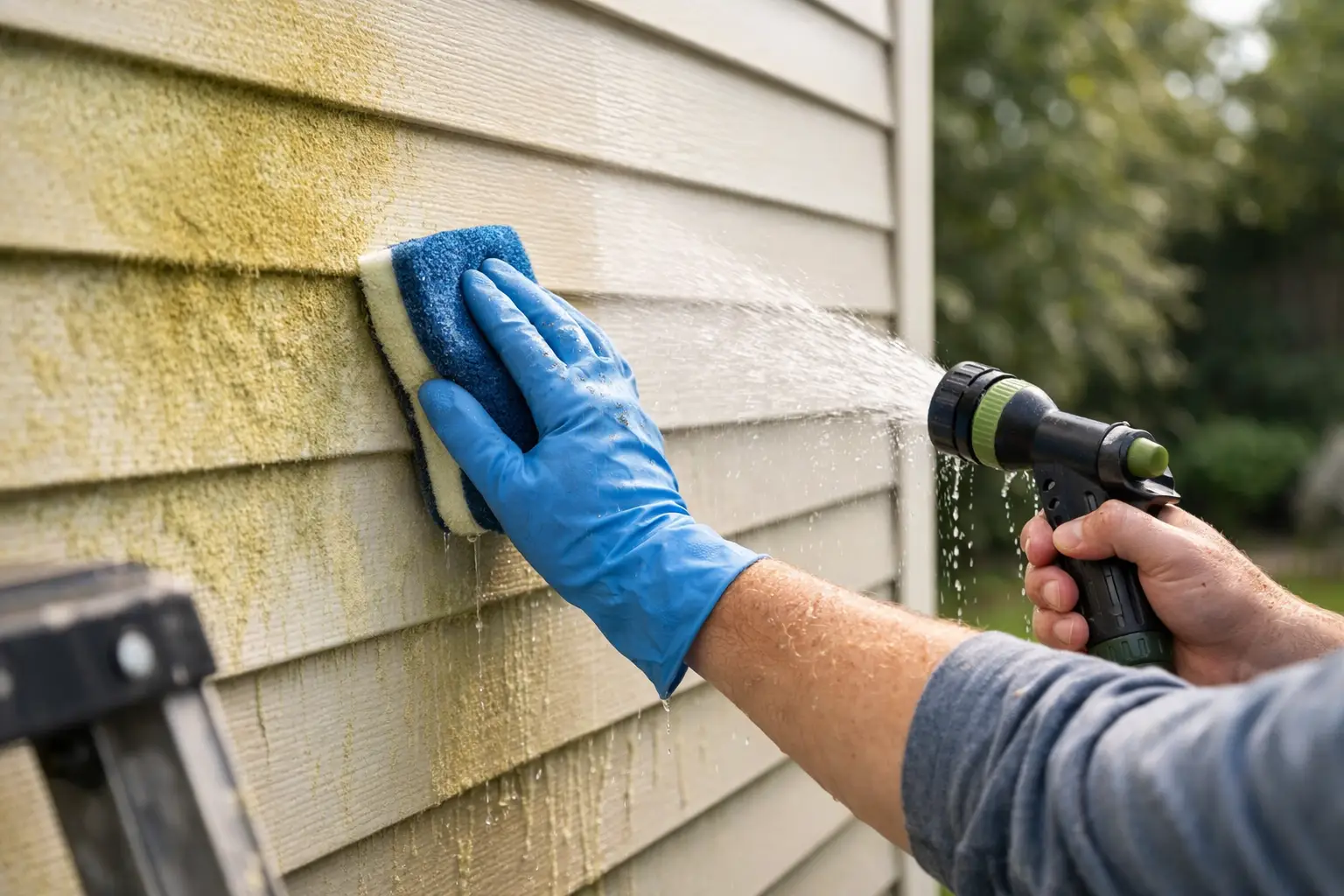
Use a garden hose with a standard spray nozzle. Start at the top of the wall and work downward so dirty water does not run over areas you have already cleaned. Keep the stream angled downward, particularly on lap siding. Spraying upward can force water behind siding panels, around window seals, or into soffit openings.
For a light coating of pollen, this may be enough. Let the siding dry before deciding whether additional cleaning is necessary. Sometimes the yellow cast disappears once the loose pollen is rinsed away.
Use a siding-safe cleaner for stuck-on pollen
If the siding still looks dusty, streaked, or grimy after rinsing, use a cleaner formulated for exterior house washing and approved for your particular siding. Read the manufacturer instructions carefully. Vinyl, painted surfaces, wood, and fiber cement can react differently to cleaners, especially if they are already weathered or oxidized.
Apply the diluted solution from the bottom upward to reduce streaking, then allow it to dwell briefly as directed. Do not let it dry on the surface. A soft brush can help on stubborn spots, but use light pressure only. Aggressive scrubbing can dull vinyl, remove oxidized paint, or damage older wood siding.
Rinse thoroughly from the top down. Pay close attention to the bottoms of siding courses, trim boards, porch ceilings, and the areas around light fixtures. Leftover cleaner or pollen residue can leave visible lines once the wall dries.
Protect plants, windows, and electrical fixtures
Even a properly diluted exterior cleaner deserves careful handling. Wet nearby shrubs and flowers before cleaning, keep them damp during the work, and rinse them again afterward. This simple step helps dilute any overspray.
Avoid spraying directly into exterior outlets, doorbell cameras, vents, or uncovered electrical fixtures. Do not use harsh chemicals on a windy day, and do not wash around open windows. If your property has older windows, loose siding, peeling paint, or visible gaps around trim, professional assessment may be the safer choice.
Do not pressure wash most siding at high pressure
High pressure can make pollen disappear quickly, but it is rarely the right tool for house siding. The force can crack vinyl, scar painted surfaces, strip wood fibers, loosen caulk, and drive water behind the exterior cladding. Water trapped behind siding can contribute to moisture problems that are far more costly than a dirty wall.
Professional house washing is different from blasting a surface with a pressure washer. A trained crew uses soft washing, which relies on a carefully controlled cleaning solution and low-pressure rinsing to remove pollen, organic growth, dirt, and stains. The cleaning agents do the work, not excessive force.
There are exceptions. Concrete, some brick, and certain durable hardscape surfaces may benefit from controlled pressure washing. But a driveway is not siding. Cleaning methods should match the surface, its condition, and the type of buildup present.
Watch for signs pollen is not the only problem
Pollen tends to look yellow, tan, or dusty green and often rinses away fairly easily. If staining remains after a gentle wash, you may be dealing with something else. Green patches often indicate algae. Black spotting can be mildew, mold, or accumulated grime. Dark vertical streaks beneath gutters may point to overflow, dirty gutters, or runoff carrying debris down the wall.
These issues call for more than repeated rinsing. A surface-safe house wash can treat the organic growth at its source and restore a more even appearance. This is particularly useful on shaded sides of homes in Asheville, Hendersonville, Biltmore Forest, and other humid mountain communities where moisture lingers.
When to schedule professional soft washing
Homeowners can usually handle a light pollen rinse, especially on a single-story home with easy access. Professional help makes sense when pollen covers multiple sides of the house, staining has set in, landscaping is extensive, or siding is high, delicate, or difficult to reach safely.
It is also a smart choice if you are preparing to sell, hosting an outdoor event, managing a rental property, or trying to catch up on seasonal maintenance. A professional wash saves the time of hauling ladders, mixing cleaners, protecting plants, and dealing with runoff. More importantly, it gives the entire exterior a consistent result.
WNC Wash Pro’s uses a surface-safe soft washing approach designed to clean siding without the damage risks associated with high-pressure washing. For homeowners who want visible results without the hassle, a trained local crew can address pollen along with mildew, algae, dirt, and other buildup in one visit.
Keep pollen from building up again
No cleaning method can stop pollen from landing on your home during spring. The goal is to keep it from sitting long enough to combine with moisture and organic growth. A simple hose rinse after the heaviest pollen weeks can make a meaningful difference, particularly on covered porches, white trim, and light-colored vinyl.
Keep gutters clear so rainwater does not spill down siding, and trim back branches or dense shrubs that keep exterior walls shaded and damp. If you notice recurring green or black growth, consider a regular house-washing schedule rather than waiting until the siding looks heavily stained. Routine maintenance is often gentler, faster, and easier on exterior materials than trying to correct years of buildup.
Your siding is part of the protection around your home, not just its appearance. Treat pollen early, use low pressure, and choose cleaning methods that respect the surface. A clean exterior lets the details of your home stand out again, right when spring is meant to be enjoyed.