
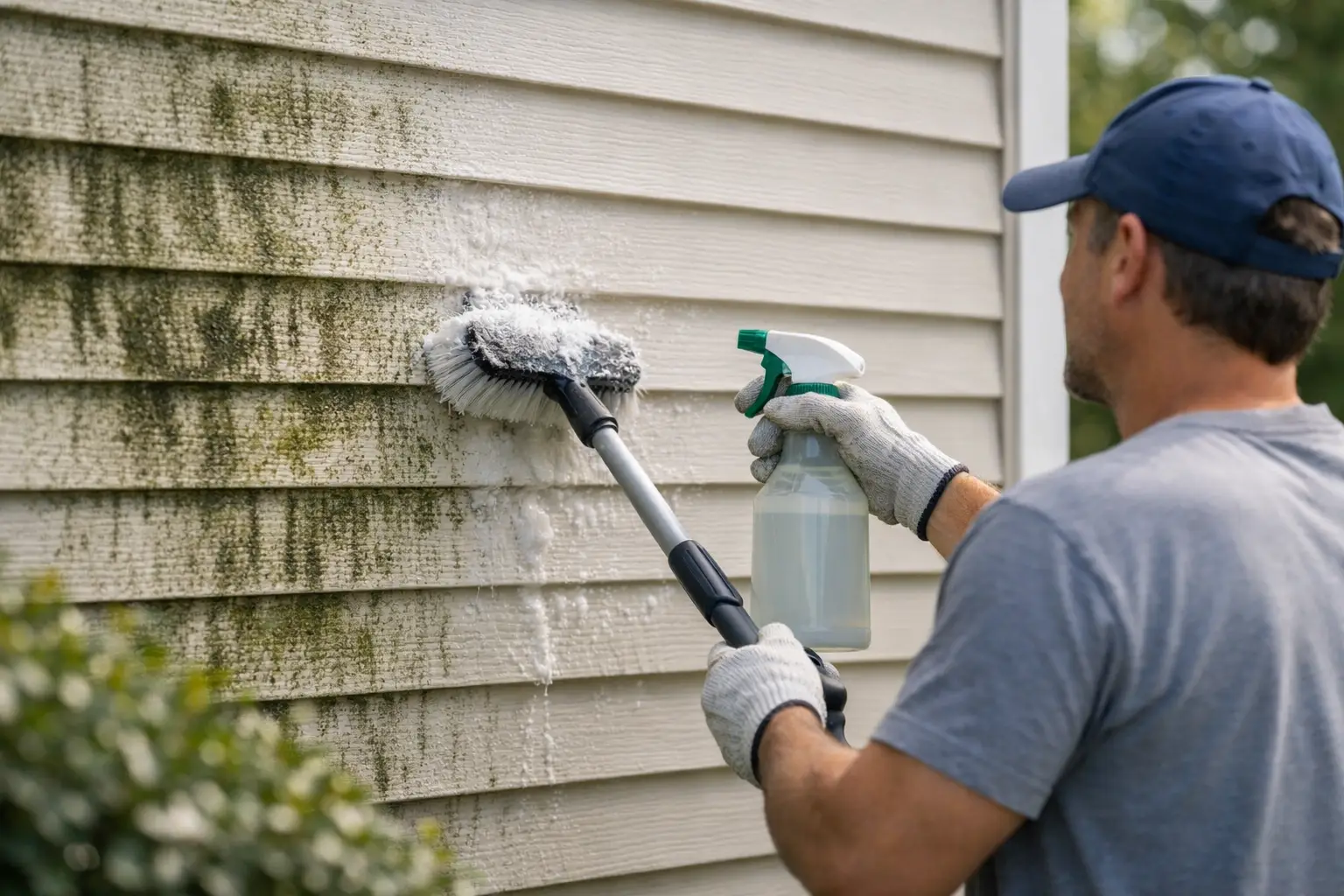
How to Remove Mildew From Siding Safely
That green-gray staining on the shaded side of your home is more than a curb-appeal problem. In Asheville and across Western North Carolina, frequent rain, tree cover, pollen, and humid summer weather create ideal conditions for mildew, algae, and other organic buildup. Knowing how to remove mildew from siding without harming the surface can protect the appearance of your home and help prevent stubborn stains from becoming a recurring headache.
The key is matching the cleaning method to the siding material and the level of buildup. A gentle treatment may handle a few small spots, while widespread growth often calls for professional soft washing rather than a high-pressure rinse.
Why Mildew Grows on Siding
Mildew needs moisture, shade, and organic material to grow. Homes surrounded by trees, positioned near slopes, or facing north may stay damp longer after rain. Pollen, dust, leaf debris, and airborne spores give mildew and algae a surface to cling to.
Vinyl siding is especially likely to show green or black discoloration because its light, smooth finish makes organic staining visible. Painted wood, fiber cement, brick, and stucco can develop similar growth, although each material needs a different level of care during cleaning.
What homeowners call mildew is often a mix of mildew, algae, mold, and surface grime. The exact contaminant matters less than using a method that kills the growth at its source instead of simply blasting away the visible stain.
How to Remove Mildew From Siding Without Damage
Start by checking the siding manufacturer’s care recommendations. This is particularly important for painted surfaces, older wood siding, and fiber cement. When in doubt, test any cleaning solution in a small, less-visible area before treating an entire wall.
For light mildew on durable vinyl siding, a low-pressure garden hose rinse followed by a siding-safe cleaning solution can be effective. Work from the bottom upward when applying the cleaner to reduce streaking, then rinse from the top downward. Keep the spray angle pointed down or straight at the wall so water does not get forced behind the siding panels.
Let the cleaning solution dwell only as long as its directions allow. Mildew stains may need gentle agitation with a soft-bristle brush, but aggressive scrubbing can dull vinyl and damage paint. Rinse thoroughly so no chemical residue remains on the siding, windows, landscaping, or nearby hardscape.
Avoid reaching for a pressure washer just because the stains look stubborn. High pressure can force water behind siding, crack brittle vinyl, strip paint, scar wood, and leave visible wand marks. The risk is even higher around windows, electrical fixtures, vents, trim, and older exterior materials.
Use Cleaning Products Carefully
A purpose-made exterior cleaner is usually the safest place to start. Some homeowners use diluted bleach-based solutions for organic growth, but bleach must be handled carefully. It can discolor painted finishes, damage nearby plants, affect metal fixtures, and create runoff concerns if it is mixed or applied incorrectly.
Never mix bleach with ammonia, acids, or other household cleaners. Wear gloves and eye protection, keep children and pets away from the work area, and wet nearby plants before and after cleaning. Covering delicate landscaping may help during treatment, but do not leave coverings in place long enough to trap heat and harm plants.
For a small, isolated stain, a mild detergent solution and soft brush may be enough. For large areas of staining, dark streaks, or buildup that returns every season, professional treatment is often the more dependable choice.
Why Soft Washing Is Often the Better Option
Soft washing uses low-pressure application and a professional cleaning solution designed to break down organic growth. Instead of relying on force, it treats the mildew, algae, and mold that have attached to the surface. The result is a more even clean with far less risk to siding, trim, windows, and landscaping.
This approach is especially useful for vinyl siding, painted wood, fiber cement, stucco, and delicate exterior details. It also helps with the difficult areas homeowners may miss, including upper walls, gables, dormers, shaded corners, and sections behind landscaping.
There is a trade-off: soft washing is not a simple rinse-and-go process. The correct solution strength, dwell time, plant protection, and rinse procedure all matter. That is why trained exterior cleaning crews assess the material, staining, and surrounding property before beginning work.
WNC Wash Pro’s uses surface-safe soft washing to remove organic buildup while helping homeowners avoid the damage that can come from unnecessary high pressure. For a home with widespread staining or sensitive materials, that approach takes the hassle out of cleaning your castle.
Siding Materials That Need Extra Care
Not every siding material should be treated the same way. Vinyl is resilient but can warp under excessive heat and become brittle with age. Painted wood is vulnerable to peeling paint and water intrusion. Fiber cement is durable, but harsh pressure can damage its finish and force water into seams.
Stucco requires special care because high pressure can chip the finish or drive moisture into cracks. Brick and masonry are generally tougher, yet older mortar joints may be weak enough to deteriorate under aggressive washing. If your home has mixed materials – such as vinyl siding with painted trim, stone accents, or wood shutters – the safest cleaning plan accounts for every surface.
A good rule is simple: if you are unsure whether a method is safe, do not test it with more pressure. Test a gentle cleaner in a small area, or have a trained professional evaluate the siding first.
Prevent Mildew From Returning
Cleaning removes the current growth, but moisture management makes the biggest difference over time. Trim back branches that keep walls shaded or rub against the house. Clear leaves from gutters and downspouts so rainwater moves away from the foundation instead of splashing back onto siding.
Check for dripping gutters, leaking hose connections, overflowing planters, and sprinkler heads that regularly soak one side of the home. These small water sources can create a perfect environment for repeat staining. Improving airflow around shrubs and groundcover near the house can also help exterior walls dry faster.
In our humid mountain climate, a yearly house wash is a practical maintenance step for many properties. Homes under heavy tree cover or near wooded areas may need attention more often. Regular cleaning is usually easier, safer, and more affordable than waiting until thick buildup covers multiple sides of the home.
When to Call a Professional
A homeowner can often manage a small patch of mildew at ground level. Professional help makes sense when staining is widespread, the affected area is high or difficult to reach, or the siding is older, painted, delicate, or already showing wear.
It is also wise to bring in a professional if mildew returns quickly after cleaning. Repeat growth may point to drainage problems, shade issues, clogged gutters, or a cleaning method that removed the stain without fully treating the organic contamination.
Professional exterior cleaning can also save time when your home needs more than siding attention. Roof streaks, dirty gutters, stained concrete, and mildew-covered decks often share the same moisture and organic-growth causes. Addressing them with the right methods can restore a cleaner, more cared-for appearance across the property.
A mildew-free exterior does more than brighten the view when you pull into the driveway. It gives you a cleaner surface to inspect, maintain, and enjoy – especially before seasonal pollen, summer humidity, or a future home sale puts every detail of your property in the spotlight.