
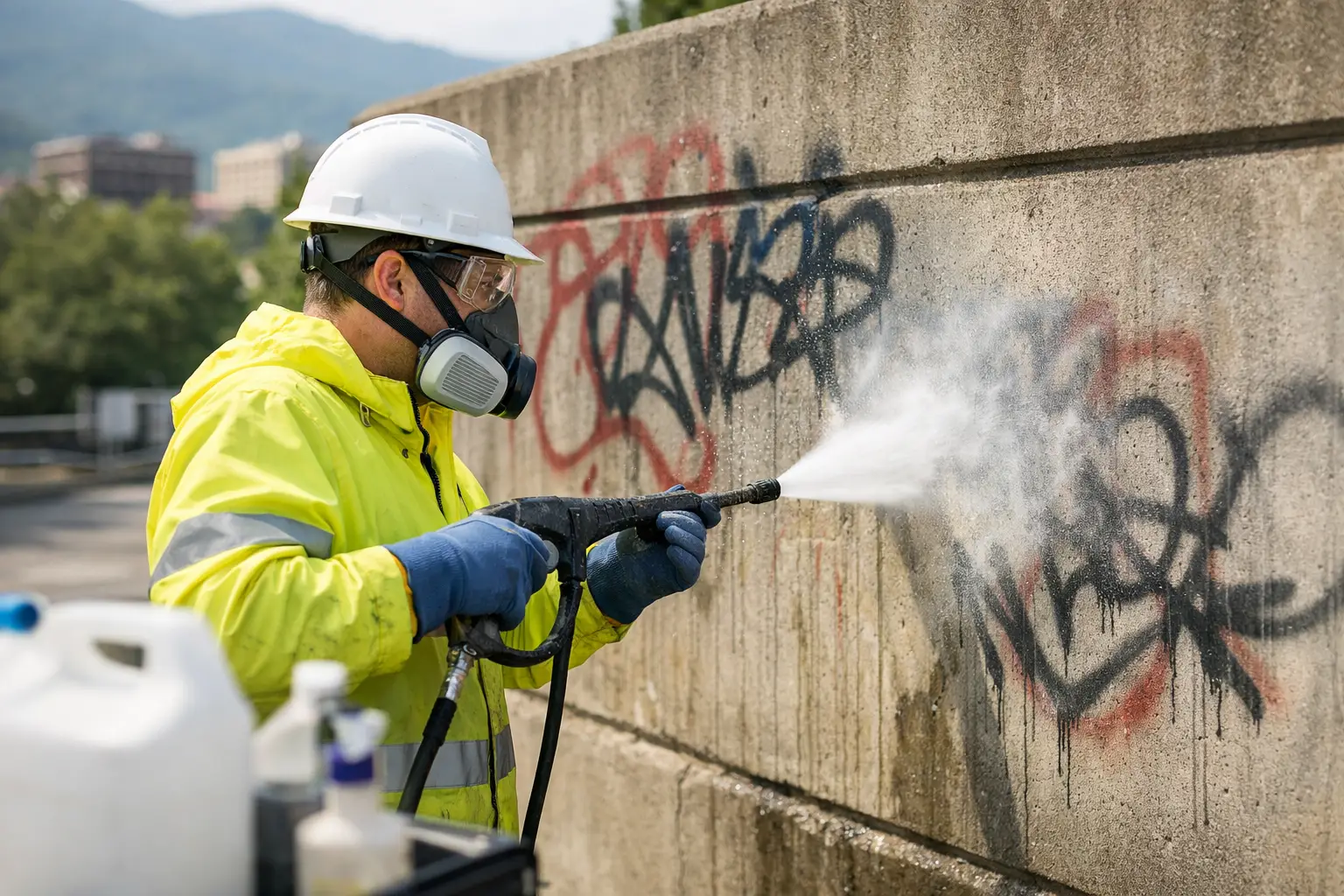
Graffiti Removal Asheville Done Safely
A fresh spray-painted tag can change the feel of a storefront, retaining wall, apartment entrance, or neighborhood business overnight. Graffiti removal Asheville property owners arrange quickly is about more than appearance. It helps protect the welcoming, well-kept image that residents, tenants, and customers expect while preventing paint from settling deeper into an exterior surface.
The right cleanup method depends on what was painted, what the surface is made of, and how long the graffiti has been there. Aggressive pressure can remove more than paint. It can scar concrete, strip a wood finish, force water behind siding, or leave a noticeable clean spot on an otherwise weathered wall. Professional removal focuses on getting the best visible result while protecting the property underneath.
Why Fast Graffiti Removal Matters
Graffiti is easiest to address when it is fresh. Paint can bond to porous masonry, unsealed concrete, bare wood, and older brick over time. Asheville’s wet weather and temperature swings can also complicate the job, carrying pigments into tiny surface openings and making a simple-looking tag more difficult to remove cleanly.
For commercial properties, speed matters because the exterior is part of the customer experience. A marked storefront, dumpster enclosure, parking structure, or entryway can make a business look unattended even when everything inside is running well. Landlords and property managers face a similar concern: common areas should feel cared for, safe, and ready for residents or prospective tenants.
Prompt action does not always mean using the strongest cleaner or highest pressure. It means choosing a trained crew that can identify the material, test an appropriate treatment, and remove the paint without creating new damage. That approach is especially valuable around historic masonry, decorative stone, painted siding, wood fences, and aging concrete.
Graffiti Removal in Asheville Is Not One-Method Cleaning
Every exterior surface reacts differently. On dense, sealed concrete, a targeted graffiti remover followed by controlled rinsing may be effective. On unsealed block or rough brick, paint can settle into pores and require repeated treatment, dwell time, and careful rinsing. A one-pass blast with a pressure washer can leave shadowing, etching, or a patch that looks brighter than the surrounding wall.
Vinyl siding and painted metal require even more care. The goal is to lift the graffiti without dulling the finish, pushing water into seams, or removing the factory coating. Wood can be more challenging because the grain absorbs color quickly. Depending on the age of the paint and the condition of the wood, complete removal may require a combination of specialty products, low-pressure rinsing, and refinishing afterward.
Glass, plastic fixtures, sign faces, and painted murals also need a lighter touch. A product that works well on concrete could haze plastic or affect a painted finish. This is why a surface assessment matters before any chemicals or equipment are brought to the wall.
The Difference Between Pressure Washing and Surface-Safe Treatment
Pressure washing has a place in exterior cleaning, particularly for durable concrete and other hard surfaces. But it is a tool, not a universal answer. When used at the wrong pressure, angle, or distance, it can permanently alter a surface. On masonry, high pressure can remove loose mortar or create etched lines that remain visible after the graffiti is gone.
Surface-safe graffiti removal usually begins with the least aggressive effective option. A trained technician considers the paint type, surface porosity, coating condition, and nearby landscaping before selecting a removal product. The area may be pre-wet, treated in sections, gently agitated when appropriate, and rinsed with controlled pressure. Runoff management also matters, especially near landscaping, drains, doors, and pedestrian areas.
The result should look clean without looking damaged. In some cases, particularly on heavily porous or weathered surfaces, a faint shadow can remain after the paint itself is removed. An honest assessment is part of professional service. Sometimes the best next step is sealing the cleaned surface, applying a matching coating, or treating the full panel or wall area so the finish looks consistent.
Common Asheville Surfaces That Need Extra Care
Brick walls and older masonry deserve patience. Many local properties have exterior materials that carry years of weathering, moss, pollen, and moisture exposure. Cleaning only the graffiti can make the treated section stand out, so broader building washing may be worth considering when the surrounding surface is visibly soiled.
Concrete is durable, but not invincible. Sidewalks, loading areas, curbs, retaining walls, and parking pads can be etched by improper pressure or harsh chemical use. If the concrete is sealed, the removal process may affect the protective coating. Reapplying sealer afterward can help restore a more even appearance and make future cleanup easier.
Painted siding, trim, fences, and decks require a lower-pressure approach. The wrong method can peel existing paint or drive moisture behind boards and panels. For these surfaces, the removal crew should protect nearby windows, doors, landscaping, and outdoor furniture while working carefully around joints and edges.
Natural stone can be unpredictable because its density and finish vary. What works on smooth manufactured stone may not be appropriate for rough fieldstone or porous limestone. Testing a small, less visible area first helps reduce risk and sets realistic expectations for the finished appearance.
What Property Owners Can Do Before Help Arrives
Avoid scrubbing aggressively with a wire brush, sanding the area, or applying random solvents from the garage. Those efforts often spread paint, scratch the material, or leave a chemical residue that makes professional treatment more complicated. A quick photo can be useful for documentation, especially for commercial properties, rental communities, or cases where a report is being made.
If the graffiti is on a customer-facing area, it is reasonable to block off the immediate space until it can be cleaned. Keep vehicles, furniture, planters, and other movable items clear of the wall when possible. This gives the cleaning team room to work safely and helps protect surrounding property from overspray or runoff.
Do not cover the issue with a rushed coat of paint unless you know the exact finish and color match. A mismatched patch can be more noticeable than the original graffiti. On painted surfaces, a professional can help determine whether targeted removal, touch-up painting, or repainting a larger section will produce the better result.
Prevention After the Paint Is Gone
A clean surface is the first priority, but prevention can reduce future disruption. Good lighting, maintained landscaping, visible cameras, and prompt removal all communicate that a property is actively cared for. For recurring problem areas, a protective coating or sacrificial anti-graffiti coating may be worth discussing. The right option depends on the surface, visibility, budget, and how frequently vandalism occurs.
Regular exterior maintenance also makes a difference. Mold, algae, dirt, and old staining can make walls look neglected, while a professionally cleaned exterior makes new graffiti more obvious and easier to address quickly. For commercial locations, scheduled building washing and concrete cleaning can support a cleaner, more professional appearance throughout the year.
Choose a Local Team That Protects the Surface
The best graffiti removal service does not treat every wall like a driveway. Look for a company that asks about the surface material, paint condition, age of the graffiti, and any concerns around landscaping or nearby finishes. Clear expectations matter, particularly when working with porous brick, unsealed block, weathered wood, or historic materials.
WNC Wash Pro’s provides trained, surface-conscious exterior cleaning for homes and commercial properties throughout the Asheville area. The goal is straightforward: remove the unwanted paint, protect the exterior beneath it, and take the hassle out of restoring your property’s curb appeal. A 100% satisfaction guarantee adds peace of mind when the condition of your home, business, or rental property is on the line.
If graffiti has appeared on your property, do not let a quick act of vandalism become a long-term stain. A prompt, careful assessment can protect the surface, preserve the look of the building, and help your property feel like it belongs to the community again.