
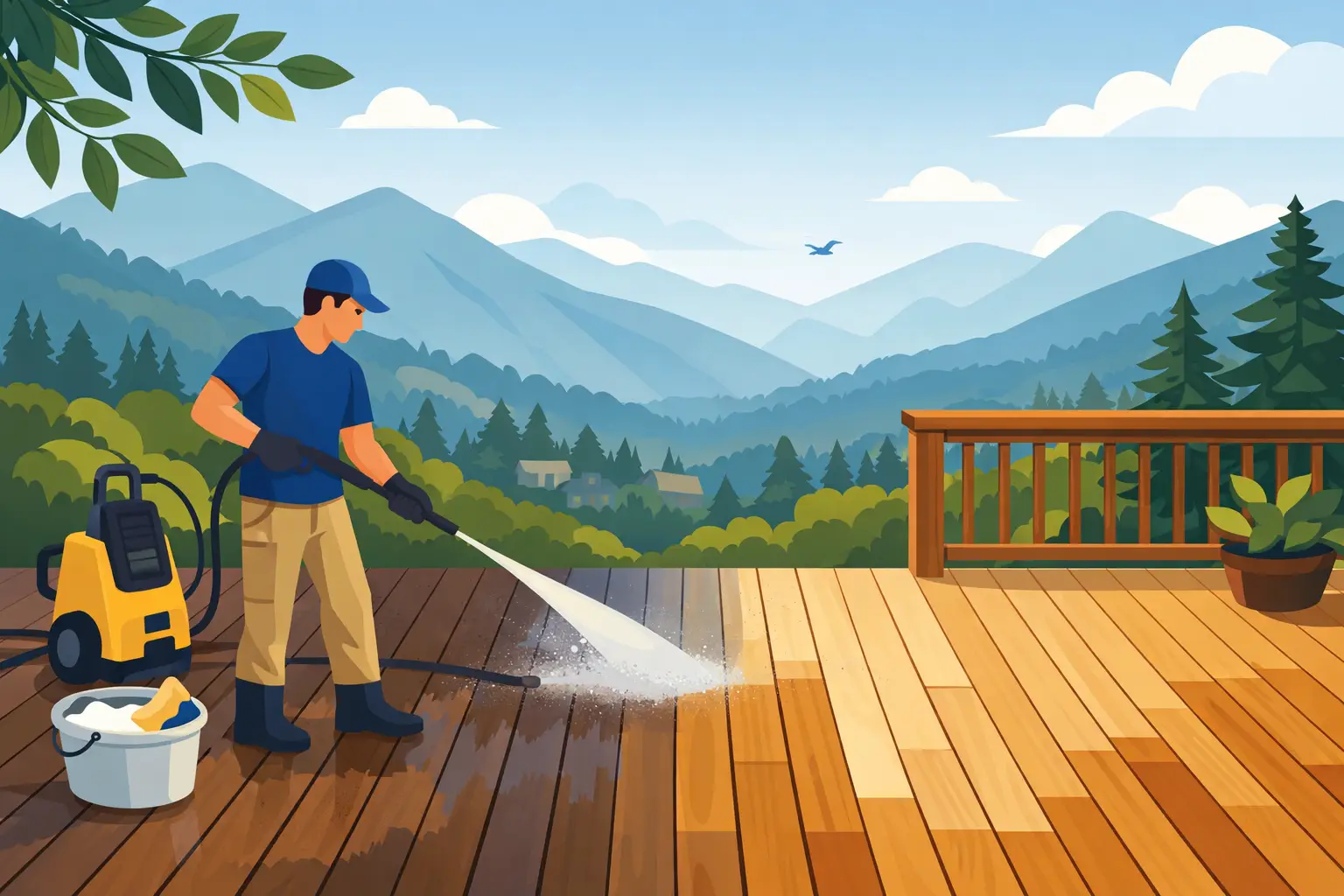
Deck Cleaning Asheville for Safer Wood Restoration
A deck can look tired long before the boards are actually worn out. In Asheville, shaded backyards, humid summers, frequent rain, and spring pollen create the perfect conditions for dark algae, mildew, and slippery buildup. Professional deck cleaning Asheville homeowners rely on removes that organic growth while helping protect the wood underneath.
The goal is not simply to make a deck look brighter for the weekend. Done correctly, deck cleaning helps preserve an outdoor space that supports family gatherings, quiet mornings, rental property appeal, and the value of your home. The key is using the right cleaning method for the deck’s material and condition.
Why Asheville Decks Get Dirty So Quickly
Western North Carolina gives us beautiful mountain scenery, but it is not especially easy on exterior wood. A deck that stays damp after rain, receives limited afternoon sun, or sits beneath mature trees can develop green or black staining surprisingly fast. What looks like ordinary dirt is often a combination of algae, mildew, leaf tannins, pollen, and moisture-fed organic growth.
Algae is more than a cosmetic problem. Once it forms a film across the boards, it can make steps and walking surfaces slick. Mildew and trapped debris can also hold moisture against the wood, which may contribute to premature weathering over time. On a composite deck, buildup can dull the finish and collect in the texture of the boards.
Many homeowners first notice the issue when the deck looks darker than it did last season or when furniture leaves clean outlines behind. Others notice it after a rainy stretch, when the stairs suddenly feel less secure underfoot. Those signs are a good reason to schedule cleaning before buildup becomes heavier and more difficult to remove.
Deck Cleaning Asheville Homes Need Is Not One-Pressure-Fits-All
Pressure washing has a place in exterior cleaning, but wood requires judgment. Excessive pressure can leave wand marks, raise the grain, gouge soft areas, or force water into vulnerable joints. A deck may look clean immediately afterward while still needing extra sanding or refinishing because the surface was damaged during the process.
That is why the safest approach depends on the deck. A trained crew first considers the surface type, age, condition, existing stain or sealant, level of contamination, and any loose or damaged boards. The cleaning process may include a surface-safe solution to treat organic growth, controlled rinsing, and pressure settings chosen specifically for the material.
Soft washing is often the right choice for treating mildew, algae, and other organic staining without relying on aggressive force. For some heavily soiled wood surfaces, carefully controlled pressure may be used as part of the process. It depends on what the deck needs, not on using the same method for every property.
Wood decks need a gentle, even approach
Cedar, pine, and pressure-treated lumber can all react differently to cleaning. Softer wood is especially vulnerable to high pressure. Even durable pressure-treated boards can splinter or become rough if they are blasted too aggressively.
A professional cleaning is designed to produce an even result across the deck, including between boards, around railings, on steps, and near posts. Those details matter. Cleaning only the open walking surface may leave dark buildup along edges and in shaded corners, where moisture tends to linger.
Composite decking has different needs
Composite decks are not maintenance-free. They still collect pollen, algae, food residue, and mildew, particularly in the textured finish of older boards. However, the manufacturer’s care guidance may limit which cleaners and pressure levels are appropriate.
Using an unsuitable chemical or excessive pressure can affect the appearance of a composite surface. Professional assessment helps match the cleaning method to the product rather than treating composite boards exactly like wood.
What a Professional Deck Cleaning Process Should Include
A quality service starts before any water hits the deck. The area should be inspected for loose boards, popped fasteners, deteriorated railings, peeling stain, and spots where landscaping or drainage keeps the structure wet. Cleaning will not repair structural problems, but identifying them early can help a property owner plan the next step.
Nearby furniture, planters, and delicate landscaping should be protected or moved as needed. Crews should also pay attention to runoff and use products with care around plants and surrounding surfaces. A clean deck should not come at the expense of your landscaping.
The actual treatment targets algae, mildew, and grime at the source rather than merely pushing visible dirt around. After an appropriate dwell time, the surface is rinsed carefully. Some decks may benefit from additional attention to railings, stair risers, or shaded sections where growth is more established.
After cleaning, the deck needs time to dry fully. This is especially important if you are considering staining or sealing. Applying a finish before the wood has dried can lead to poor adhesion, uneven color, or a finish that fails sooner than expected.
When Should You Clean Your Deck?
For many Asheville-area homes, annual cleaning is a practical baseline. Decks under trees, near wooded areas, or on the north side of a home may need service more frequently. Properties with rental turnover or homes being prepared for sale may also benefit from a cleaning before photos, showings, or outdoor entertaining season.
Spring is a popular time because pollen, winter debris, and moisture staining are easy to see. Cleaning in fall can be just as useful, especially after a long humid summer has encouraged algae growth. The best schedule is based on conditions, not the calendar alone.
Watch for a green cast on boards, black spotting around railings, slippery steps, or areas that remain damp long after the rest of the deck dries. These are practical signs that cleaning should not wait.
Cleaning Helps You Make Better Repair and Stain Decisions
It is hard to evaluate a dirty deck accurately. Once pollen, algae, and surface grime are removed, you can see whether boards are simply discolored or whether they are cracked, soft, cupped, or ready for replacement. A clean surface also gives a more honest picture of the condition of an existing stain or sealant.
If the deck is due for staining, cleaning is an essential first step, but it is not always the entire preparation process. Peeling finishes may require further prep, and weathered wood may need sanding before a new coating is applied. A reputable exterior cleaning company can explain where cleaning ends and where repair or refinishing work begins.
That clarity protects your budget. There is no benefit in applying a fresh stain over algae, embedded grime, or damp wood, only to have the finish look uneven or wear prematurely.
Simple Habits That Keep a Deck Cleaner Longer
Professional cleaning handles established buildup, while a few regular habits can extend the results. Sweep leaves and pine needles from the boards, especially after storms. Keep gaps between boards clear so water can drain. Move planters occasionally to prevent moisture rings, and trim vegetation that blocks airflow around the deck.
Avoid letting outdoor rugs, stacked firewood, or stored items trap water against the surface for long periods. These items do not have to be removed forever, but shifting them periodically helps prevent darker patches and uneven weathering.
It also helps to look at gutters and downspouts. Overflowing gutters or downspouts that empty directly beside the deck can keep the area wet and encourage more organic growth. Exterior maintenance works best when the whole property is considered together.
Choose a Local Team That Treats Your Deck Like an Investment
A deck is not a driveway. It should never be approached with a one-size-fits-all cleaning method or rushed through with more pressure than the material can handle. Ask whether the provider evaluates wood and composite surfaces differently, uses surface-safe cleaning solutions, and has experience with the moisture and shade patterns common across Asheville and Buncombe County.
WNC Wash Pro’s provides trained, professional exterior cleaning built around safe methods and visible results. Homeowners can request a free estimate, discuss the condition of their deck, and get a clear recommendation without the hassle of guessing which approach is right.
Your deck should feel like part of your home, not another weekend project waiting for attention. Cleaning it before algae and moisture take over gives you a safer, better-looking place to enjoy the next clear mountain afternoon.