
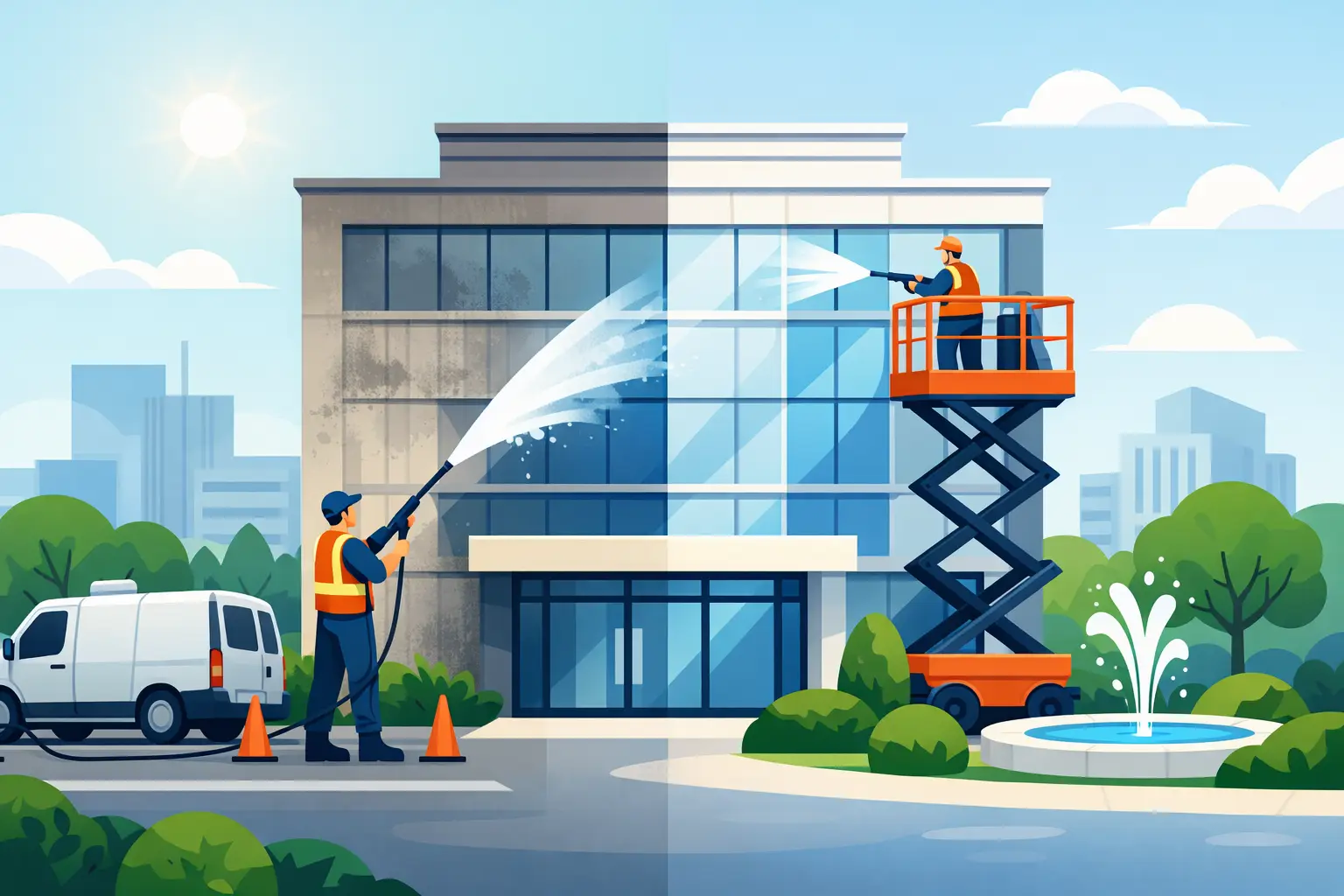
Commercial Building Washing That Protects Curb Appeal
A storefront can look neglected long before the doors open. Green algae on siding, black mildew near entryways, pollen-covered facades, and stained concrete all send a message to customers, tenants, and visitors. Professional commercial building washing gives your property a cleaner, more welcoming appearance while helping protect the exterior materials you have invested in.
For businesses across Asheville and Western North Carolina, exterior buildup is more than a cosmetic issue. Our humid climate, shaded lots, changing seasons, and heavy pollen create ideal conditions for mold, mildew, algae, and grime. The right cleaning method restores the property without turning a maintenance project into an expensive repair.
Why Commercial Building Washing Matters
A clean exterior supports the way people experience your business before they walk through the door. Whether you manage an office building, retail center, restaurant, medical practice, apartment community, warehouse, or church, the condition of the property affects first impressions.
Building washing also addresses contaminants that do not stay still. Algae, mildew, and organic growth can spread across vinyl, painted surfaces, stucco, brick, concrete, gutters, awnings, and other exterior areas. Left in place, that buildup can create persistent staining and hold moisture against certain surfaces. Regular cleaning is a practical part of protecting curb appeal and reducing avoidable wear.
For property managers, a well-maintained exterior can make routine inspections easier. It is much simpler to spot damaged caulking, failing paint, cracks, drainage issues, or other maintenance concerns when the building is not hidden beneath dirt and biological growth.
The Right Method Depends on the Surface
Commercial properties are rarely made from one material. A single site may include painted siding, brick walls, metal panels, vinyl trim, concrete sidewalks, dumpster pads, loading areas, and decorative stone. That is why choosing a cleaning method based only on pressure is a mistake.
High pressure can be effective for durable concrete in the right hands, especially when removing embedded dirt, gum, and heavy traffic staining. But it is not the right answer for every part of a building. Too much pressure can force water behind siding, damage painted finishes, scar wood, disturb mortar, or leave visible marks on more delicate surfaces.
Soft washing is often the safer alternative for exterior walls, siding, trim, and other sensitive surfaces. This process uses low-pressure application and professional cleaning solutions designed to break down organic growth at its source. Rather than simply blasting away the visible green or black layer, soft washing treats mold, mildew, algae, and grime so the surface can be rinsed clean without unnecessary force.
The best approach may combine methods. Concrete near an entrance may need controlled pressure washing, while the adjacent facade needs soft washing. A trained crew evaluates the material, the condition of the surface, the type of staining, and nearby landscaping before work begins.
Common Areas That Need Attention
The front of the building is the obvious place to start, but customers notice the entire route from the parking lot to the entrance. Sidewalks, curbs, breezeways, retaining walls, dumpster enclosures, awnings, drive-through lanes, and rear delivery areas all contribute to the overall condition of a property.
Concrete deserves special attention. It collects vehicle fluids, food and drink spills, gum, dirt, algae, and mildew. When moisture and organic growth are present, walkways can also become slick. Cleaning does not replace proper repairs or slip-resistance planning, but it can help keep pedestrian areas cleaner and more presentable.
Graffiti, rust streaks, and irrigation stains may need specialized removal methods. These problems are different from normal dirt, and treating them with the wrong product or too much pressure can make the appearance worse. A professional assessment helps match the stain to the appropriate cleaning process.
When Should a Commercial Property Be Washed?
There is no single schedule that fits every building. A busy retail entrance with shade trees and heavy foot traffic may need attention more often than a small office with open sun exposure. Restaurants, healthcare facilities, multifamily communities, and customer-facing businesses usually benefit from a more consistent exterior maintenance plan.
In Asheville and the surrounding mountain communities, many properties need building washing annually. Properties with dense shade, north-facing walls, nearby trees, high humidity, or recurring algae may need service every six to nine months. Regular cleaning is usually easier and more cost-effective than waiting until stains become deeply established.
Seasonal timing matters, too. Spring pollen can coat walls, windows, signs, and walkways quickly. Summer humidity encourages biological growth. Fall leaves can clog gutters and trap moisture around exterior areas. A proactive maintenance schedule lets managers plan service around tenant needs, peak customer hours, and weather conditions instead of responding only after the property looks dirty.
What to Expect From a Professional Service
Commercial cleaning should be organized around the needs of the property, not just the fastest route through the job. Before washing begins, a professional crew should identify sensitive materials, access points, landscaping, electrical fixtures, outdoor furniture, signage, and areas that require special care.
The crew should also consider how the work affects customers and tenants. For a storefront, that may mean scheduling before opening, after closing, or during a lower-traffic window. For an apartment community, it may mean coordinating with management so residents understand where work is taking place. Clear communication helps take the hassle out of exterior maintenance.
A quality job includes more than spraying the walls. It involves protecting plants where needed, applying the appropriate solution, allowing it time to work, rinsing thoroughly, and checking the finished surfaces. Some heavy stains may require additional treatment, while others may be permanent damage rather than removable buildup. A dependable contractor will set realistic expectations rather than promise an outcome the surface cannot deliver.
Choosing a Commercial Building Washing Contractor
Price matters, but it should not be the only factor. Commercial exteriors can be expensive to repair, and a low quote is not a good value if it comes with damaged siding, etched concrete, dead landscaping, or missed areas.
Look for a contractor that can explain why a specific method is recommended for your property. They should be comfortable discussing soft washing versus pressure washing, the products used around landscaping, scheduling options, and how they handle tough stains such as rust or graffiti. Ask whether they provide a clear estimate and whether they stand behind their work.
Local experience is valuable because exterior conditions vary by region. Crews familiar with Asheville, Buncombe County, Hendersonville, Biltmore Forest, and nearby communities understand how quickly pollen, moisture, shade, and mountain weather can affect commercial surfaces. WNC Wash Pro’s uses surface-safe cleaning methods and backs its work with a 100% satisfaction guarantee, returning to the job if needed to make things right.
A Few Questions Worth Asking
Before approving service, ask how the contractor will clean your specific building materials, whether they can work around your operating hours, and how they will protect landscaping and adjacent surfaces. It is also helpful to ask whether the estimate includes sidewalks, awnings, concrete, dumpster areas, or other features that may be outside the basic building wash.
These conversations prevent assumptions on both sides. They also make it easier to compare estimates based on scope and care, not simply the lowest number.
Keep the Exterior From Falling Behind
Commercial building washing works best as part of an ongoing property care plan. Between professional visits, managers can keep vegetation trimmed away from walls, address drainage issues, clear leaves from gutters, and watch for early signs of algae or mildew. Small maintenance steps reduce the conditions that allow buildup to return quickly.
Your building represents your business every day, including after rain, during pollen season, and when customers are deciding where to stop. Keeping its exterior clean is a straightforward way to show that the property is cared for and that the people who visit it are welcome.