
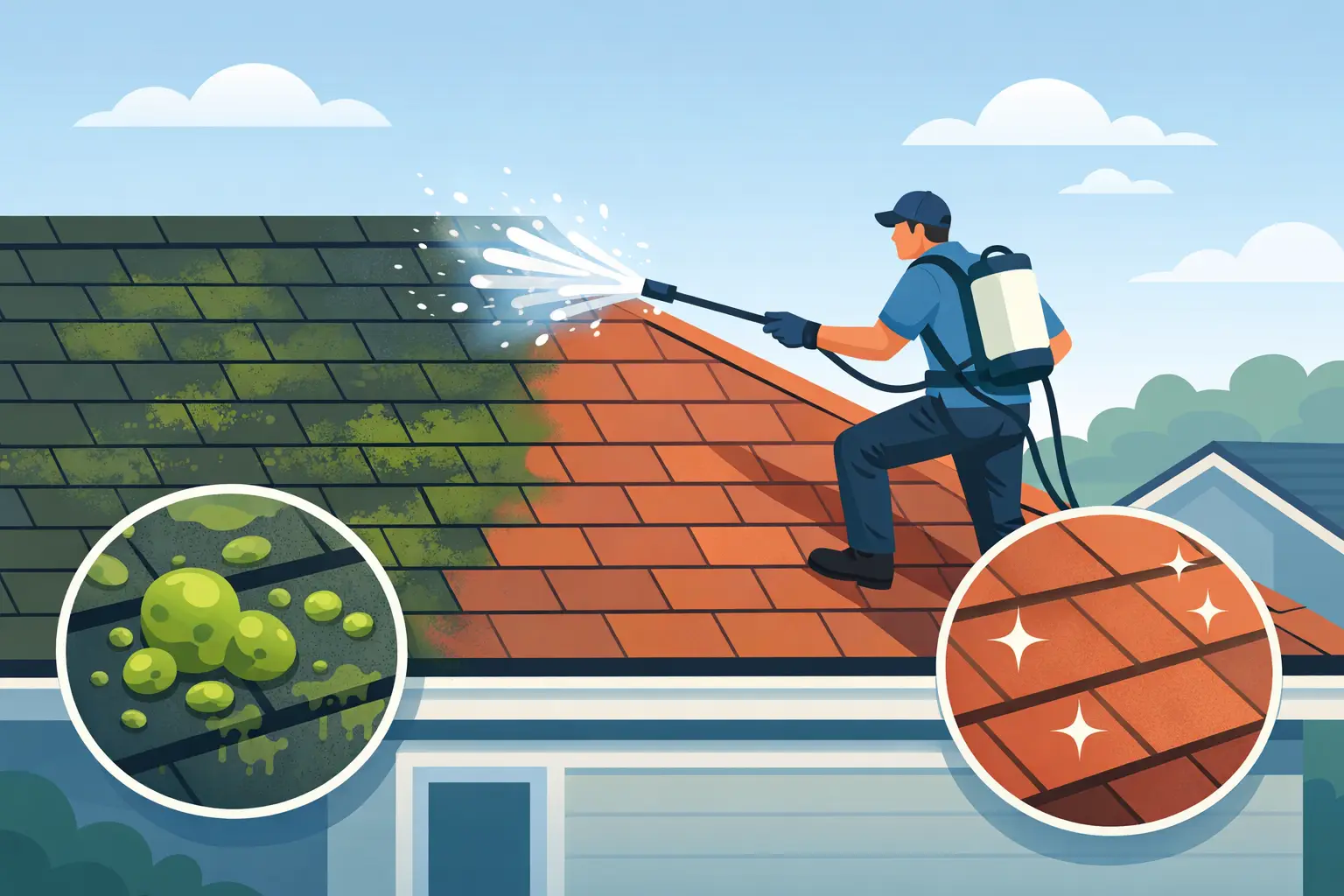
Roof Algae Removal That Protects Your Shingles
Those dark streaks running down a roof are not just dirt that showed up after a wet season. In Western North Carolina, they are often algae feeding on the limestone filler in asphalt shingles. Professional roof algae removal clears the staining without putting expensive shingles at risk, helping your home look cared for from the street while supporting the life of the roof underneath.
Our mountain climate gives algae plenty to work with. Shade from hardwoods, regular rainfall, humid summers, morning dew, and leaves that hold moisture near the roofline can all create the conditions for growth. Hendersonville, Asheville, Biltmore Forest, and surrounding communities see this issue often, especially on north-facing slopes and roofs beneath mature trees.
What Roof Algae Looks Like
The most common culprit is a blue-green algae known as Gloeocapsa magma. It usually starts as faint dark spots, then develops into the familiar black or brown streaks that make a roof look older than it is. Because the streaking follows the path of water down the shingles, many homeowners assume it is runoff, soot, or a roof material failure.
Algae is different from moss and lichen, though they can appear together. Moss looks green and fuzzy, often growing in thicker patches where debris and moisture collect. Lichen has a flatter, crusty appearance in shades of green, gray, or white. Moss and lichen can grip the shingle surface more aggressively than algae, which means they call for careful treatment and realistic expectations about how quickly every trace will disappear.
A trained exterior cleaning professional can identify what is on the roof before choosing a cleaning approach. That matters because a roof with surface algae needs a different plan than a roof with loose shingles, failing flashing, active leaks, or heavy moss growth.
Why Roof Algae Removal Is Worth Doing
Roof algae does not automatically mean your roof needs replacement. Still, allowing it to build up for years can lead to more than a curb appeal problem. Dark staining absorbs heat, which can make a roof surface warmer in direct sun. Moisture-loving growth also tends to thrive where leaves, pine needles, and debris stay trapped against the roof.
For homeowners preparing to sell, stained shingles can create an immediate negative impression. A clean roof can make siding, landscaping, and trim look better without the cost and disruption of a reroof. Landlords and property managers see a similar benefit: exterior upkeep helps a property look monitored and move-in ready.
The biggest value is often prevention. Routine cleaning gives you a reason to look closely at the roofline, gutters, valleys, and areas under tree cover before minor maintenance concerns become easier to miss. Cleaning is not a substitute for roof repair, but it is a practical part of caring for one of your home’s most valuable systems.
The Safe Way to Remove Algae From a Roof
Pressure washing is not the answer for asphalt shingles. High pressure can loosen protective granules, lift shingle edges, force water beneath the roofing materials, and shorten the useful life of the roof. A roof may look clean immediately after aggressive washing, but the damage may not be visible until later.
The safer alternative is soft washing. This method uses a purpose-built cleaning solution applied at low pressure to treat organic growth at its source. Rather than blasting the stain away, the solution breaks down algae, mildew, and similar buildup while protecting the shingle surface. The roof is then allowed to dry and weather naturally as remaining residue releases.
Results can vary by roof condition. Light algae staining may clear quickly, while thick moss or lichen may need time to release after treatment. Trying to scrape or pressure wash stubborn growth off on the same day can do more harm than good. The goal is a clean, protected roof – not a rushed result that sacrifices the materials.
A professional crew should also prepare the surrounding area before treatment. That includes wetting and protecting landscaping, managing runoff, and using the right application process for the home. This detail is especially important for properties with established shrubs, garden beds, and landscaping close to the roofline.
Why DIY Roof Cleaning Can Get Expensive
A homeowner can find roof-cleaning chemicals and rental equipment easily. The hard part is applying them safely on a steep, wet surface while controlling overspray and runoff. Falls are an obvious concern, but so are damaged plants, discolored exterior surfaces, and improperly mixed solutions.
There is also the risk of treating the wrong problem. A dark roof may have algae, but it could also have failing shingles, water damage, or staining from metal components. If shingles are curling, cracked, missing, or soft underfoot, cleaning should wait until a qualified roofing professional evaluates the condition.
For many homeowners, professional service takes the hassle out of an unpleasant and risky job. It provides the right equipment, surface-safe methods, and a clearer path to results without turning a weekend project into a roof repair.
How Often Should You Schedule Roof Algae Removal?
There is no single schedule that fits every property. A sunny roof with good airflow may stay clean for several years. A shaded home near trees, especially one with a north-facing roof slope, may show new staining sooner. In Asheville’s humid mountain environment, it is smart to inspect the roof visually at least once or twice a year and after seasons with heavy leaf fall.
You may need cleaning sooner if dark streaks become visible from the curb, moss begins forming along shingle edges, or gutters regularly overflow with leaves and organic debris. Keeping gutters clear and trimming back branches that hang directly over the roof can reduce the moisture and debris that encourage growth.
Some roofs benefit from preventive treatment before stains become heavy. This is often a good option for homeowners who want to protect curb appeal, maintain a newer roof, or keep a property ready for listing. The right timing depends on shade, roofing material, nearby vegetation, and the roof’s existing condition.
What to Expect From a Professional Roof Cleaning Visit
A careful roof cleaning starts with an assessment of the roof and the property around it. The crew looks for visible algae, moss, lichen, debris buildup, access challenges, delicate landscaping, and obvious signs that a roofing contractor may need to be involved first.
Before treatment begins, nearby plants and surfaces are prepared and protected. The cleaning solution is applied with a low-pressure soft-wash process designed for roofing materials. Crews avoid unnecessary walking on the roof whenever possible, because foot traffic itself can be hard on older or fragile shingles.
Afterward, the roof should look noticeably improved, though heavily rooted growth may continue to lighten and release over time. A trustworthy contractor will explain what to expect instead of promising that every aged shingle will look brand new. Cleaning removes biological staining; it cannot reverse normal weathering, granule loss, or other signs of roof age.
Choose a Contractor Who Respects the Roof
The best roof algae removal service is not the one that uses the most pressure. It is the one that understands how roofing materials respond to water, cleaning solutions, foot traffic, and organic growth. Ask how the company cleans asphalt shingles, how it protects landscaping, and what it does if it finds a condition that should be addressed by a roofer.
Look for trained professionals who can explain the process in plain language and stand behind the work. WNC Wash Pro’s uses surface-safe soft washing to help homeowners throughout Western North Carolina restore stained exterior surfaces without the unnecessary damage associated with high-pressure cleaning.
A roof should protect your home, not distract from it. When dark streaks start taking over the view from the driveway, a safe professional cleaning can help your shingles look cared for again while you keep your attention where it belongs – enjoying your home.